Summary Donald Trump cancels planned US strikes on Iran after announcing progress in high-level negotiations, while both sides continued exchanging warnings amid ongoing regional tensions.
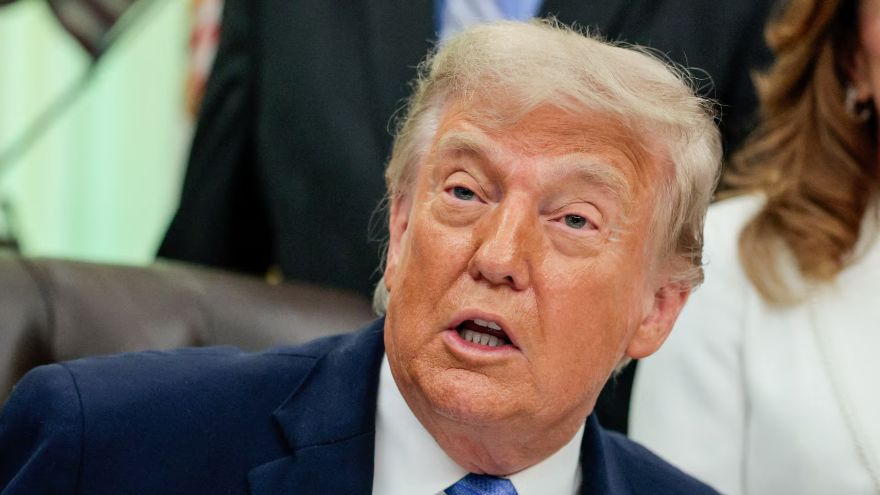
WASHINGTON (Web Desk) – US President Donald Trump announced on Thursday that he had cancelled planned military strikes against Iran that were scheduled for the evening, marking a dramatic shift only hours after warning that the United States would hit the country “very hard” and signalling interest in taking control of key Iranian oil infrastructure.
The announcement came amid reports of intensified diplomatic contacts between Washington and Tehran, even as threats, military exchanges and sharp rhetoric continued to raise fears of a broader regional conflict.
In a post on Truth Social, Trump said the decision followed discussions that had reached the highest levels of Iran’s leadership and had received approval from multiple regional and international stakeholders.
“Based on the fact that discussions with the Islamic Republic of Iran have been brought to the highest level of Iranian leadership and approved, I have, as President of the United States of America, cancelled the scheduled strikes and bombings against Iran this evening,” Trump wrote.
He added that “discussions and final points” had been agreed in both concept and detail by the United States, Israel, Saudi Arabia, the UAE, Qatar, Turkey, Pakistan, Bahrain, Kuwait, Jordan, Egypt and others.
Trump said a naval blockade would remain in place until what he described as a “transaction” is finalised, adding that details regarding the signing would be announced later.
The decision represented a significant reversal from remarks made earlier in the day when Trump warned that the United States would launch another major attack against Iran.
Kharg Island
Earlier today, in a separate social media post, Trump had declared that the US would be hitting Iran “very hard tonight”, arguing that much of Tehran’s military capability had already been destroyed. He also stated that he wanted, at some point, to take control of Kharg Island, Iran’s most important oil export hub.
Kharg Island plays a central role in Iran’s energy sector, handling the majority of the country’s crude oil exports. Under normal circumstances, volumes shipped through the island account for roughly 2 per cent of global oil supply, with much of the crude destined for China.
Trump suggested that the United States could eventually assume control of Kharg Island and other oil infrastructure facilities, comparing the idea to Washington’s influence over Venezuela’s energy sector.
Analysts have noted that any attempt to seize the island would require a substantial military operation involving ground forces. Such a move could expose American troops to missile and drone attacks and risk drawing the conflict into a more dangerous phase.
Despite the rhetoric, the practical impact on global oil shipments would likely be limited in the immediate term, as Iranian exports have already faced major disruptions following recent developments in the Gulf.
Iran sends warning
Iran responded swiftly to Trump’s earlier threats. The Khatam al-Anbiya Central Headquarters, Iran’s top joint military command, warned that any renewed US attack would trigger a stronger response than previous Iranian actions.
In a statement carried by Iranian state media, the command said recent American threats against Iranian oil facilities could have serious consequences for regional energy security.
“Either oil and gas exports are for everyone or they will be available for no one,” the statement said, warning that a wider conflict would create greater instability across the region.
Iran’s chief negotiator, Mohammad Baqer Qalibaf, also issued a stark message, cautioning that impulsive decisions could devastate energy markets and drag the region into a prolonged conflict.
“Wrong strategies and impulsive decisions will reset the entire board for the worse,” he wrote on X, adding that those pursuing military escalation would face “a different Iran”.
Following Trump’s threat of further strikes, Iran’s Red Crescent announced that emergency personnel had been mobilised across the country.
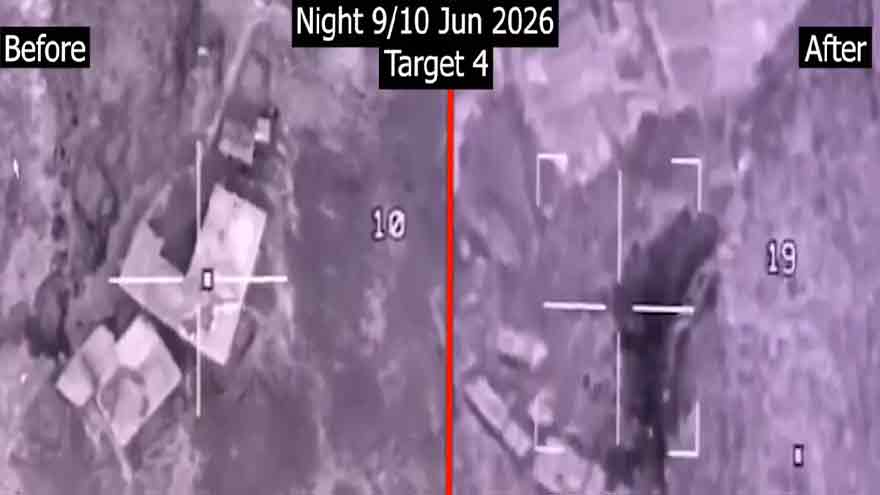
The renewed exchange of warnings came after another day of military activity. Iranian media reported explosions in several cities, while Tehran said US strikes had targeted locations across the country.
Iran’s Islamic Revolutionary Guard Corps said it had launched attacks against American military targets at bases in Kuwait, Jordan and Bahrain, and also targeted the US Navy’s Fifth Fleet headquarters in Bahrain.
Iranian news agencies reported that at least five people were injured in Thursday’s attacks.
Diplomacy continues
Despite the military tensions, diplomatic efforts appear to be gathering momentum behind the scenes.
According to Iranian sources and Western officials, indirect talks between Washington and Tehran have intensified in recent days. Discussions are reportedly focused on a preliminary framework aimed at reducing tensions and potentially ending more than three months of conflict.
One of the unresolved issues concerns billions of dollars in frozen Iranian assets held abroad. Tehran is seeking direct access to the funds, while Washington reportedly favours a phased release linked to humanitarian purchases.
Iran is also seeking the lifting of sanctions, recognition of its control over the Strait of Hormuz and an end to Israeli military operations in Lebanon.
For its part, the Trump administration continues to insist that Iran must remove restrictions on shipping through the Strait of Hormuz and accept guarantees preventing the development of a nuclear weapon, an ambition Tehran denies pursuing.
Speaking to Fox News, Trump confirmed that contacts with Iran remained active despite the latest hostilities.
“We are talking to them and all,” he said, while reiterating that his preferred outcome would involve taking control of Kharg Island.
The conflict, which began after US and Israeli strikes on Iran on February 28, has killed thousands of people, primarily in Iran and Lebanon, and contributed to volatility in global energy markets.
United Nations Secretary-General Antonio Guterres urged all parties to intensify efforts towards a peaceful and durable agreement that would strengthen regional and international security.
Meanwhile, concerns are also growing over maritime safety. India called on the United States to halt attacks affecting commercial shipping after three incidents involving Indian-crewed tankers this week, including one attack off Oman that killed three sailors.