Summary Pakistan confirms it is mediating indirect US-Iran talks, with Tehran reviewing a 15-point proposal amid escalating Middle East tensions.
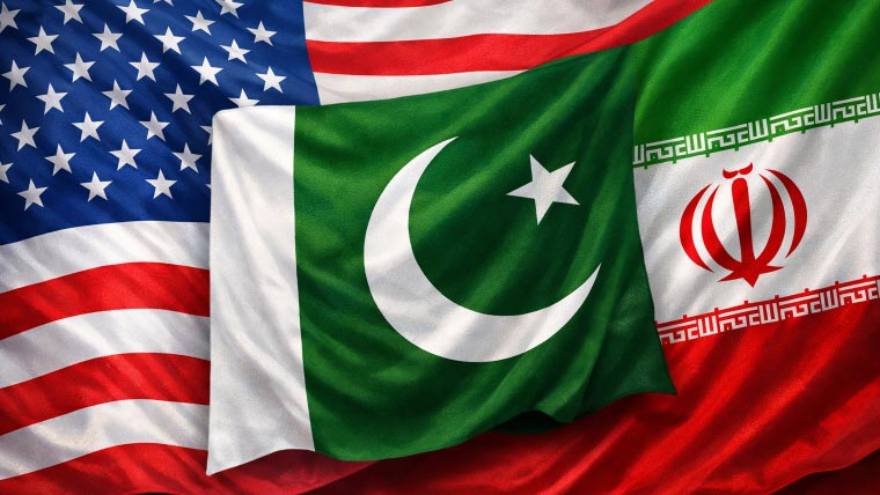
ISLAMABAD (Dunya News) – Pakistan has officially confirmed its role as a mediator in ongoing indirect talks between the United States and Iran, with Deputy Prime Minister and Foreign Minister Ishaq Dar stating that back-channel diplomacy is underway to ease tensions in the Middle East.
In a statement posted on social media platform X, Dar dismissed what he described as unnecessary media speculation surrounding peace negotiations aimed at ending the ongoing regional conflict. He confirmed that indirect communication between Washington and Tehran is continuing through messages relayed by Pakistan.
According to Dar, the United States has shared a 15-point proposal with Iran, which is currently under consideration in Tehran. He noted that Pakistan is actively facilitating the exchange of messages between the two sides as part of efforts to de-escalate the situation.
There has been unnecessary speculation in the media regarding peace talks to end ongoing conflict in the Middle East. In reality, US-Iran indirect talks are taking place through messages being relayed by Pakistan. In this context, the United States has shared 15 points, being…
— Ishaq Dar (@MIshaqDar50) March 26, 2026
The foreign minister highlighted that Pakistan is not acting alone, with countries including Turkiye and Egypt providing support to advance the diplomatic initiative. These coordinated efforts are aimed at bringing an end to hostilities and restoring stability in a region gripped by weeks of escalating conflict.
Dar reiterated Pakistan’s commitment to promoting peace and stability both regionally and globally, stressing that dialogue and diplomacy remain the only viable path forward in resolving complex geopolitical crises.
The confirmation comes amid intensified international efforts to open diplomatic channels following nearly a month-long conflict involving the United States, Israel, and Iran, which began on February 28 and has had far-reaching consequences across the Middle East.
Pakistan has played a central role in back-channel diplomacy, working closely with key regional stakeholders to prevent further escalation. Officials say Islamabad has been instrumental in maintaining communication lines between Washington and Tehran at a time when direct engagement remains limited.
As part of these efforts, Pakistan’s military leadership has also engaged with top US officials. Contact between Chief of Army Staff Field Marshal Asim Munir and US President Donald Trump was confirmed by the White House.
Prime Minister Shehbaz Sharif has further signalled Islamabad’s willingness to host formal talks between the United States and Iran, an offer acknowledged by President Trump, who shared the development on his Truth Social platform.
Diplomatic sources indicate that Pakistan has already conveyed a US proposal to Iranian authorities, although details of the framework have not been publicly disclosed. It remains unclear whether the proposal aligns fully with the reported 15-point plan.
Turkiye is also exploring options to facilitate negotiations, with both Pakistan and Turkiye being considered as potential venues for any future talks, according to regional sources.
However, in a significant development, Iran has reportedly rejected the US proposal, maintaining that it will conclude what it terms an “imposed war” on its own terms and timeline. A senior Iranian political-security official indicated that Tehran’s stance is consistent with its cautious approach during previous negotiation rounds in 2025, which coincided with US military actions.
Iran has outlined five key conditions for ending the conflict, including a complete halt to military aggression and targeted killings, guarantees against renewed hostilities, payment of reparations, comprehensive resolution across all fronts and allied groups, and international recognition of its control over the Strait of Hormuz.
Meanwhile, contrasting narratives have emerged from Washington and Tehran. President Donald Trump stated that Iran was eager to reach an agreement to end the fighting, while Iran’s foreign minister maintained that although Tehran is reviewing the US proposal, it has no intention of entering talks aimed at winding down the war.
Pakistan’s diplomatic outreach has extended beyond the immediate parties to the conflict. Foreign Office spokesperson Tahir Andrabi confirmed that Islamabad is in contact with both regional and global stakeholders to push for de-escalation.
According to the Foreign Office, consultations have been held with leadership in Turkiye, Jordan, Kuwait, Azerbaijan, Malaysia, Egypt, Bangladesh, and Lebanon, while engagements with Bahrain and Indonesia have also taken place to exchange views on the evolving situation.