Summary Macron said that some people defend the idea of freeing the Strait of Hormuz by force via a military operation.
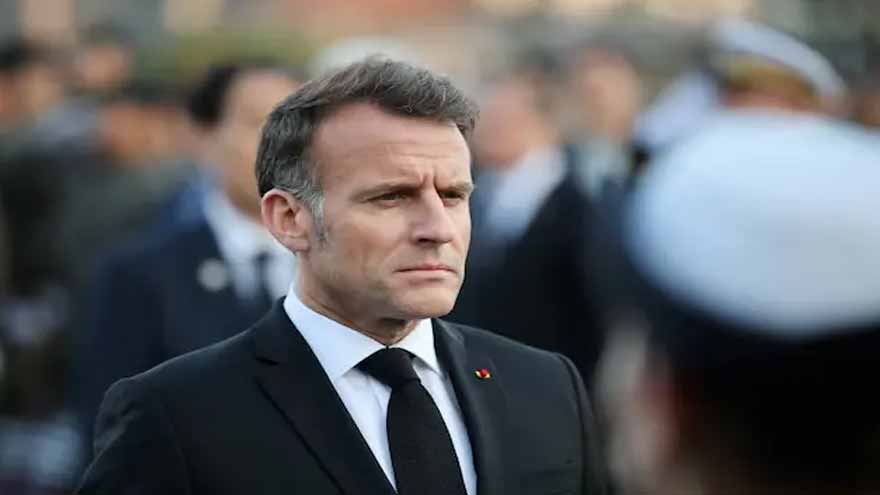
(Agencies) - French President Emmanuel Macron said on Thursday it would be unrealistic to launch a military operation to force open the Strait of Hormuz, after US President Donald Trump challenged US allies to work towards reopening it.
“Some people defend the idea of freeing the Strait of Hormuz by force via a military operation, a position sometimes expressed by the United States, although it has varied,” Macron told reporters during a trip to South Korea.
“This was never the option we have supported because it is unrealistic,” he added.
“It would take forever, and would expose all those who go through the Strait to risks from the guardians of the revolution but also ballistic missiles,” he said.
'Resist until the end'
Trump has recently raised the possibility of a deal to end the war, which has pushed up fuel prices in the US and around the world, and pushed down his approval ratings.
He said talks could be possible with Iran's new leadership, which he described as "less radical and much more reasonable" than their predecessors.
But Tehran has dismissed Washington's ceasefire overtures, describing US demands to end the conflict as "maximalist and irrational".
"Messages have been received through intermediaries, including Pakistan, but there is no direct negotiation with the US," said Iranian foreign ministry spokesman Esmaeil Baqaei, quoted by the ISNA news agency on Thursday.
Trump warned that if no agreement with Tehran was struck, Washington had "our eyes on key targets including the country's electric generating plants".
Pro-government Iranians voiced defiance as they marched in Tehran at the funeral of a Revolutionary Guards naval commander killed in an Israeli strike.
"This war has lasted a month. However long it takes, we will continue," said Moussa Nowruzi, a 57-year-old pensioner.
"We will resist until the end."
The country's health ministry said the Pasteur Institute of Iran, a century-old medical centre in Tehran, had been extensively damaged in a strike.
In Lebanon, militant group Hezbollah said its fighters launched drones and rockets at northern Israel Thursday, with the Israeli military's Home Front Command saying air raid sirens were activated.
A day earlier, Israel killed a top Hezbollah commander, two sources told AFP, in a Beirut strike that the Lebanese health ministry said killed seven people.
Authorities in Lebanon say Israeli attacks have killed more than 1,300 people in the country since war erupted between Israel and Iran-backed Hezbollah on March 2.
'Oxygen for volatility'
The conflict has drawn in Gulf countries once seen as a safe haven in a volatile region, with air defences in the United Arab Emirates responding to missile and drone threats Thursday.
Trump vowed the United States would not allow allies in the region – Israel, Saudi Arabia, Qatar, the UAE, Kuwait and Bahrain – to "get hurt or fail in any way, shape or form".
The war has highlighted the importance of the Strait of Hormuz, a shipping lane through which one-fifth of the world's oil usually passes.
Iran's Revolutionary Guards have vowed to keep it shut to the country's "enemies" while Trump has made reopening it a condition for a ceasefire.