



IOC decides against blanket ban on Russia for Rio Olympics
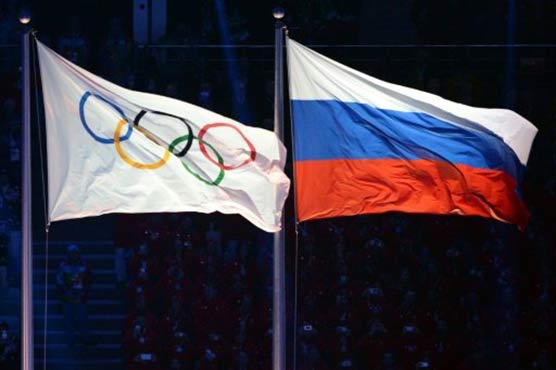
IOC president Thomas Bach said the body stopped short of an historic outright ban
LAUSANNE, July 24, 2016 (AFP) - The International Olympic Committee on Sunday decided against hitting Russia with a blanket ban from the Rio Games over state-run doping but laid out unprecedented eligibility conditions for individual Russian athletes.
IOC president Thomas Bach said the body stopped short of an historic outright ban in order to protect the rights of clean Russian competitors hoping to take part at the Games which start in two weeks.
But an extraordinary set of checks have been put in place and individuals had to assume "collective responsibility" given the extent of Russia s deceit, Bach said.
"We have set the bar to the limit," he told reporters.
The IOC faced global calls to act after a World Anti-Doping Agency report last week detailed a massive cheating programme directed by the Russian sports ministry with help from the FSB state intelligence agency.
The doping affected 30 sports, including at the 2014 Sochi Games and other major events, WADA said, in revelations that widened the worst drug scandal in Olympic history.
Russia s entire track and field squad has already been barred from Rio following a similar WADA report on "state-supported" doping.
Fourteen national doping agencies -- including the United States, Germany and Japan -- as well as several national Olympic committees had demanded Russia s exclusion from Rio.
Others, especially top political leaders in Moscow, insisted collective punishment would be unjust.
Bach said the IOC reached a decision that considered the severity of the doping scheme while also sending "a message of encouragement to clean Russian athletes."
"You have to be able to look in the eyes of the individual (clean) athletes concerned," Bach said.
Russian sports minister Vitaly Mutko -- a key player in the WADA report who has been banned from Rio -- hailed the IOC s "objective" decision.
Separately, an IOC ethics commission ruled that 800m runner Yuliya Stepanova, who turned whistleblower on doping in Russian athletics, could not go to Rio even as a neutral.
The United States anti-doping chief Travis Tygart blasted the IOC for creating "a confusing mess."
"In response to the most important moment for clean athletes and the integrity of the Olympic Games, the IOC has refused to take decisive leadership," the USADA boss said in a statement.
- Ambitious timeline -
==========================
The IOC executive implemented a rigorous set of criteria for each Russian Olympic hopeful.
They include:
+ Athletes must be individually cleared by their respective sports federation.
+ Federations should not consider the absence of a past positive drug test as evidence of a clean record and there should be no presumption of innocence.
+ An expert from the Court of Arbitration for Sport must approve each individual decision.
+ Any athlete who has previously tested positive for doping is ineligible, even if they have already served their suspension.
This sets Russia apart from other countries like the United States, which is sending doping convicted sprinters Tyson Gay and Justin Gatlin to the Games.
+ No athletes named in the WADA report led by Canadian law professor Richard McLaren is eligible.
This multi-layered screening process must be carried out for the 387 athletes nominated for Rio by the Russian Olympic Committee (ROC) before the Games start on August 5.
"This is a very ambitious timeline, but we had no choice," Bach said.
Russians "have to clear the highest hurdles in order to have chance to compete in the Olympic games," he added.
Mutko told the R-Sport news agency he was "absolutely sure that the majority of the Russian team will meet the criteria," noting however that the conditions were "very tough."
Russia has strongly denied any state role in doping.
Following the IOC announcement, the International Tennis Federation said eight players already met the eligibility requirements, pending confirmation from WADA that they were not implicated in the McLaren report.
- Stepanova barred from Rio -
=============================
The IOC also delivered a crushing blow to Stepanova s hopes of competing in Rio.
She had refused to run for Russia and hoped for a special Olympic charter exemption to compete as a neutral after she gave evidence to WADA.
The IOC ethics commission said that while Stepanova "made a contribution to the protection and promotion of clean athletes", Olympic rules did not permit the entry of neutrals.
Also, despite her whistleblower credentials, she is an admitted cheater and her conduct does "not satisfy the ethical requirements for an athlete to enter the Olympic Games."
Tygart called the IOC s decision on Stepanova "incomprehensible."
"It will undoubtedly deter whistleblowers in the future from coming forward," the US anti-doping chief said.
