


Hungarian master of absurdist excess László Krasznahorkai wins Nobel literature prize
Entertainment
He’s the first Nobel literature winner from Hungary since Imre Kertesz in 2002

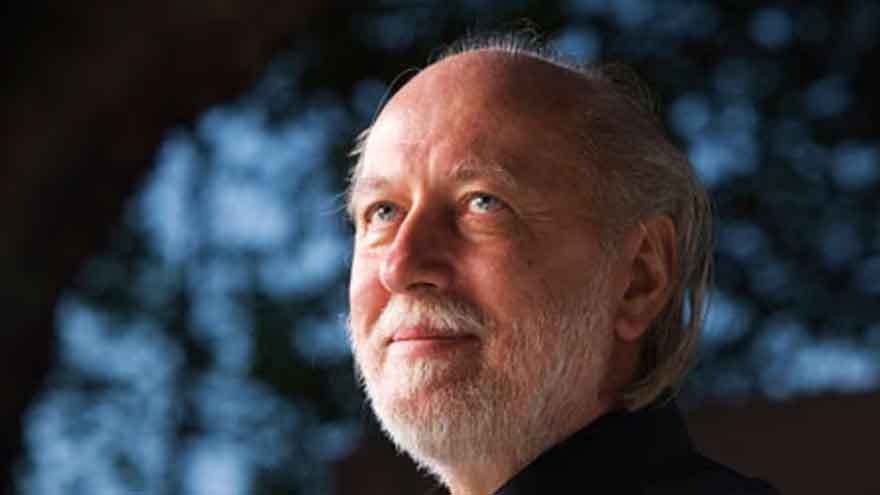
STOCKHOLM (AP) — Hungarian writer László Krasznahorkai, whose surreal and anarchic novels combine a bleak world view with mordant humor, won the Nobel Prize in literature Thursday for work the judges said upholds the power of art in the midst of “apocalyptic terror.”
The Nobel judges said the 71-year-old author, whose novels sometimes consist of just one long sentence, is “a great epic writer” whose work “is characterized by absurdism and grotesque excess.”
He’s the first Nobel literature winner from Hungary since Imre Kertesz in 2002 and joins a list of laureates that includes Ernest Hemingway, Toni Morrison and Kazuo Ishiguro.
“I am calm and very nervous,” Krasznahorkai told Radio Sweden after getting news of the prize, which comes with an award of more than $1 million. “This is the first day in my life when I got a Nobel Prize. I don’t know what’s coming in the future.”
The work that won the Nobel Prize in literature
The American writer and critic Susan Sontag once described Krasznahorkai as the “contemporary master of the Apocalypse.” His work has echoes of other European writers who explored the absurd tragicomedy of existence, including Franz Kafka and Samuel Beckett.
Zsuzsanna Varga, a Hungarian literature expert at the University of Glasgow, said Krasznahorkai’s novels probe the “utter hopelessness” of human existence, while also being “incredibly funny.”
Krasznahorkai’s near-endless sentences made his work the “Hotel California” of literature — once readers get into it, “you can never leave,” she said.
Varga suggested readers new to Krasznahorkai’s work start with “Satantango,” his 1985 debut, which centered around the few remaining residents of a dying collective farm and set the tone for what was to follow.
Krasznahorkai has since written more than 20 books, including “The Melancholy of Resistance,” a surreal, disturbing tale involving a traveling circus and a stuffed whale, and “Baron Wenckheim’s Homecoming,” the sprawling saga of a gambling-addicted aristocrat.
“Herscht 07769,” from 2021, is set in a German town riven with unrest. Written as a series of letters to then-German Chancellor Angela Merkel, it has just one period in its 400 pages.
Several works, including “Satantango,” and “The Melancholy of Resistance” were turned into films by Hungarian director Béla Tarr.
Krasznahorkai also wrote several books inspired by his travels to China and Japan, including “A Mountain to the North, a Lake to the South, Paths to the West, a River to the East,” published in Hungarian in 2003.
