Summary US lawmakers criticize Nvidia’s decision to reinstate Jensen Huang, demanding tougher China chip export restrictions and congressional scrutiny over national security concerns.
WASHINGTON (Reuters) - US lawmakers from both parties sharply criticized Nvidia's (NVDA.O), opens new tab decision to reinstate Jensen Huang as CEO, saying Congress should tighten restrictions on China's access to the company's advanced AI chips and scrutinize the circumstances surrounding Huang's return.
Democratic US Senator Elizabeth Warren of Massachusetts, who is set to chair the Banking Committee starting in January, called the decision to reinstate Huang "reckless," adding Nvidia's board still owes Congress answers about the company’s compliance with US export controls. The Banking Committee is responsible for approving legislation on export controls.
"Jensen Huang’s return only increases the urgency of passing bipartisan export control bills into law and making sure Nvidia does not lobby to kill that legislation and put our national security at risk," Warren said.
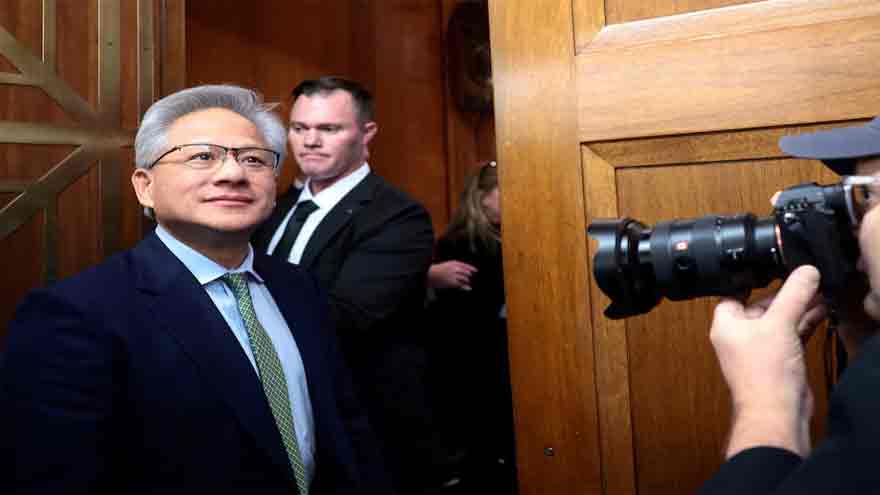
Huang will testify on December 3 before the US Senate Banking Committee in a public hearing, the panel's Republican Chair Tim Scott said Monday, as lawmakers probe allegations about Huang's ties to a woman accused of being a Chinese spy. Huang's personal spokesperson declined to comment on the planned appearance.
Republican Senator Pete Ricketts, a member of the Senate Banking Committee, said in a statement on Monday that the Nvidia board's decision to reinstate Huang "doesn’t excuse" him from testifying before Congress.
Ricketts is pushing for Congress to pass the Match Act, a bill that would pressure US allies to restrict sales and maintenance of advanced chipmaking equipment destined for China. It would not directly restrict Nvidia's chip sales.
Companies based in allied countries that make semiconductor-manufacturing tools would be affected, such as the Netherlands' ASML (ASML.AS), opens new tab and Tokyo Electron (8035.T), opens new tab in Japan.
Supporters argue that under the legislation, China would have greater difficulty developing its own advanced AI chips that would compete with Nvidia in the long term.
The top Democrat on the House Intelligence Committee, Representative Jim Himes, said Huang is still expected to appear for a closed-door interview on December 1 with three House panels.
Hakeem Jeffries, the incoming speaker of the US House of Representatives, said on Monday that Congress should include "ironclad" legislation to prevent AI technology from reaching China in the annual defense bill. That bill is a must-pass measure that funds the military and typically attracts bipartisan support. A Senate version of the legislation already includes several measures to crack down on China's access to advanced AI chips.
Nvidia did not immediately comment on the criticism from Congress.
Senate Democratic leader Chuck Schumer of New York said the reinstatement showed it was critical to pass legislation to toughen restrictions on US chip exports to China.
President Donald Trump on CNBC said he had pressed the Nvidia board to reinstate Huang and that he did not think the board would have done so without his action.
Republican Senator John Curtis, a member of the Senate Foreign Relations Committee, said he wanted answers about why the board opted to reappoint Huang as CEO.
"Last week, the board said it didn’t intend to reinstate him," he said. "I’d like to know what changed."