Summary Chairman Senate concerned over Balochistan.
Dunya News Report (Yaruq Malik)
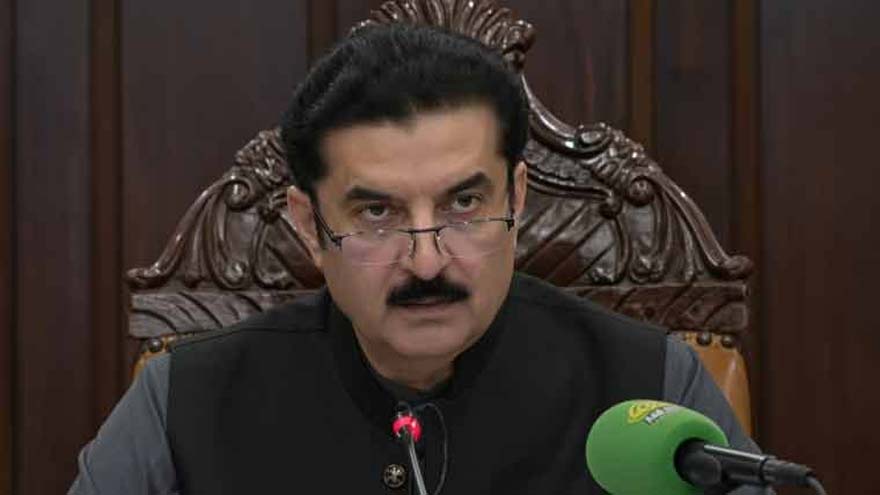
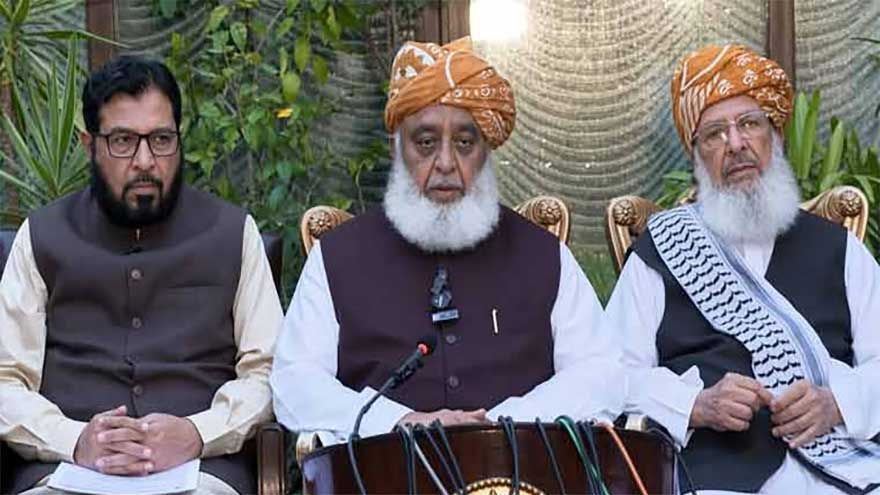
ISLAMABAD: The Deputy Chairman of Senate Maulana Abdul Ghafoor Haideri has criticized the Balochistan government for not standing up to the outstanding problems that the province faces. He added that the provincial government has failed to fulfill the promises it had previously made during the election campaign which is alarming.
“The nationalists had made tall promises to people during the election campaign but have delivered nothing. The people of Gwadar are facing an acute shortage of drinking water.” the deputy Chairman said.
He expressed concerns over the deteriorating conditions of the health and education sectors in Balochistan despite the added budget allocation made by the provincial government.
Moreover, talking on the China-Pakistan Economic Corridor (CPEC), Maulana Haideri said that the project has the capability to change the destiny of the people of Balochistan. He added that through CPEC, Pakistan will greatly improve its image in the world. He warned the provinces over the increasing conspiracies being crafted by the neighboring states against the implementation of CPEC in Pakistan.
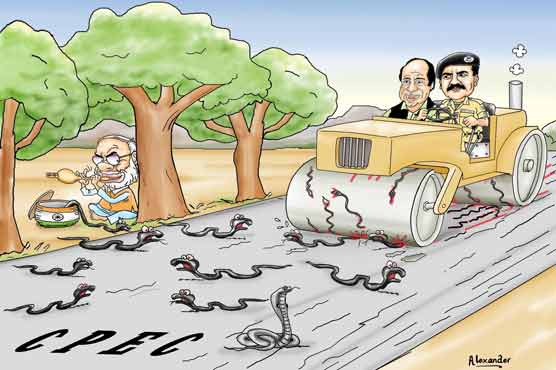
“India and other neighboring countries are not happy with CPEC and have been hatching conspiracies to create doubts and misunderstandings among the provinces on the project,” he said.
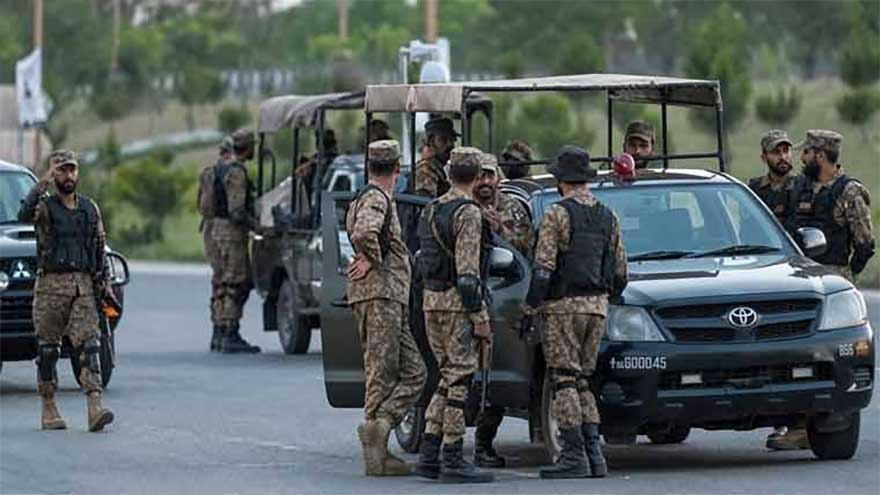
Previously, Chief of Army Staff General Raheel Sharif made it clear that the security forces of Pakistan will make certain that every project under the China-Pakistan Economic Corridor (CPEC) is implemented successfully at all costs. A Special Security Division (SSD) has been created to monitor and provide security to every project that comes under CPEC. During a recent visit to the headquarters of SSD, General Sharif instructed the task force to ensure the successful implementation of every project under the economic corridor.
The army chief stated that he is aware of every campaign that is working against the success of the CPEC project and ensured that the military will resist any negativity that harms its implementation.
“We are aware of all the campaigns against CPEC,” said the army chief.
The federal government has been facing resistance from the provincial governments over the issue of the CPEC route which ended with a consensus that was created through the All Party Conference (APC) chaired by Prime Minister Nawaz Sharif.
The APC was aimed at addressing the concerns put forward by the provincial governments of Khyber Pakhtunkhwa, Balochistan and Sindh. Surprisingly, the Sindh government officials were absent during the meeting.
The Prime Minister ensured the political parties that the mutual interests of the provinces will not be ignored at any cost. Moreover, the PM insisted that the federal government is dedicated to take the provinces under confidence during every phase of the project.
Moreover, the Federal Minister for Planning and Development Ahsan Iqbal had complained that that the ‘aggressive remarks’ generated from the KP and Baluchistan leadership were risking foreign investment. The Multi Party Conference had declared a ‘13 point resolution’ that demanded the restoration of decisions made in last year’s MPC held in May which included the promise of creating the Western route of CPEC before the Eastern.
The Prime Minister constituted a steering committee which includes the PM, CM’s of the four provinces and Federal Minister Ahsan Iqbal who will be the convener of the committee which will have sessions after every three months.
Furthermore, representatives from Baluchistan National Party Mengal (BNP-M), National Party, Jamhoori Watan Party, Jamaat-i-Islami and Pakhtunkhwa Milli Awami Party (PkMAP) have collectively agreed upon the continuation of CPEC and called out for ‘unity’ among the provinces through progressive coordination with the federal government.
Ahsan Iqbal insists that Pakistan’s business and investment profile has improved internationally with the China-Pakistan Economic Corridor (CPEC). He said that Pakistan’s economy has improved with the recent efforts made by the federal government and the law and order situation across the country has also shown promising results as compared to the past.
Speaking about Vision 2025, Mr. Iqbal stated that under ‘Vision-2025’, we wish to restructure the business portfolio of Pakistan in multiple sectors and to create a roadmap that takes Pakistan into the top 25 economies of the world.
“Under Vision-2025, we are restructuring portfolio of our productive sectors on cluster-based approach to transform agriculture, industry and mineral sectors. The target is ambitious but achievable if the government, private sector and academia synergize their efforts to achieve eight percent growth rate annually in the next 10 years,” the minister said.
He insisted that the way the international community pictures Pakistan has changed immensely in 2016 from 2013. He said that 2016 will be the year of productivity, quality and innovation in Pakistan.
“The world now recognizes Pakistan as the next emerging success story. We have also declared 2016 as the year of productivity, quality and innovation to become competitive on the international market. We are mobilizing the indigenous resources to develop an export thrust for the economy.” he stated.
Under CPEC, China is said to reduce its route cost by thousands of kilometers for its oil and gas imports from Africa and the Middle East.