


Non-state actors biggest threat to region: Hina Khar
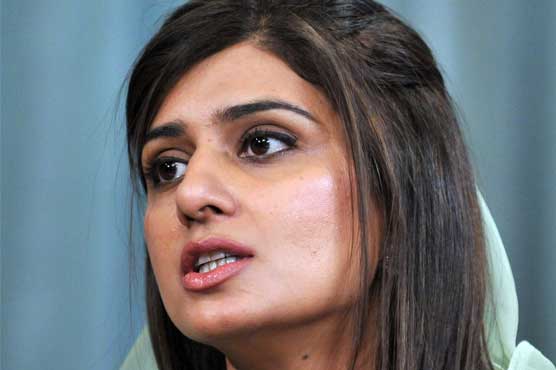
We wanted dialogue process to be uninterruptible but Modi's stated policy is Pakistan's isolation
KARACHI: (Dunya News) – Former Pakistan Foreign Minister Hina Rabbani Khar has on Tuesday said that the non-state actors are the biggest threat to the regional peace. She said that the capacity of certain non-state actors to derail Pakistan-India dialogue process was the biggest problem for the region, reported Dunya News.
Talking to Dunya media group president Kamran Khan on Dunya Kamran Khan Kay Saath, Hina Rabbani Khar said that non-state actors’ capacity to derail peace process was thwarting the entire effort. “But on the India side, it is a stated state policy that they want to isolate Pakistan diplomatically as Indian Prime Minister Narendra Modi has himself said repeatedly”, Khar said.
The former foreign minister said that her Pakistan People’s Party (PPP) government wanted to make the dialogue process uninterrupted and uninterruptible because certain elements or groups could not be allowed to dictate the two countries.
When asked Kamran Khan how much the incidents like Pathankot or Mumbai Attacks played their role in thwarting the dialogue process, Khar said that these incidents were the biggest problem. She said that such incidents ideally should not affect the overall strategy. “Getting hold of some Indian agent in Balochistan or the Pathankot incident happening in India should be considered incidental issues while the dialogue process is a strategic issue”, she said.
Watch full interview:
Hina Rabbani Khar said that the possibility of the restoration of dialogue was always there but the way Indian government had been toeing the policy of aggression, and even genocide, Pakistan was left with very few options diplomatically: 1) solve the problem through bilateral dialogue, which is the first priority always, but Indian attitude remained aggressive throughout. Then the state terrorism in Indian Held Kashmir and the cross-border ceasefire violation made it near impossible. 2) Applying diplomatic pressure on India through powerful friendly countries.
Kamran Khan said that senior and well-respected retired generals were of the opinion that there should be a tit for tat response for India was required and they needed be taught a lesson. Khar said that military response was not an option since there was a history of wars between the two countries and it hadn’t yielded any benefits. She said that an intense diplomatic pressure was going to be the appropriate response to this aggression.
“The aggression of India, its state terrorism, human genocide, use of pellets; this is not what Pakistan is saying, this is Guardian saying it, and the other major international media organisations. But is Pakistan’s foreign policy management paralysed? There is not even a foreign minister appointed. How are you going to run an effective foreign policy? And it’s not only the Eastern border; the differences with Afghanistan are also a major issue. And when you discuss the challenges that the army chief has to face must also include the peaceful negotiation of reconciliation in Afghanistan”, she said.
The former foreign minister said that Pakistan foreign policy was in doldrums and the government had failed miserably to divert the attention of the world towards the Indian aggression and its state terrorism in Kashmir.
