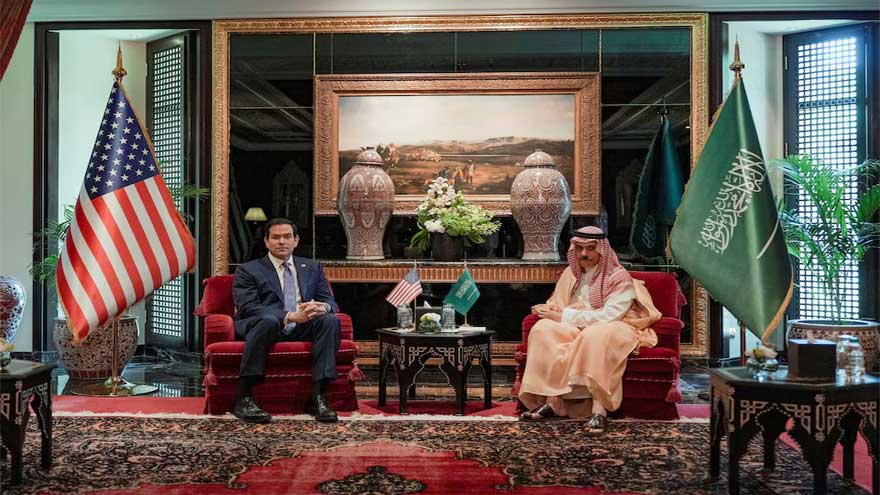
Summary Secretary of State Marco Rubio promised United States' Gulf allies that Washington would protect their interests as it seeks to hammer out a final settlement of the Middle East war in talks with Iran
MANAMA (Reuters/AFP) – US Secretary of State Marco Rubio told Gulf allies on Thursday that any deal with Iran would take their interests into account, as he wrapped up a Middle East trip aimed at selling the Trump administration's preliminary accord to sceptical regional partners.
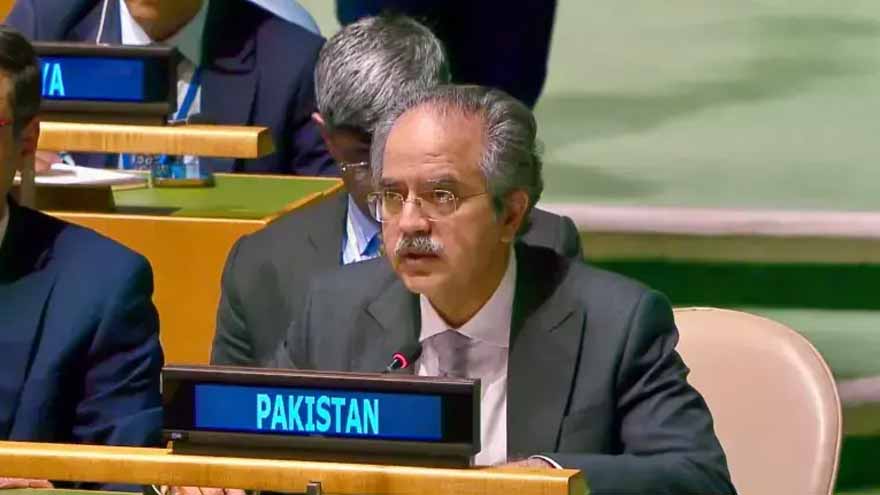
Speaking at a meeting of Gulf Arab foreign ministers and officials in Bahrain — home to the US Navy's Fifth Fleet — Rubio said Washington was seeking an enduring peace with long-time foe Iran that would not undermine the security and prosperity of its allies in the oil-rich region, which fear the accord is too soft on Iran after it attacked them in the war.
Iran fought two of the world's most powerful armies - the US and Israel - during the conflict and took effective control of the vital Strait of Hormuz, heavily disrupting oil flows and rattling global energy markets and the wider economy.
"The reality of it is that no country on Earth has the right to charge for the use of international waterways. And that will never be an acceptable condition of any deal. The president's been fundamentally clear about that," said Rubio.
Bahrain's Foreign Minister Abdullatif bin Rashid Al Zayani, who chaired the gathering, welcomed Oman's announcement of a corridor for the safe passage of vessels through the strait.
Rubio's three-day tour of the Gulf is the first high-level diplomatic mission since the US-Iran framework agreement last week to end the conflict, which started on February 28 with US-Israeli strikes on Iran.
He has acknowledged the delicacy of his mission as he seeks to win over Gulf Arab leaders wary that excessive concessions could strengthen Tehran and reshape the region’s security balance and oil flows.
At his previous stops in the UAE and Kuwait, Rubio sought to assure officials that the proposed deal was not overly favorable to Iran, which struck several Gulf states during the war.
"We're not going to do anything that undermines the security of our allies, our longstanding allies in the region," he told reporters in Kuwait.
CONFLICTING ACCOUNTS ON DEAL TERMS
US President Donald Trump said on Tuesday that Iran had agreed to nuclear inspections into "infinity," while Tehran said it had made no such concession in negotiations, raising questions about the viability of their fragile peace deal.
The two countries, which ended a first round of negotiations in Switzerland on Monday, have also offered conflicting accounts about financial incentives for Iran, control of the Strait of Hormuz, and Israel's parallel war in Lebanon.
All six Gulf Cooperation Council (GCC) nations - Saudi Arabia, Qatar, Oman, the United Arab Emirates, Bahrain and Kuwait - are strategic US allies that offered some degree of logistical support to Washington during the war, and all were buffeted by Iranian airstrikes as a result.
Together, they make up the backbone of America's security architecture in the Middle East, and any countries rethinking their security relationship with the US could have a significant impact on US military strategy in the region.
The draft US-Iran agreement includes no limits on Iran's ballistic missiles, a proposed $300 billion reconstruction fund and provisions that could expand Tehran's regional influence and control over critical oil shipping lanes.
Rubio has said he would not be asking regional allies to contribute to any reconstruction fund during the trip, even as the MoU with Iran suggests that countries in the region would at least be partially responsible for footing the bill.
Some US Gulf allies are privately feeling disappointed over the interim deal that could open the door to US normalization with Iran, a predominantly Shi'ite country that most Sunni-led GCC states consider their main adversary.
Arriving on Wednesday night in Bahrain's capital Manama, which hosts the headquarters of the US Navy's Fifth Fleet, Rubio will also meet with the Gulf Cooperation Council, or GCC, a grouping of six Sunni monarchies that also includes Saudi Arabia, Qatar and Oman, the United Arab Emirates, and Kuwait.
His three-day tour of the oil-rich Gulf is the first high-level diplomatic mission since the US-Iran framework agreement last week to end the conflict.
At his previous stops in the UAE and Kuwait, Rubio sought to assure officials that the proposed deal was not overly favorable to Iran, which struck several Gulf states during the US-Israeli war.
"We're not going to do anything that undermines the security of our allies, our longstanding allies in the region," he told reporters in Kuwait.
Secretary Rubio promised the United States' Gulf allies that Washington would protect their interests as it seeks to hammer out a final settlement of the Middle East war in talks with Iran.
He was on a regional tour to reassure the Gulf states, which were targeted by Tehran's missiles and drones during the conflict and saw their crucial oil and gas shipments effectively cut off by an Iranian blockade of the Strait of Hormuz.
Tehran has emerged emboldened from the war, vowing not to relinquish control of the vital waterway and going so far as to call its initial deal with Washington to stop the fighting "a declaration of America's defeat".
During a visit to Kuwait City, Rubio said Washington would be on the same page as Gulf states as it wrangles with Iran over a permanent settlement to the conflict.
"We're going to be completely aligned with our partners in the Gulf. That's why we're meeting with all of them tomorrow," he said, adding the US would "engage them on conversations about every decision that's made with regards to this negotiation".
Rubio is due to attend a Gulf Cooperation Council meeting in Bahrain on Thursday after sitting down with the leaders of Kuwait and the United Arab Emirates on Wednesday.
The initial US-Iran deal, which sets out a 60-day negotiating process aimed at reaching a long-term agreement, failed to address Gulf nations' long-standing concerns about Iran's missile programme and regional proxies.
But Rubio insisted Washington was "not going to do anything that undermines the security of our allies".
Tehran, however, has already portrayed the deal as a victory.
Its top negotiator Mohammad Bagher Ghalibaf said on Wednesday that the agreement, reached with the help of Pakistani mediation, was "the result of the resistance and authority of the brave Iranian nation".
"That is why the Islamabad Memorandum of Understanding became a declaration of America's defeat," he said.
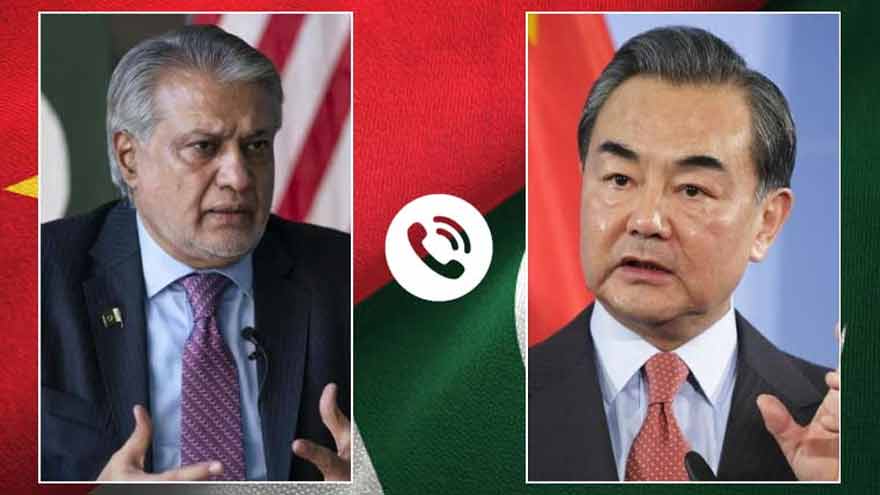
Both Rubio and Pakistan said that technical talks between the US and Iran were expected to resume in the coming days following a first round in Switzerland.
AT ODDS ON HORMUZ
Rubio also insisted on Wednesday that the US was committed to preserving the pre-war status quo of toll-free navigation in the Strait of Hormuz, which carries a substantial proportion of global oil and gas shipments.
"I know of no country on the planet that supports tolling or fees for the use of the strait," he said in Kuwait.
Iran, however, has repeatedly said it intends to retain control over the strait, along with Oman, and charge what it calls maritime service fees for crossing it.
On Wednesday US President Donald Trump wrote on social media that Iran had told Washington it would charge "NO TOLLS, NO INSURANCE COSTS, & NO OTHER CHARGES OF ANY KIND", but did not clarify whether that commitment would outlast the 60-day negotiating period.
Qatar's prime minister, meanwhile, travelled to Oman to initiate talks on the strait between the Gulf states, Iraq and Iran, a diplomat told AFP, explaining Gulf countries would push for no-charge freedom of navigation, while Iran was expected to ask for an environmental and security service fee.
Speaking to AFP on condition of anonymity, another diplomat said separate talks on reconciliation between Gulf countries and Iran were expected to be held in Saudi Arabia, though they did not specify a date.
'LIKE THE PHOENIX'
Iran's Ghalibaf reiterated Wednesday that peace in Lebanon, which was drawn into the war when Tehran-backed Hezbollah launched attacks on Israel, was a fundamental pillar of reaching a definitive agreement with the US.
"For us, the ceasefire in Lebanon has been and is as important as the ceasefire in Iran," he said.
The violence in Lebanon has ebbed in recent days, but Israel's defence minister insisted that its troops in the neighbouring country's south were going nowhere.
"We have announced that in any case we are not withdrawing and, as of this moment... there is no American demand for Israel to withdraw from Lebanon," Katz said in an interview in Tel Aviv.
In the beachside Lebanese city of Tyre, 40-year-old Hussein Hassan was welcoming customers to his barbershop, despite one of its walls being cracked and its glass facade blown away in Israeli strikes.
Tyre residents "love life and work. We shake off the dust and rise up again like the phoenix," he said proudly.
A new ceasefire was hastily announced in Lebanon after the fighting there threatened to derail the US-Iran negotiations, but there have still been attacks on a smaller scale.
The Israeli military reported carrying out two airstrikes in the south on Wednesday on suspected Hezbollah operatives it said posed a threat to troops.
Lebanon's state-run National News Agency said that "two people were killed" when an Israeli drone targeted their vehicle near the town of Kfar Rumman.