


Ukraine struggles to identify thousands of soldiers' remains as relatives ache for news
World
Many of the bodies are decaying or in fragments, so such labs are key to identifying them

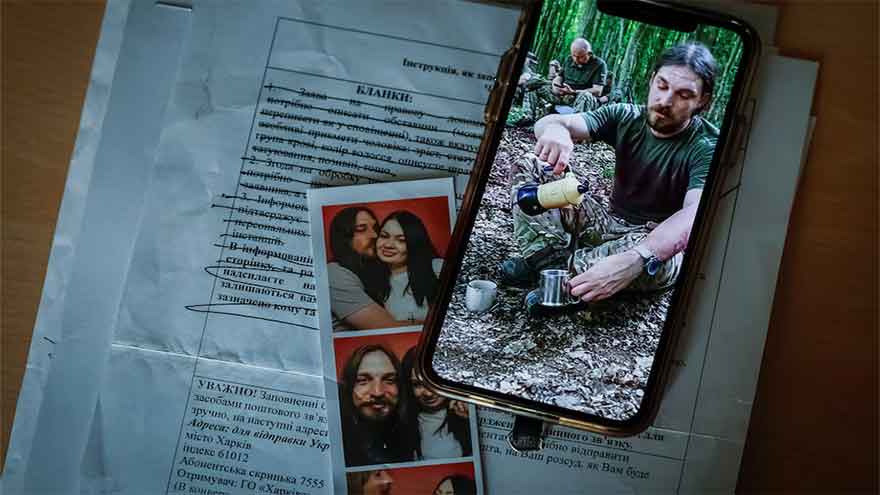
KYIV, Sept 16 (Reuters) - It's more than a year since Anastasiia Tsvietkova's husband went missing fighting the Russians near the eastern city of Pokrovsk, and she doesn't know whether he's alive or dead.
Russia does not routinely provide information about those captured or killed, and there has been no news from fellow soldiers or the International Red Cross, which can sometimes visit prisoner-of-war camps.
If Yaroslav Kachemasov was indeed killed on the front, then the recent repatriation of thousands of bodies might at least allow Tsvietkova to grieve.
Yet even that still seems a remote prospect, as Ukraine's forensic identification laboratories are overwhelmed not only by the sudden arrival of so many bodies, but also the difficulty of identifying remains that may be burned or dismembered.
The 29-year-old dentist living in Kyiv submitted a sample of her husband's DNA, filled in dozens of forms, wrote letters and joined social media groups as she sought information.
Kachemasov, 37, went missing during his second combat mission near Pokrovsk, which Russia has been attacking for months. The place where he disappeared is now occupied
"The uncertainty has been the toughest," Tsvietkova told Reuters. "Your loved one, with whom you have been together day in, day out for 11 years - now there is such an information vacuum that you simply don't know anything at all."
Since Russia launched its full-scale invasion of Ukraine in 2022, hundreds of thousands have been killed or wounded on both sides. At least 70,000 Ukrainian soldiers and civilians have been reported missing.
In the last four months, more than 7,000 mostly unidentified bodies have been brought to Ukraine in refrigerated rail cars and trucks, the piles of white plastic sacks a grim reminder of the cost of the worst conflict in Europe since World War Two.
Reuters spoke to eight experts including police investigators, the interior minister, Ukrainian and international forensic scientists and volunteers, and visited a forensic DNA laboratory in Kyiv.
Many of the bodies are decaying or in fragments, so such labs are key to identifying them.
But the process of establishing and matching each DNA profile can take many months.
Since 2022, the Interior Ministry has expanded its DNA laboratories to 20 from nine, and more than doubled the number of forensic genetics scientists to 450, according to Ruslan Abbasov, a deputy director of the ministry's forensic research centre.
But the start of large-scale swaps was a shock.
"We were used to one, two, three, 10 (bodies), and they would come in slowly," he said at a laboratory on the outskirts of Kyiv.
"Then it was 100, then it was 500. We thought 500 was a lot. Then there were 900, there were 909 and so on."
Experts in protective gear and disposable overalls run DNA tests and match profiles to missing persons. But some cases are so complicated that it can take up to 30 attempts to find a DNA match.
Ukraine has only recently begun routinely collecting DNA samples from serving soldiers in case of disappearance or death, so investigators often face the much trickier task of using relatives' DNA to find a match.
