


Iranians welcome ceasefire, concerned for future
World
Many Iranians who fled the strikes were also glad, return home after tiring stays out of the city

DUBAI (Reuters) - After 12 days of Israeli airstrikes that echoed in cities around the country, killing hundreds and sending waves of people fleeing their homes, Iranians voiced relief on Tuesday at the surprise overnight announcement of a ceasefire.
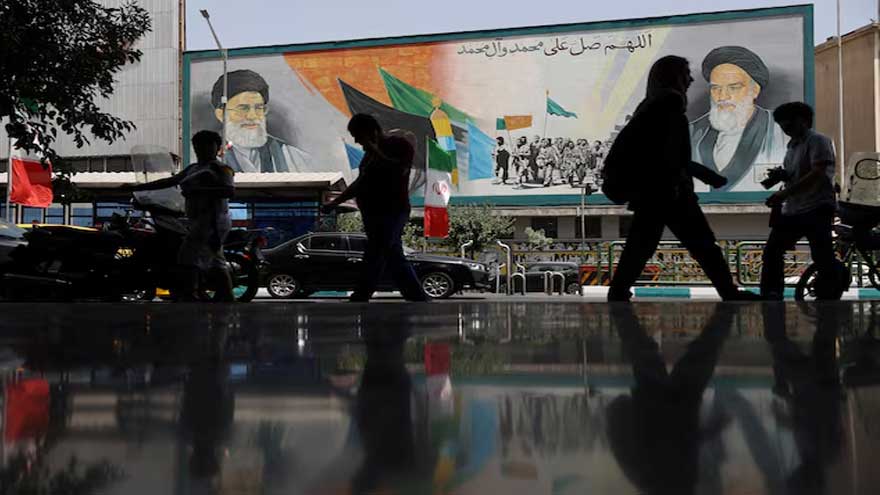
For those in the Iranian capital it brought the prospect of a clean-up, a return to normal life and the soothing - for now at least - of anxiety about a further escalation and sustained warfare.
Many Iranians who fled the strikes were also glad, able to return home after tiring, expensive stays outside the city in rented accommodation or with relatives.
"I am overjoyed. It is over and we finally can live in peace. It was an unnecessary war and we people paid the price for Israel's war-mongering designs," said Shima, 40, from Shiraz.
Just 24 hours earlier, plumes of smoke hung over parts of the capital as Israel targeted the Islamic Revolutionary Guards Corps and its paramilitary Basij militia, as well as Evin prison at the foot of the Alborz Mountains.
One man in a busy Tehran street, who asked to remain anonymous, said "It's the people who are paying the price - whether our people or theirs. Both sides are bearing the cost so it's better that this happened sooner rather than later."
Israel has repeatedly warned residents to leave large swathes of the city before it conducted airstrikes, clogging the highways out of Tehran with vast traffic jams.
Exhausted and running out of cash, many of them had started to return home even before the ceasefire was announced.
Arash, a 39-year-old government employee, had taken his family to Damavand, a mountain resort 35 miles east of Tehran that is popular for its clean air and bucolic setting.
They returned to Tehran two days ago. "My wife and two children were terrified of the bombings but renting even a modest room in Damavand for any length of time is beyond my limited budget," he said.
Noushin, 35, drove almost five hours with her husband and child to stay with her mother-in-law in Sari, near Iran's Caspian coast. But the house was already crowded with relatives seeking shelter and Noushin decided they were better off at home.
"My child misses her room. I miss my house. How long can we live like this?" she asked. "The government of Israel as well as the United States should feel ashamed after causing so much damage to our beautiful cities," she said with angry tone.
NO SIGNS OF PROTESTS
Israel launched its surprise air war on June 13, hitting nuclear sites and killing military commanders in the worst blow to Iran since Iraq invaded in 1980, and Prime Minister Benjamin Netanyahu said the strikes could result in regime change.
However, there have been no signs of significant street protests against the Islamic Republic.
Iranians contacted by Reuters, including some who oppose the Islamic Republic and have protested against it in the past, said the airstrikes had brought people to rally around national feeling in the face of what they saw as foreign aggression.
Still, for many Iranians there is anger at the top ranks of the nation's leadership, and for those returning home the reality of a sanctions-hit economy remains.
While Israel has repeatedly targeted both leaders and facilities of the internal security forces under the IRGC, state media has announced hundreds of arrests of people accused of spying.
Black security vehicles were seen on the streets of Tehran on Tuesday and dissidents expressed fear of a coming crackdown by the authorities to ward off any attempt at mass protests.
Accusations of ceasefire violations on Tuesday also raised fears that the war could reignite.
"I hope they (the Israelis) remain committed to the ceasefire. History has shown that they’ve never truly honoured it, but I still hope this time they do — because it’s in our interest and theirs as well," said one man on a Tehran street.
