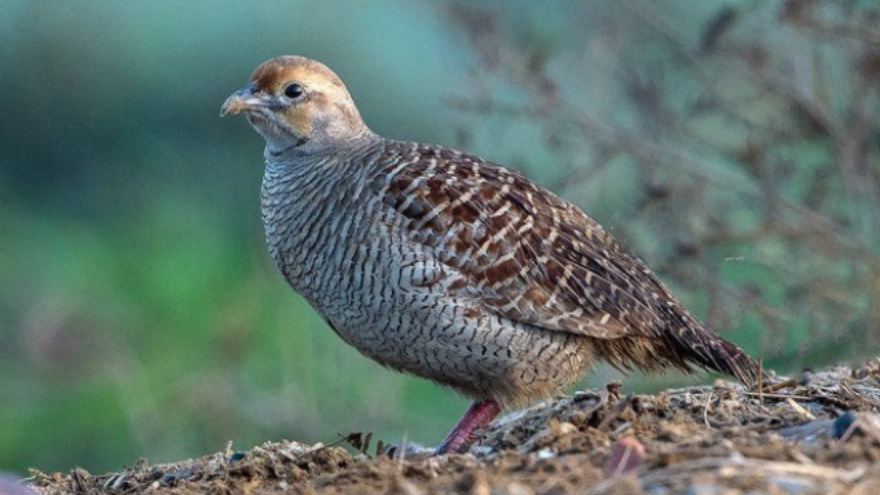
Summary Punjab introduces its first partridge hunting season, alongside Rs9.4 billion projects for wildlife conservation and eco-tourism across the Salt Range.
LAHORE (Web Desk) – Punjab has designated 80 hunting zones for partridge for the first time, with the hunting season running from 1st December to 15th February.
Legal hunting will only be allowed on Sundays at notified locations, requiring valid licences or permits.
Officials have emphasised that 80 percent of revenue from legal hunting and trophy sales will go to local communities. A reward of Rs10,000 has been set for verified information on illegal hunting, particularly of urial and chinkara.
Community-centred conservation
Chief Wildlife Ranger Punjab, Mobeen Ilahi, explained that a comprehensive new policy has been introduced this year to integrate local communities into decision-making, monitoring, and wildlife protection. “The Salt Range offers significant eco-tourism potential due to its blend of wildlife and natural landscapes, which can be managed sustainably and promoted internationally,” he said.
Limited hunting permits will be auctioned across the 80 zones, with formal applications invited from communities. These measures form part of the Chief Minister’s Community Conservation Programme, which also provides funding for breeding, rewilding, and local development initiatives.
So far this year, 16 international trophy hunts for urial have been auctioned, attracting foreign hunters to the Salt Range for wild boar and partridge hunting. According to officials, the number of permits may increase in future, depending on wildlife growth. Additionally, 15 eco-lodges will be managed by local groups to generate year-round income from tourism, nature trails, and eco-activities.
Local resistance to hunting
Several communities in the Salt Range, after consultations, have declared that no hunting will be permitted in their areas. Leaders of Union Council Kohali in Tehsil Sohawa, including villages such as Tapha Phadial, Nathot, Dial, and Dhok, have announced a total ban on all hunting.
Government permits may allow hunting on notified lands, but private property, grazing fields, crop lands, and hill areas used by locals for livestock will remain off-limits.
Rs9.4 billion conservation projects
Parallel to the hunting season, the Punjab government has approved two major initiatives worth Rs9.4 billion for wildlife conservation, habitat restoration, and eco-tourism development across the Salt Range and Koh-e-Sulaiman. These projects cover Jhelum, Attock, Chakwal, Mianwali, and the mountainous Koh-e-Sulaiman belt, where fragmented ecosystems and shrinking wildlife habitats will be restored under a community-inclusive strategy.
The first project, the Punjab Wildlife Conservation and Habitat Restoration Programme for Community-Based Conservancies, costs Rs3.9 billion. Under it, 15 lodges will be handed to registered Community-Based Conservancies to manage local conservation efforts. Plans include 20 partridge pre-release centres, eight community breeding centres (15 acres each) for urial and chinkara, and four official breeding centres (25 acres each). A 300-acre enclosure in Koh-e-Sulaiman will facilitate the scientific reintroduction of urial, chinkara, and the Sulaiman markhor.
The second project, the Rs5.5 billion Eco-Tourism Salt Range National Park, focuses on modern eco-tourism infrastructure, including four eco-lodges, a tourist restaurant, family picnic zones, hiking trails, viewpoints, cable cars, zip lines, and jeeping routes. A new Motorway M-2 interchange and supporting facilities will enhance public access while preserving the environment.
Officials highlighted that these initiatives represent the first integrated provincial model combining conservation, tourism, and community partnership. The projects, scheduled for completion by June 2027, are expected to provide sustainable income for local residents while protecting the region’s wildlife habitats.