


Death toll in Karachi rises to 11 as torrential rains bring city to a standstill
Pakistan
More than 660 die nationwide as monsoon downpours wreak havoc across Pakistan
Hundreds of feeders trip, plunging neighbourhoods into prolonged blackouts
Authorities declare emergency as Karachi braces for more downpours
Traffic police issue safety alerts amid waterlogged roads and diversions

KARACHI (Dunya News) – Life in Karachi is at a standstill on Wednesday as the Meteorological Department forecast more rains for the city in the coming 24 hours.
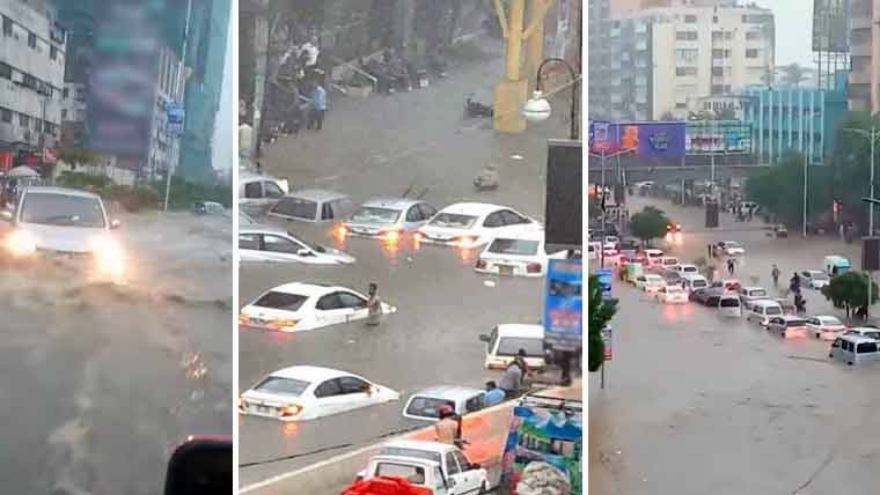
Thoroughfares and low-lying areas remain submerged after unprecedented rainfall began on Tuesday, with the city receiving 245 millimetres of rain in just 12 hours. Schools, public and private offices, courts and business centres are closed. Flight operations at Jinnah International Airport has been severely disrupted. Electricity has not yet been restored fully.
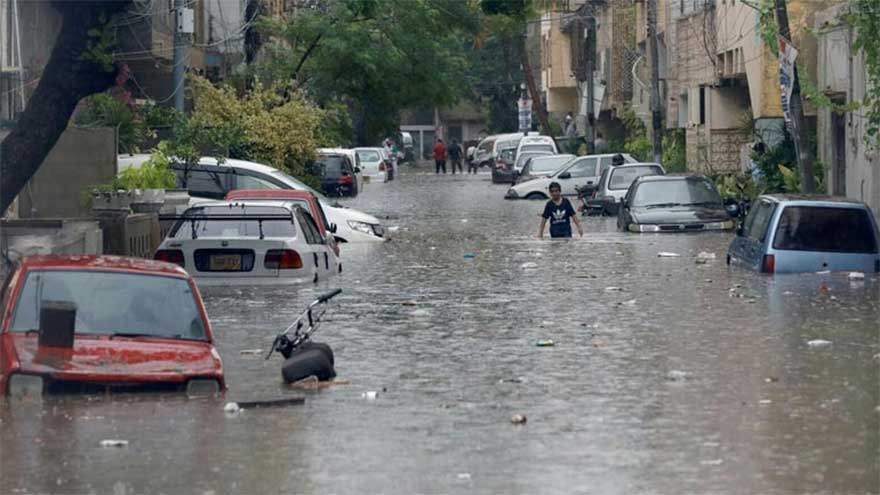
The local administration has been striving hard to drain water but the drainage systems is choked. Residents are forced to wade through waterlogged roads.
Chief Minister Murad Ali Shah and Karachi Mayor Murtaza Wahab visited the city late night, held emergency meetings to monitor the situation, and directed traffic police and rescue teams to clear roads and assist trapped residents.
The Met Office, in the meanwhile, has reported that a low-pressure area over India's Gujarat would likely to intensify and bring more rain. The current temperature of the city is 31°C with 75 percent humidity. The wind direction has changed and it is blowing from the northeast at a speed of 11 km/h.
کراچی بارش کے دوران سب سے وائرل ویڈیو pic.twitter.com/R3saUQ85k4
— Pakistan Tourism (@PakistanJannatt) August 20, 2025
Eleven people were killed in rain-related incidents on Tuesday. Torrential monsoon rains swept through the city, flooding streets, paralysing traffic and plunging entire neighbourhoods into darkness as power feeders tripped across the city.
From Surjani Town and Gulshan-i-Iqbal to Malir and Shahrah-i-Faisal, the downpour submerged roads and residential areas, forcing residents to wade through waist-deep water. The relentless showers left major thoroughfares clogged, homes inundated and civic infrastructure struggling to cope, while authorities declared a rain emergency and warned of more heavy rainfall in the days ahead.
By the afternoon, dark clouds gathered over the city before releasing heavy downpours in Surjani Town, Federal B Area, Gulshan-i-Iqbal, Qayyumabad, Gulistan-i-Jauhar, Malir, Shahrah-i-Faisal, Nazimabad and New Karachi. Streets, underpasses and neighbourhoods were quickly inundated.
In Gulshan-i-Hadeed, a continuous hour of rain submerged streets and forced floodwater into homes, leaving residents scrambling to move valuables to safety. Major intersections, including Hassan Square, Nipa Chowrangi, Jail Chowrangi, Liaquatabad No.10, Karsaz, Korangi and the Expressway, were submerged, causing traffic gridlock across the city.
areas.
— Karachi Traffic Police (@Khitrafficpol) August 19, 2025
- *Cause/Note*: Rain is causing slow traffic flow.
- *Precautionary Measures in Rain*:
1. *Reduce speed* and maintain a maximum distance from the vehicle ahead.
2. *Avoid sudden braking*.
3. *Be cautious of slippery roads* due to wet conditions.
- *Traffic Police
Deaths across Karachi
Tragedy struck as the city’s already battered infrastructure gave way under the force of the rains. At least 11 people lost their lives in wall collapse incidents across different neighbourhoods.
In Gulistan-i-Jauhar’s Block 12, a house wall crumbled, killing four family members on the spot and injuring a child. The deceased included a four-year-old girl, Maryam, her three-year-old brother Hamza, their 24-year-old mother Samia, and a 28-year-old man yet to be identified. A 10-year-old boy, also injured in the collapse, remained unidentified at the time of reporting. All victims were rushed to hospital by Chhipa ambulance services.
In another incident, an eight-year-old boy, Abdullah, died when a wall collapsed near Aqsa Mosque in Orangi Town’s Sector 11.5. He was shifted to Abbasi Shaheed Hospital.
Power breakdowns
The torrential showers triggered massive power failures, with more than 600 feeders tripping across Karachi. Supply remained disrupted as restoration work could not begin immediately, owing to submerged substations and underground cable faults.
Among the worst affected were Baldia with 68 feeders down, Bin Qasim with 52, Defence with 50, Gulshan-i-Iqbal with 46, Gulistan-i-Jauhar with 62, Korangi with 59, Orangi with 82, and Society and Surjani with 68 and 57 respectively. Feeder trips were also reported in Liaquatabad, Nazimabad and Uthal in Balochistan.
Neighbourhoods including North Karachi, Liaquatabad, PIB Colony, Jamshed Road, Old City Area, Mehmoodabad, Korangi, Landhi and Shah Faisal Colony remained without electricity for hours. The Sindh Secretariat was also affected, where the roof of Barrack No.84 collapsed due to persistent rain, though no casualties were reported.
Emergency measures
Sindh Chief Minister Syed Murad Ali Shah directed all civic, rescue and traffic departments to remain on high alert. He ordered Karachi’s mayor to mobilise machinery and manpower for immediate drainage, while urging citizens to avoid unnecessary travel during heavy showers.
Shah further instructed traffic police to remain alert at low-lying and busy junctions, advising the public to stay away from power poles and weak infrastructure. The provincial disaster management authority, police and local administrations were told to coordinate closely to minimise risks from flooding.
The Pakistan Meteorological Department (PMD) forecast three more days of intermittent rains with thunderstorms in Karachi, warning of possible heavy falls in parts of Sindh. Saadi Town received the highest rainfall at 35.8mm by 8am, followed by Gulshan-i-Maymar at 33.3mm, Nazimabad at 26mm, Surjani Town at 7mm and Defence Phase VII at 3mm. The minimum temperature was recorded at 28°C with 85 per cent humidity.
Meanwhile, the Karachi Metropolitan Corporation declared a rain emergency, cancelling all staff leave and establishing a Rain Emergency Cell. Fire brigade units and Urban Search and Rescue teams were placed on standby. The East Zone police chief instructed officers to remain present in their jurisdictions, ensure traffic movement, and safeguard citizens’ lives and property.
At 3:37pm, Karachi Traffic Police issued an update warning of slow movement on key roads including MA Jinnah Road, University Road, I.I. Chundrigar Road, Guru Mandir, Gulbai Chowk and Jinnah Avenue. Citizens were urged to maintain low speeds, avoid sudden braking and keep safe distances. Traffic was diverted at Nazimabad Underpass, where accumulated water rendered the route impassable.
Locations*:
— Karachi Traffic Police (@Khitrafficpol) August 19, 2025
- *Nazimabad Underpass*
- *Liaquatabad Underpass*
- *Gharibabad Underpass*
- *Cause*: Rainwater accumulation
- *Alternative Route*: Traffic is being diverted above the underpasses
- *Message to Public*: Citizens are
Nationwide death toll
Karachi is not the only city reeling under heavy monsoon showers. Across Pakistan, the death toll from rain-related incidents has climbed to 660. Khyber Pakhtunkhwa bore the heaviest losses, with 392 fatalities, followed by Punjab with 164, Gilgit-Baltistan with 32, Sindh with 29, Balochistan with 20, Azad Jammu and Kashmir with 15 and Islamabad with eight.
Among the dead were 394 men, 95 women and 171 children, while injuries nationwide reached 935.
Punjab recorded the highest number of injuries at 582, followed by 245 in Khyber Pakhtunkhwa, 40 in Sindh, 37 in Gilgit-Baltistan, 24 in AJK, four in Balochistan and three in Islamabad.
670 dead, 25,000 rescued as flood relief operations continue
Fresh forecasts warned of heavy rainfall in Kashmir, Gilgit-Baltistan, Murree, Galiyat, Quetta, Zhob, Kalat, Lahore, Attock, Rawalpindi, Peshawar, Nowshera, Tharparkar, Umerkot, Mithi and Thatta in the next 24 hours, with authorities warning of possible flooding in low-lying districts.
Sindh Chief Secretary Asif Haider Shah instructed the PDMA, district administrations and Rescue 1122 to remain in constant contact with PMD and continue drainage operations. All deputy commissioners were ordered into the field to oversee relief measures.
Monsoon rains, stretching from June to September, remain vital for replenishing reservoirs yet continue to overwhelm urban infrastructure, triggering deadly floods and displacing communities in densely populated areas.
