


Unexpected finding: coffee helps bacteria survive in body
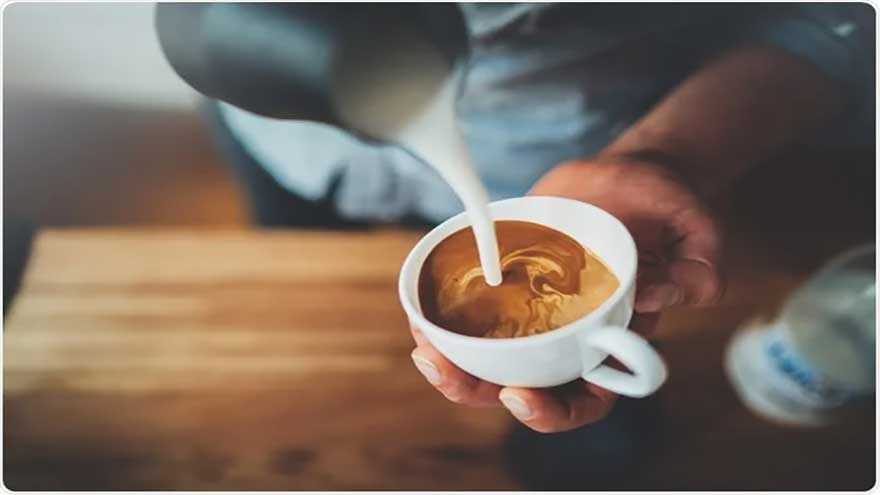
It helps bacteria resist antibiotics in your gut

(Web Desk) - Coffee perks you up – but it could also be energizing bacteria, making them more resistant to antibiotics. This is the unexpected finding from a team of researchers led by Professor Ana Rita Brochado at the University of Würzburg.
The study shows that certain food ingredients, including caffeine, make some antibiotics work less effectively.
This doesn’t mean caffeine kills antibiotics directly. But it does cause subtle changes inside bacteria like E. coli.
These changes can block antibiotic entry, helping the bacteria survive. You won’t feel anything after that cup of tea, but the microbes in your gut might get more stubborn.
Bacteria notice what’s around them. They don’t just sit there waiting to die. E. coli, for example, reacts to chemical signals in its environment by flipping certain genes on or off. This gives it more control over what gets in and out of the cell.
Professor Brochado’s team tested 94 substances: antibiotics, human drugs, and common food ingredients.
The researchers focused on seven genes that affect transport proteins – tiny pores and pumps that regulate flow in and out of bacteria. Change these proteins, and you change how much antibiotic reaches the inside.
Some changes were big. Others were tiny. But one thing was clear: bacteria don’t treat caffeine like background noise.
The researchers found that caffeine activates a gene called Rob. Once Rob switches on, it sets off a chain reaction. Several transport proteins shift behavior, and the bacteria start blocking out antibiotics like ciprofloxacin.
“Caffeine triggers a cascade of events starting with the gene regulator Rob and culminating in the change of several transport proteins in E. coli, which in turn leads to a reduced uptake of antibiotics such as ciprofloxacin,” explained Professor Brochado.
So caffeine doesn’t kill antibiotics. It just makes it harder for them to get inside the cell. The bacteria do not become fully resistant – they just become harder to kill.
The research suggests that bacteria can adapt based on diet and environment, even without new mutations or resistance genes.
“Our data show that several substances can subtly but systematically influence gene regulation in bacteria,” noted study lead author Christoph Binsfeld, a PhD student in the Department of Microbiology at the University of Würzburg.
The scary part? These effects don’t show up on standard resistance tests. You might think an antibiotic will work fine. But in your gut, after your morning coffee, bacteria might disagree.
You might expect this caffeine effect to happen across similar bacteria. But it doesn’t. The team also looked at Salmonella enterica, a close cousin of E. coli. Same antibiotic, same caffeine.
In Salmonella, caffeine didn’t reduce drug uptake. The difference likely comes down to how each species controls transport proteins. One tweaks the gates and the other doesn’t.
This shows that resistance isn’t just about which genes bacteria have. It’s also about how they use them – and when.
Coffee weakens antibiotic effects
