Summary Bushra reflected on her life, career and creative journey, but was direct when addressing the state of comedy and entertainment in Pakistan.
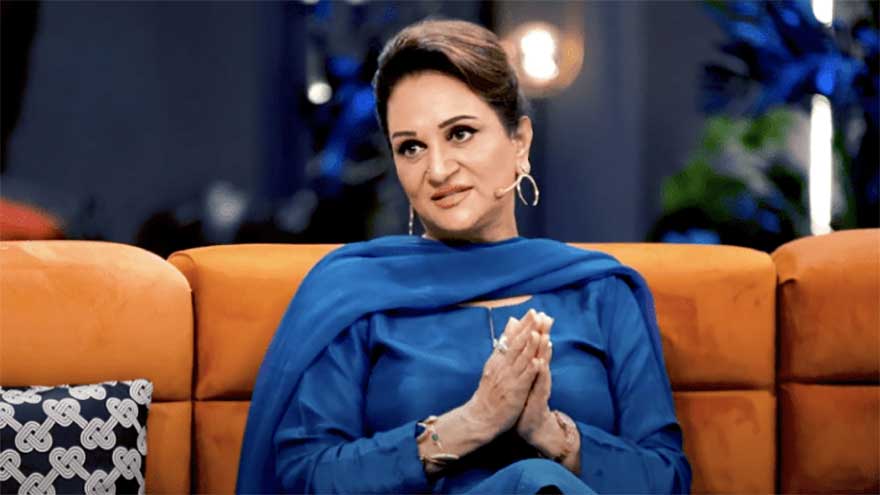
(Web Desk) - Bushra Ansari has criticised the declining standards of comedy, saying vulgarity and insolent behaviour are now being mistaken for humour.
The veteran actor, singer and playwright made the remarks while speaking at Sindh Madressatul Islam University’s Popular Lecture Series.
Bushra reflected on her life, career and creative journey, but was direct when addressing the state of comedy and entertainment in Pakistan.
Bushra said that humour has seen a drastic change over the years, with audiences now responding to content that lacks depth or refinement.
She said: “People have started laughing at vulgarity. Content creators and influencers, too, these days think that insolent behaviour is amusing, but it is not.”
Contrasting this with a previous era of comedy, she added: “We used to make people laugh with simple and clean humour. We still do.
“If our content creators are successful today with this kind of content, then it is our failure.”
Bushra Ansari said her own grounding came from working alongside legends of Pakistani entertainment, including Farooq Qaiser, Moin Akhtar and Anwar Maqsood.
She said those experiences shaped her understanding of humour as something meaningful rather than crude or attention-seeking.
The actress also criticised the broader television industry, saying production houses increasingly view dramas as financial investments rather than artistic projects.
Bushra explained: “That’s why stories are being repeated and there is hardly anything new coming out.
Despite this, Bushra Ansari said Pakistani dramas still retain a sense of realism that sets them apart from other industries.
She stated: “But despite this, our dramas have realism. They don’t have that in India where they may show women laden with makeup and jewellery working in kitchens.”
Bushra also spoke candidly about ageing in the industry and the lack of strong roles for older women.
She said: “No writer here is writing good and meaningful roles for women of my age now.”