Summary Rising commodity prices due to global uncertainties could further impact GDP growth
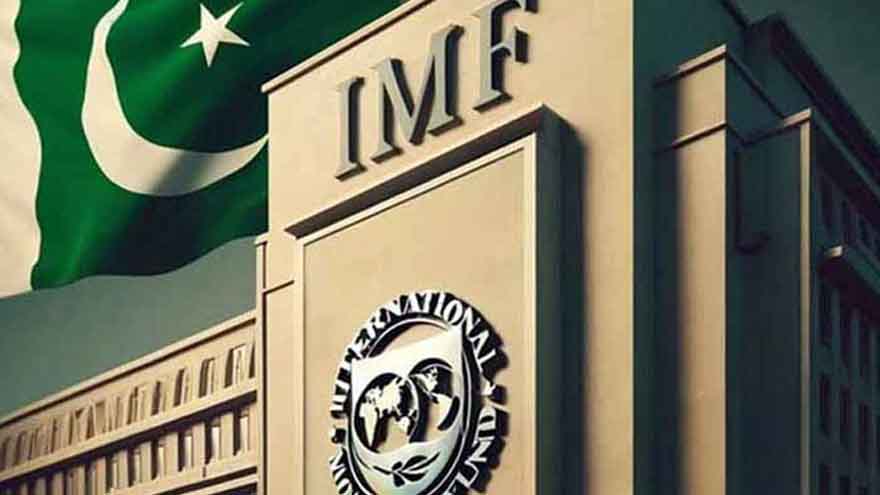
ISLAMABAD (Mudasar Ali Rana) – The government on Tuesday requested the International Monetary Fund (IMF) to revise the macroeconomic framework for the ongoing fiscal year 2025-26, citing significant economic disruptions caused by recent floods.
Reliable sources indicate that discrepancies have emerged between the government’s and the IMF’s economic estimates during policy level talks currently underway in Islamabad.
According to official briefings, the government has informed the IMF delegation that due to flood related losses, GDP growth may decline from the earlier projected 4.2% to around 3.5%. Inflation is estimated to remain at 8%, while foreign exchange reserves are expected to hover around $15 billion.
However, production targets for major crops are likely to be met. IMF mission acknowledged that Pakistan continues to face serious external challenges, including regional tensions that could put pressure on external stability.
Read more: Provincial budget surplus target unachievable due to floods, IMF informed
Rising commodity prices due to global uncertainties could further impact GDP growth and investor confidence. Both sides are now working towards finalizing the draft of the Memorandum of Economic and Financial Policies (MEFP), with new structural benchmarks likely to be introduced for the next review.
Differences remain in macroeconomic projections, which will be further discussed in upcoming meetings. The government has also raised concerns over the fiscal impact of the floods, stating that the earlier estimate of Rs370 billion in damages has now surpassed Rs700 billion.
In response, Pakistan has approached international institutions including the World Bank, Asian Development Bank, European Union, and the UNDP for technical support to conduct a Post-Disaster Needs Assessment (PDNA) and produce an updated report.
Discussions have also included a review of provincial primary budget surplus targets.
Moreover upcoming sessions with the IMF team will cover key areas including the Reko Diq project, focusing on investment, import impacts on the current account, export potential, incentives, project duration, and broader macroeconomic and fiscal implications.
Further talks are scheduled on the country’s new tariff and auto policies, which are key components of the ongoing economic reforms under the IMF program.