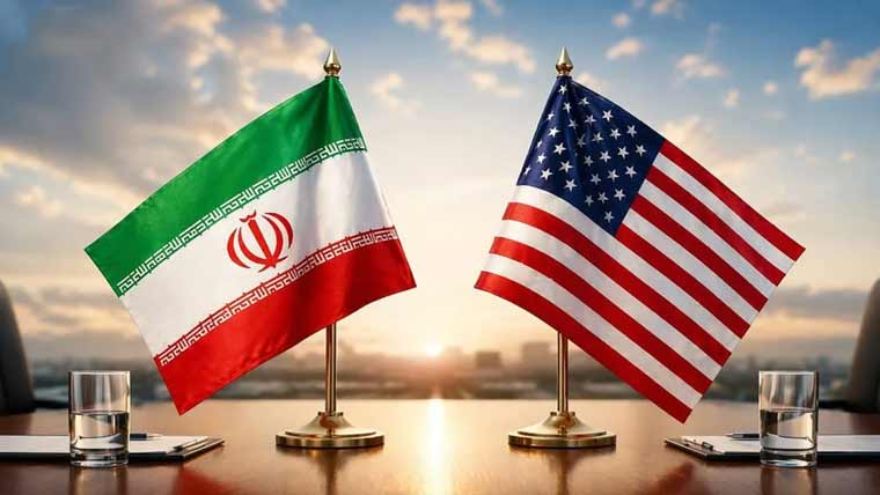
Summary US and Iran have confirmed signing a memorandum of understanding aimed at ending hostilities, reopening the Strait of Hormuz, and launching phased negotiations on nuclear and regional issues.
WASHINGTON/TEHRAN (Web Desk) – The United States and Iran have announced the signing of a memorandum of understanding (MoU) aimed at ending hostilities between the two sides, opening the Strait of Hormuz to maritime traffic, and establishing a phased framework for negotiations on nuclear and regional issues.
The agreement, described by a senior US official as a major diplomatic breakthrough, was signed digitally by US President Donald Trump, Vice President JD Vance, and Iranian parliament speaker Mohammad Bagher Qalibaf. Officials said the detailed text of the agreement would be released within 24 to 48 hours, while technical-level discussions are expected to begin later this week.
A signing ceremony is expected on Friday, with earlier indications suggesting Switzerland as the likely venue. US officials noted that while the framework has been agreed, procedural and technical elements still need to be finalised before full implementation details are published.
Strait reopening
At the centre of the agreement is the immediate reopening of the Strait of Hormuz, a vital global corridor for crude oil and liquefied natural gas shipments. The US official said restrictions previously imposed by Washington would be lifted, enabling a gradual but significant rise in commercial shipping activity.
“You will see significant increase in traffic in the Strait of Hormuz, actually starting already, and that will ramp up slowly over time,” the official said, speaking on condition of anonymity. While normal traffic levels are not expected to return within two weeks, authorities indicated a steady increase in vessel movement as implementation begins.
In parallel remarks, US President Donald Trump said many oil-laden ships were already beginning to move out through the strait and described the corridor as set to become “open and toll-free”. He also suggested limited international maritime presence could be considered to support stability.
Nuclear and phased diplomacy
The agreement outlines a phased approach to wider political and security negotiations. Iran’s nuclear programme will not be resolved in the initial stage but will instead be addressed in later rounds of talks, reflecting what officials described as a sequencing strategy designed to stabilise conditions first.
The deal also links broader implementation to regional dynamics, particularly developments involving Lebanon, which has remained a key sticking point throughout negotiations. The US official said progress in other areas may depend on reduced tensions involving regional actors.
Iranian Foreign Minister Abbas Araqchi reiterated that any lasting settlement must include a complete halt to Israeli military operations in Lebanon, reinforcing Tehran’s position that regional de-escalation is central to the agreement’s success.
Regional responses
The announcement has triggered immediate reactions across the region. Israel has stated it will not withdraw from territory it has seized in Lebanon and has warned it would respond if Iran conducts attacks linked to developments in the area, adding uncertainty to the agreement’s broader regional framework.
Lebanese group Hezbollah has welcomed the US-Iran understanding, describing it as a potential step towards reduced hostilities. However, the response also reflects ongoing complexities surrounding enforcement and compliance across multiple conflict zones.
In Iran, parliament speaker Mohammad Bagher Qalibaf described the agreement as a “great stride toward final victory”, posting on social media that Iran had achieved progress through what he called national resistance. The statement underlined Tehran’s framing of the deal as both diplomatic and symbolic.
Next steps
The reopening of the Strait of Hormuz is expected to have immediate implications for global energy markets, given its role as a key transit route for a significant share of the world’s oil supply. US officials said shipping activity would begin increasing immediately and continue rising gradually, although full normalisation could take longer than two weeks.
President Trump said the text of the MoU would be released “pretty soon”, likely after Friday, signalling that public disclosure of the agreement will follow the formal signing process.
Officials from both sides emphasised that the MoU represents only the first stage of a wider diplomatic process. Technical consultations are expected to focus on enforcement mechanisms, maritime monitoring arrangements, and the sequencing of subsequent political negotiations.
Further details are anticipated within the next 24 to 48 hours, as both Washington and Tehran prepare for additional rounds of engagement that will determine how the framework is translated into operational commitments across security, trade, and regional stability domains.
Attention now turns to the implementation phase, particularly the pace at which shipping through the Strait of Hormuz increases and how regional stakeholders respond to the evolving diplomatic landscape.