Summary Donald Trump thanks Iran after Strait of Hormuz reopens following Lebanon ceasefire, easing global oil concerns.
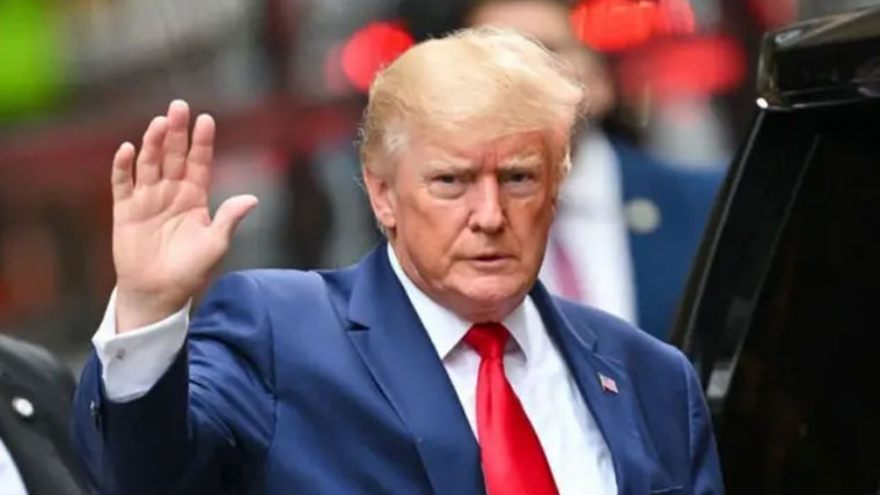
WASHINGTON (Dunya News) – US President Donald Trump has publicly thanked Iran after it announced the full reopening of the strategically vital Strait of Hormuz, a move that signals a temporary easing of tensions in a region shaken by weeks of conflict.
In a statement shared on social media, Trump confirmed that Iran had declared the waterway open for full passage. He expressed gratitude for the decision, calling attention to the importance of restoring maritime traffic through one of the world’s most critical energy corridors.
The US president added that while the strait is now open for business and transit, a naval blockade linked specifically to Iran would remain in place until ongoing negotiations between the two countries are fully completed.
The development follows an announcement by Iran’s Foreign Minister Abbas Araqchi, who said the Strait of Hormuz had been reopened to all commercial vessels. The decision comes in the context of a ceasefire agreement linked to Lebanon, under which hostilities involving Israel and Iran-backed groups have been temporarily halted.
Araqchi stated that commercial shipping would continue without interruption for the duration of the truce, which is expected to last 10 days. He emphasised that vessels must adhere to designated routes outlined by Iran’s Ports and Maritime Organisation to ensure safe and organised passage through the strait.
Iran reopens Strait of Hormuz following Lebanon ceasefire
The Strait of Hormuz, a narrow maritime chokepoint connecting the Persian Gulf to the Arabian Sea, is responsible for the transit of nearly one-fifth of the world’s oil and liquefied natural gas. Its closure during the recent escalation raised fears of a severe global energy shock, with markets reacting sharply to disruptions in supply.
The conflict, which began on February 28 following a US-Israeli military campaign targeting Iran, has reportedly resulted in thousands of casualties and widespread instability across the Middle East. The closure of the strait during this period intensified concerns among global economies already facing uncertainty.
Following Iran’s announcement, oil prices dropped by approximately 9 percent, extending earlier declines as traders responded to the prospect of restored supply routes. The easing of pressure on energy markets offered a degree of relief after days of volatility.
At the same time, the International Monetary Fund has revised down its global growth forecasts, warning that prolonged conflict in the region could push the world economy closer to recession. The reopening of the strait may help stabilise short-term projections, although risks remain tied to the fragile ceasefire.
Trump also indicated that diplomatic efforts between Washington and Tehran are advancing. He said the two sides are close to reaching an agreement and suggested that talks could take place soon, potentially in Islamabad. However, logistical challenges have cast uncertainty over the timing of any immediate meeting.
Pakistan is understood to be playing an active diplomatic role in facilitating dialogue between the United States and Iran, with expectations that the next round of negotiations could be hosted in the country.