Summary Isfahan province is considered a strategic hub for Iran’s defence infrastructure. The region is also home to critical nuclear facilities such as Natanz
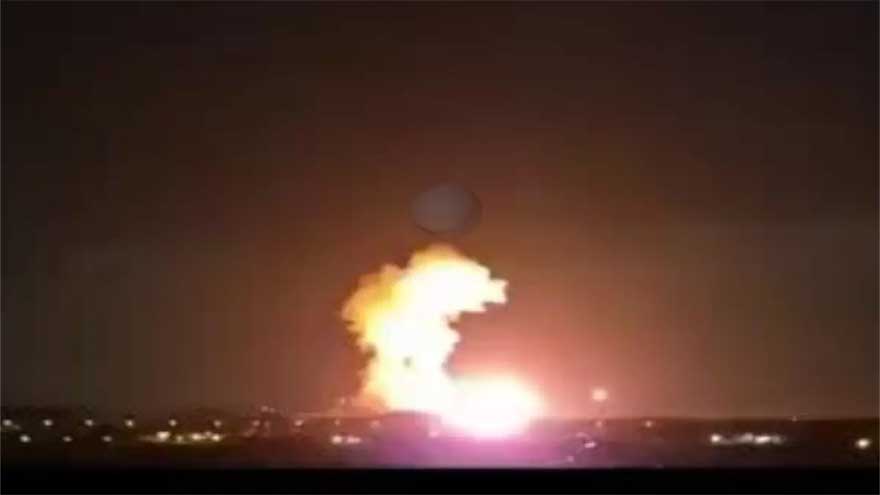
(Web Desk/Agencies) – The US-Israeli forces targeted military sites in Iran’s central Isfahan province on Tuesday morning with bunker-buster bombs, according to Iranian officials, as tensions in the region continue to escalate amid the ongoing conflict.
Iran’s Fars News Agency quoted Akbar Salehi, a security official at the provincial governor’s office, as saying that preliminary investigations indicate several “military sites” were hit, reported Al Jazeera.
However, he did not disclose specific locations. Authorities have yet to confirm the extent of the damage or report any casualties.
Isfahan province is considered a strategic hub for Iran’s defence infrastructure. It hosts key military installations, including the Badr Airbase, the 8th Shekari Airbase, and the 4th Air Force base. The region is also home to critical nuclear facilities such as Natanz, making it highly sensitive in the context of the current conflict.
According to Wall Street journal, the United States targeted a major ammunition depot in Isfahan using 2,000-pound bunker-buster bombs, suggesting a significant escalation in the scale and intensity of the strikes.
Meanwhile, the conflict appears to be widening across the region. The United Arab Emirates reportedly experienced one of the heaviest waves of Iranian attacks since the early days of the war, raising concerns about further regional spillover.
TRUMP 'WILLING TO END WAR WITHOUT REOPENING HORMUZ'
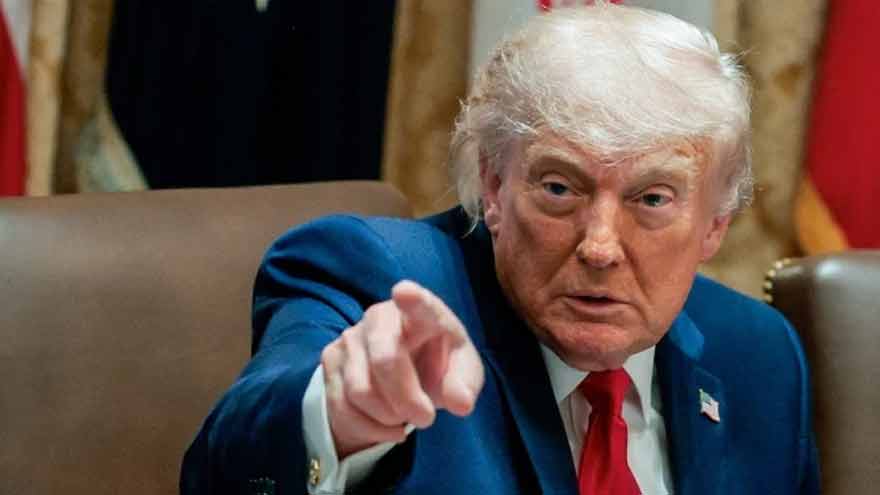
In Washington, President Donald Trump has indicated to aides that he may be open to ending the military campaign against Iran, even if the strategically vital Strait of Hormuz remains largely closed. Officials described the situation as complex, noting that reopening the critical shipping route could require a separate and prolonged operation.
The WSJ reported that Trump and his aides have assessed in recent days that a mission to pry open the chokepoint would push the conflict beyond the president’s timeline of four to six weeks.
Trump decided that the US should achieve its main goals of hobbling Iran’s navy and its missile stocks and wind down the fighting, according to WSJ. The US would then pressure Iran diplomatically to resume the flow of trade and press allies in Europe and the Gulf to take the lead, it reported.
IRAN DENIES TALKS WITH US, SLAMS ‘NON-STARTER’ DEMANDS
The spokesman for Iran’s Foreign Ministry, Esmaeil Baghaei, has said that there are no negotiations with the US, and this is something that the Iranians have been repeating every single day, despite the claims from the Americans that talks are ongoing and advancing, and even that the Iranians have accepted most of those 15 points.
The Iranians say there is an exchange of messages through intermediaries and that they are now aware of those 15 points, but they think they are non-starters. They think these extreme demands… Iran cannot accept, because they compromise the country’s national integrity and sovereignty, and include calls to give up on its nuclear programme and the Strait of Hormuz.
On the other hand, the Americans see the five demands that were submitted by Iran in the same light, because they include, for instance, calls for the US to close its military bases in the Gulf region.
So, there is a huge gap between the two sides, and the Iranians are saying their focus is not on these negotiations, but rather on defending their nation. That’s why they have been launching wave after wave of missiles and drones on Israel and on other targets in the region.
Today, they announced an 87th wave and said that it has been conducted by the Iranian Navy. That’s a message to the Americans, particularly to Trump, who said that the Iranian navy was completely obliterated during the first days of the war.
US SAYS TRUMP ‘INTERESTED’ IN ASKING ARAB COUNTRIES TO PAY FOR WAR ON IRAN
White House spokesperson Karoline Leavitt says passing the conflict’s costs off to regional states is ‘an idea’ that Trump has.
The White House has suggested that US President Donald Trump will ask Arab countries to cover the cost of the United States’ war against Iran, estimated to be in the tens of billions of dollars.
Trump’s spokeswoman, Karoline Leavitt, was asked on Monday whether Arab states should pay for the war, as when US allies helped fund Washington’s intervention during the Gulf War in 1990.
“I think it’s something the president would be quite interested in calling them to do,” Leavitt told reporters.
“I won’t get ahead of him on that, but certainly it’s an idea that I know that he has, and something that I think you’ll hear more from him on.”
The US led a global coalition of dozens of countries during the Gulf War to fend off Iraq’s invasion of Kuwait at the request of the country and several of its Arab neighbours.
In turn, states in the region and coalition members, including Germany and Japan, raised $54bn (the equivalent of $134bn today) to help pay for the US involvement.
This time, however, the US and Israel went to war with Iran unilaterally without involving their allies and regional countries.
Earlier this month, Sean Hannity, a right-wing commentator close to Trump, said any ceasefire deal should include making Iran pay for the cost of the war, which has killed nearly 2,000 Iranians.
“They must agree to repay America in oil for the entire cost of this entire military operation,” Hannity said.
However, Iran has set US compensation for war damage as one of its conditions.
Iran has retaliated against US and Israeli strikes with missile and drone attacks across the entire Middle East.
Iranian officials have said they are targeting US assets in the region, but Tehran has launched attacks against civilian sites, including hotels, airports and energy infrastructure, in several Gulf countries.
US media outlets reported earlier this month that officials told members of the US Congress in a classified hearing that the first six days of the war cost $11.3bn.
The Center for Strategic and International Studies estimated that the number rose to $16.5bn by day 12 of the conflict. The bill is likely far higher now as the war enters its 31st day.
The White House is seeking at least $200bn in additional military spending from Congress to help fund the military campaign in Iran and replenish the Pentagon’s munition stockpiles.
Beyond the immediate price tag for the US military, the war – which saw Iran close down the Strait of Hormuz – has sent global energy prices soaring.
The average price of one gallon (3.8 litres) of petrol in the US is now $3.99, according to an American Automobile Association (AAA) tracker, more than $1 higher than before the war started.
On Monday, Leavitt reiterated the Trump administration’s assertion that the surge in energy prices will be outweighed by the gains of weakening Iran.
“The overall message, as we repeatedly stated again: These are short-term actions and short-term price fluctuations for the long-term benefit of ending the threat that Iran poses to the United States of America, our troops and our allies in the region,” she told reporters.
Iran argues that it was attacked first in the middle of diplomatic talks, and it did not pose a threat to the US or the region.
ISRAELI MILITARY SAYS FOUR SOLDIERS KILLED IN SOUTHERN LEBANON
The Israeli military said on Tuesday that four of its personnel were killed and two wounded during combat in southern Lebanon.