Summary There are also worries that South Korea’s ties with Japan could turn sour because of the recent inauguration of Japan’s Takaichi, who has right-wing views on her country’s wartime aggressions.
SEOUL, South Korea (AP) — South Korea’s new president will host leaders from 20 countries for the upcoming Asia-Pacific Economic Cooperation summit, where the American and Chinese leaders are set to hold a high-stakes meeting on the sidelines.
The two-day annual APEC summit, which opens in Gyeongju on Friday, is likely to test Lee Jae Myung’s diplomatic abilities as he faces tough foreign policy challenges.
Lee, in office less than five months, seeks to get along with friends and rivals alike with his self-proclaimed “pragmatic diplomacy.” But prospects for greater cooperation with Washington and Tokyo are in doubt due to Trump’s tariff war and the election of a new ultraconservative leader in Japan. Tensions with North Korea remain high after Pyongyang snubbed Lee’s overture and bolstered ties with Russia and China instead.
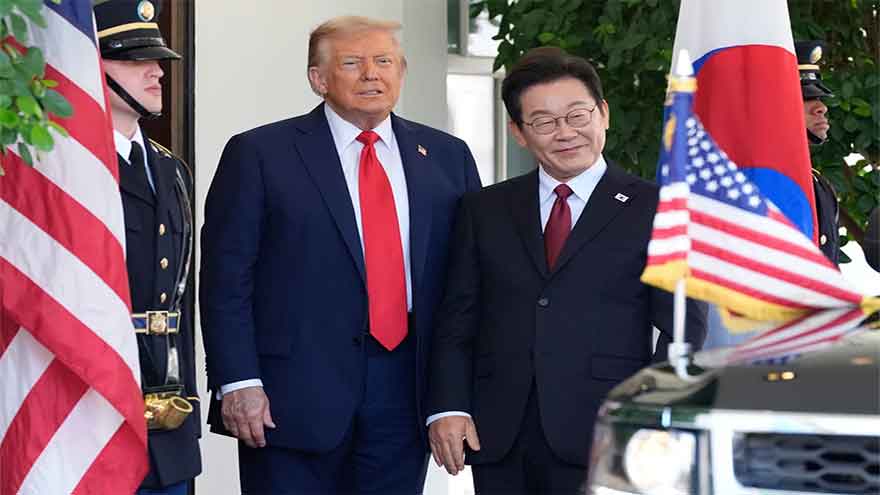
In Gyeongju, Lee is expected to hold one-on-one meetings with U.S President Donald Trump, Chinese President Xi Jinping and new Japanese Prime Minister Sanae Takaichi, while presiding over APEC events.
Experts say the summit may offer positive optics for Lee, but it doesn’t guarantee long-term diplomatic success.
This year’s APEC summit, the first in South Korea in 20 years, is overshadowed by Thursday’s Trump-Xi meeting, whose results are expected to have a major impact on the global economy. Trump will likely skip APEC’s main conference, but experts say Lee could still align with other countries to promote free trade and multilateralism.
South Korean officials say they’ve been holding ministerial-level communications with other countries to prod all 21 to issue a joint declaration at the end of the summit in an effort not to repeat the failure to reach one in 2018 in Papua New Guinea due to U.S.-China discord over trade.
“Of course, there are some lingering issues, but many have been resolved. We’re making efforts toward the adoption of a ‘Gyeongju Declaration’ and acting as a mediator between the U.S. and China,” South Korea’s national security director Wi Sung-lac told local broadcaster KBS on Sunday.
Top South Korean officials have been recently flying in and out of Washington to finalize a trade agreement with the U.S., but it’s unclear if the two countries can strike one in time for the APEC summit.
South Korea’s trade minister, Kim Jung-Kwan, told lawmakers Friday that Washington and Seoul remain “sharply divided” over how much of South Korea’s promised $350 billion U.S. investment package should be provided as direct cash payments under a July deal aimed at averting the Trump administration’s highest tariffs.
There are also worries that South Korea’s ties with Japan could turn sour because of the recent inauguration of Japan’s Takaichi, who has right-wing views on her country’s wartime aggressions.
Relations between the Asian neighbors and their trilateral military cooperation with the U.S. have improved in recent years. But Seoul-Tokyo ties previously experienced on-again, off-again setbacks due to grievances stemming from Japan’s past colonial rule of the Korean Peninsula. There are also questions about whether a trilateral Seoul-Tokyo-Washington partnership would continue to grow amid Trump’s “America first” policy.
Kim Tae-hyung, a professor at Seoul’s Soongsil University, said Seoul and Tokyo are more likely to continue to tighten cooperation as they both struggle to deal with Trump’s unilateral push to reset the global trade order and American security commitments to them.