Summary When his death comes, it will pitch the global Tibetan community into uncertainty, perhaps for years
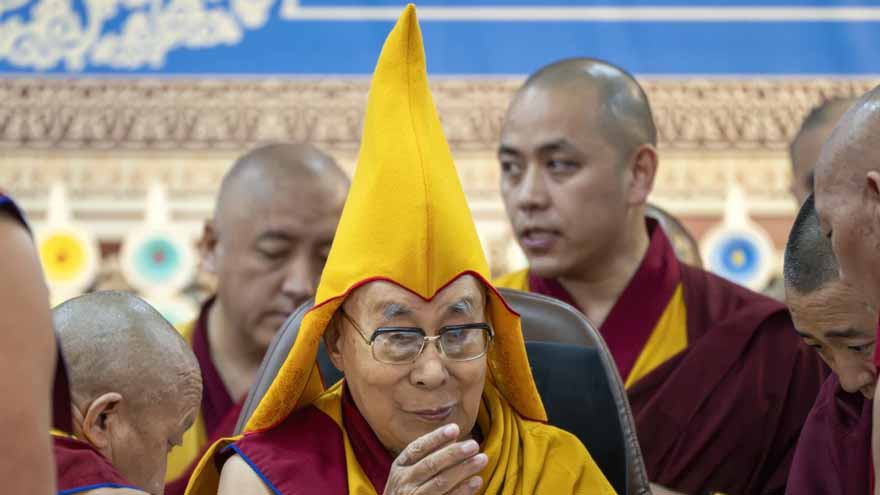
DHARAMSHALA, India (AP) — The Dalai Lama has announced that he intends to reincarnate, paving the way for a successor to take on a mantle stretching back 500 years after his death.
But as he approaches his 90th birthday, that news hasn’t eased the worries of Tibetan Buddhists who wonder: What will happen when this Dalai Lama is gone?
For decades, the 14th Dalai Lama has been more than a spiritual leader. He has sustained a nation in exile and managed to build a community that’s kept the Tibetan culture and identity alive. He is the China -reviled spokesperson for a Tibetan homeland that many, like him, can see only from afar. He has received a Nobel Peace Prize and been courted by royalty, politicians and Hollywood stars, helping him draw global attention and support for Tibet.
When his death comes, it will pitch the global Tibetan community into uncertainty, perhaps for years. His successor will have to be found through the traditional process of reincarnation. China, whose troops took control of Tibet in 1950, says it will reject anyone chosen without Beijing’s consent.
Tibetans in India’s Himalayan town of Dharamshala, the Dalai Lama’s home in exile, and scattered around the world fear a new onslaught on their cultural and religious identity.
“The absence of His Holiness would be a huge setback for the Tibetans,” said Penpa Tsering, the head of the democratically elected Tibetan government-in-exile. “The responsibility lies on us as to how we carry forward the legacy of His Holiness.”
A long gap
The Dalai Lama has become one of the world’s most recognizable figures while leading a Tibetan diaspora through their struggle for autonomy and opposition of China’s control of Tibet. He has not named a successor, but he says they will be born in the “free world” — outside China.
Previous Dalai Lamas have been identified by senior monastic disciples, under strict religious rituals meant to identify their predecessor’s reincarnation. Monks interpret signs, consult oracles and send search committees to Tibetan households looking for a child who exhibits the qualities of the Dalai Lama.
All of this takes years of effort, leaving a leadership vacuum. Years of religious education and training are needed before the identified successor grows up and takes up full responsibilities as spiritual leader.
China has already sought to elevate other spiritual figures, particularly Tibetan Buddhism’s No. 2 figure, the Panchen Lama, whose legitimacy is highly contested by many Tibetans at home and in exile.
Gyaltsen Norbu was installed by Beijing as the 11th Panchen Lama in 1995 after followers of the Dalai Lama recognized a different boy as the Panchen’s incarnation. That boy disappeared soon after.
Joy and stubbornness
And there’s no guarantee the successor will have the current Dalai Lama’s charisma, or his ability to balance a sense of joy with the stubbornness needed to counter China.
“He is a fulcrum, he’s the epitome of the Tibetan movement,” said writer and activist Tenzin Tsundue, who was born in India.
Tsundue for years has advocated for Tibet’s autonomy. To him, the current Dalai Lama’s absence will be hugely felt.
Like many other Tibetans, however, his hopes are pinned on the government in exile. “How is home not anything but a genuine human demand?” he added.