Summary Release of Taliban fighters from an Afghan jail triggered condemnation from the United States.
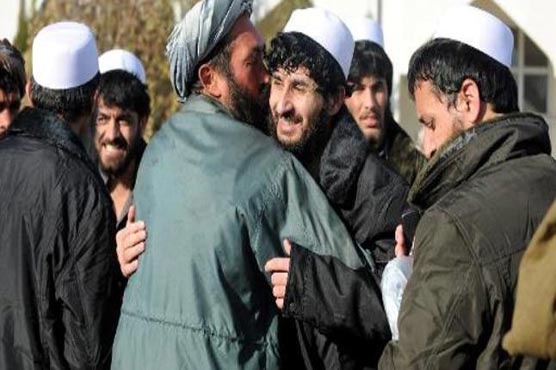
KABUL (AFP) - Scores of alleged Taliban fighters walked free from an Afghan jail Thursday, triggering condemnation from the United States, as President Hamid Karzai accused Washington of "harassing" his country's judicial authority.
The decision to release the prisoners further worsened the bitter relationship between Kabul and Washington as US-led foreign troops prepare to withdraw after 13 years of fighting militants.
US officials said those released from Bagram prison were responsible for killing NATO and Afghan soldiers as well as civilians. But Karzai defended the move.
"Afghanistan is a sovereign country. If the Afghan judicial authorities decide to release the prisoners, it is of no concern to the US and should be of no concern to the US," Karzai told a news conference in the Turkish capital Ankara.
"I hope that the United States will stop harassing Afghanistan's procedures and judicial authority."
Afghan officials said the 65 men were vetted before their release.
"Their cases were reviewed and we had no reason to keep them in jail," Abdul Shukor Dadras, a member of the Afghan government's review body, told AFP.
The US Embassy in Kabul criticised the releases as "a deeply regrettable" move that could lead to further violence in Afghanistan, which has suffered a bloody Taliban insurgency since 2001.
"The Afghan government bears responsibility for the results of its decision," the embassy said in a statement. "We urge it to make every effort to ensure that those released do not commit new acts of violence and terror."
US State Department deputy spokeswoman Marie Harf said previously released Taliban prisoners had taken up arms again after being freed.
"We believe that some individuals previously released have already returned to the fight, and that additional released detainees may continue to fill the ranks of the insurgency," she said.
Karzai has called Bagram prison a "Taliban-producing factory" and alleged that some detainees were tortured into hating their country.
The US military described the men as "dangerous individuals" directly linked to attacks that killed or wounded 32 NATO personnel and 23 Afghans.
It gave names and details of three of the men, including Mohammad Wali, describing him as a suspected Taliban explosives expert "biometrically linked" to two bombings against troops in Helmand province.
Plans to free the men have enraged US officials and become a focal point of strained relations as the two countries wrangle over a security deal, which would allow some American soldiers to stay in the country after 2014.
Most US and other foreign troops are scheduled to pull out this year, but a small force may stay to conduct training and counter-terrorism missions.
The prison releases could threaten essential funding for Afghanistan as US lawmakers become increasingly frustrated at Kabul's antagonistic approach to its biggest aid donor.
Afghan officials say the Bagram detainees have been held, often for years, without being charged or brought to trial, and that there is insufficient evidence to prosecute them.
The prison, 50 kilometres (30 miles) north of Kabul, was the main detention centre housing Taliban and other insurgents captured by Western military forces until it was transferred to Afghan control last year.