Summary US Secretary of State has said that new sanctions against Iran will hurt nuclear talks.
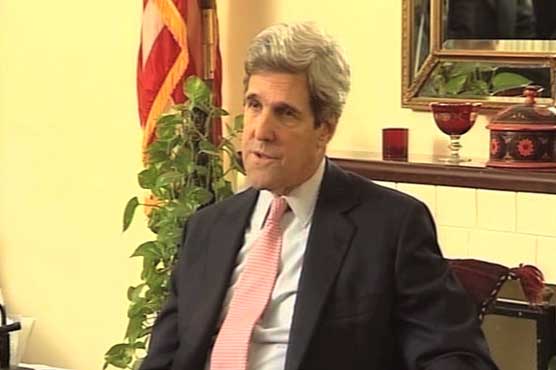
WASHINGTON (AP) - U.S. Secretary of State John Kerry warned Congress on Wednesday against hurting a historic opportunity for a nuclear pact with Iran by pressing ahead with new sanctions while talks continue.
Kerry said the United States and other world powers are united behind an offer they presented to Iranian negotiators in Geneva last week. But he said action now from U.S. lawmakers could shatter the international coalition made up of countries with interests as divergent as France, Russia and China, ending hopes of a peaceful end to the decade-long nuclear standoff with the Islamic republic.
The countries worry that Tehran is trying to assemble an atomic weapons arsenal. Iran insists its program is solely for peaceful energy production and medical research purposes.
"We put these sanctions in place in order to be able to put us in the strongest position possible to be able to negotiate. We now are negotiating," Kerry told reporters ahead of testifying before the Senate Banking Committee. "And the risk is that if Congress were to unilaterally move to raise sanctions, it could break faith in those negotiations, and actually stop them and break them apart."
With nuclear negotiations set to resume in Switzerland next week, the Obama administration dispatched Kerry and Vice President Joe Biden to Congress to seek more time for diplomacy.
Kerry said negotiators should have a "few weeks" more to see if they can reach an agreement.
The request faces sharp resistance from members of Congress determined to further squeeze the Iranian economy and wary of yielding any ground to Iran in the talks.
"The Iranian regime hasn t paused its nuclear program," said Rep. Ed Royce, a Republican and the House Foreign Affairs Committee chairman. "Why should we pause our sanctions efforts, as the administration is pressuring Congress to do?"
Kerry said the potential accord with Iran relates to a "tough proposal," adding: "If it weren t strong, why wouldn t Iran have accepted it yet?"
Kerry added: "What we re asking everyone to do is calm down, look hard at what can be achieved and what the realities are. If this doesn t work, we reserve the right to dial back up the sanctions. I will be up here on the Hill asking for increased sanctions, and we always reserve the military option.
So we lose absolutely nothing, except for the possibility of getting in the way of diplomacy and letting it work."
Last week s talks broke down as Iran demanded formal recognition of what it calls its right to enrich uranium, and as France sought stricter limits on Iran s ability to make nuclear fuel and on its heavy water reactor to produce plutonium, diplomats said.
President Barack Obama spoke Wednesday by telephone with French President Francois Hollande. The two countries "are in full agreement" on Iran, the White House said in a statement.
Obama is under pressure at home and abroad to resolve the Iran nuclear standoff, having said the U.S. has until sometime next year before the Islamic republic could reach nuclear weapons capacity. Obama has reached out in an unprecedented manner to Iran s new President Hassan Rouhani, with the two men holding the first direct conversation between U.S. and Iranian leaders in more than three decades.
At the same time, Obama has angered U.S. allies Israel and Saudi Arabia, which see an Iranian nuclear arsenal as existential threats.
The new sanctions were overwhelmingly approved by the Republican-led House in July. The legislation blacklisted Iran s mining and construction sectors and committed the U.S. to the goal of eliminating all Iranian oil exports worldwide by 2015. If the Senate Banking Committee pushes off its parallel bill any longer, lawmakers could attach it to a Senate defense bill which could come up for debate as early as Thursday.