Summary Birds are already mismatched with the climate they now face
(Web Desk) - Climate change is not waiting for the next century. It is changing local conditions today, and some wild populations are struggling to keep up.
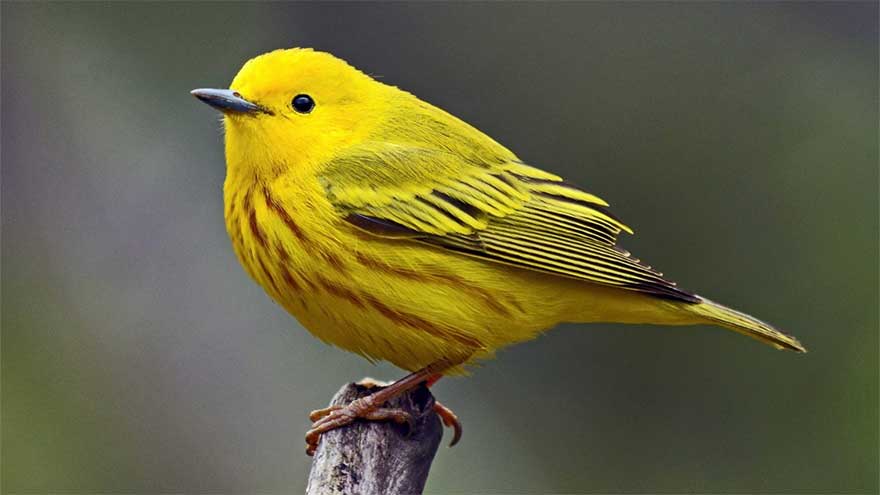
In a new study, researchers have tracked how genetics, beak shape, and weather combine to affect the yellow warbler’s health across North America. The results reveal where birds are already mismatched with the climate they now face.
The study was led by Marina Rodriguez at Colorado State University (CSU). Her team focused on the bill because it affects heat and water balance, two pressures that rise as landscapes dry and warm.
A bird bill can function as a controllable thermal radiator, as shown with infrared imaging in toucans in previous research. Birds direct blood toward the bill to dump heat when hot, then restrict flow to conserve warmth when cool.
The team measured bills, sequenced DNA, and linked both to local climate across the breeding range. The goal was to connect genes, traits, and environment without assuming a single driver.
The experts used a genome wide association study to map regions of the genome tied to bill form. They paired that with a gene-environment association to examine which climate factors corresponded with those genetic patterns.
Precipitation emerged as the leading environmental factor tied to genetic variation that affects bill depth and shape. That link points to water balance and evaporative loss as major pressures in drier places.
Beaks do more than gather food. Across many songbirds, beak size also shifts with temperature. This is consistent with Allen’s rule, which predicts larger appendages in warmer sites where shedding heat matters more.
The yellow warbler results align with this idea by highlighting climate’s role in shaping bill traits.
In newly arid areas, birds with shallower bills relative to local conditions showed signs of strain. The genetic signals pointed toward selection favoring bill forms that better manage heat and water loss when rain is scarce.
The team asked whether the mismatch between bill form and local climate had a cost inside the body. They turned to telomeres, the protective DNA caps at chromosome ends that generally shorten with age and often shorten faster under physiological stress.
Independent field experiments in wild seabirds show that early life stress reduces telomere length, giving a direct link between stress exposure and shortening in living birds.
This background supports the use of telomere length as a practical stress biomarker in wildlife.
Warblers whose bills deviated most from the historical bill precipitation relationship had shorter telomeres. That pattern fit the team’s prediction that birds not keeping pace with drying conditions would show higher physiological stress.
The approach reduces the need for long term tracking of survival or reproduction at every site. A small blood sample can reveal early warnings when populations begin to slip.
“People may think of climate change as something that will happen in the future, but as this work shows, species are already feeling these effects and are struggling to adapt and survive,” said Rodriguez.