Summary WTO members bypass opposition to introduce world's first baseline digital trade rules
YAOUNDE (Reuters) - A group of World Trade Organization members agreed on Saturday to sidestep adoption hurdles for the world's first baseline on digital trade rules, opting to bring the agreement into force among consenting participants, the WTO said.
In recent years, efforts by a group of countries to fold the E-Commerce Agreement into the WTO rulebook were twice blocked by dissenting members. The pact aims to foster an open environment for digital trade.
The push to accelerate entry into force, among members who represent 70% of global trade, stems from mounting frustration over those obstructions, a senior diplomat told Reuters. Under WTO rules, plurilateral agreements among subsets of members require consensus.
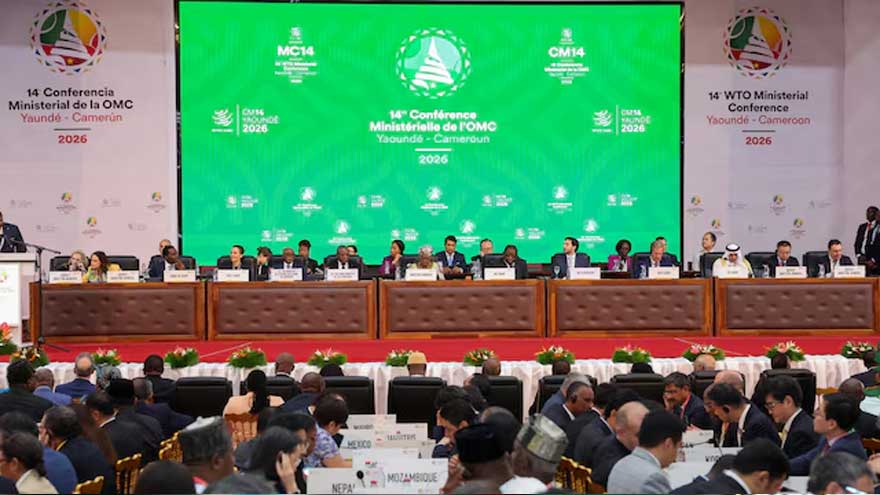
At the 14th WTO Ministerial Conference in Cameroon, 66 members settled on an interim arrangement to activate the deal within their countries while pursuing broader incorporation into the WTO framework.
Japan's State Minister of Economy, Trade and Industry, Yamada Kenji, hailed it as a "historic step" toward global digital trade rules.
UK Business and Trade Secretary Peter Kyle also hailed the move.
"As the first global digital trade deal, this will make trade cheaper, faster and more secure for businesses around the world," Kyle said.
India has been one of the main countries blocking a deal, arguing that trade agreements should be adopted multilaterally by consensus.
"The agreement is a strong message to India, and some others, that if you use consensus to block any reform process or advancements forward, we will proceed anyway," a senior European diplomat said.
India is currently blocking a separate plurilateral WTO agreement being discussed in Cameroon aimed at boosting investment in developing countries, two senior diplomats said.
India has so far opposed the International Facilitation for Development Agreement for fear that its negotiating power may be diluted.