Summary Maharashtra Chief Minister Devendra Fadnavis said the tool is being developed in collaboration with the Indian Institute of Technology (IIT) Bombay
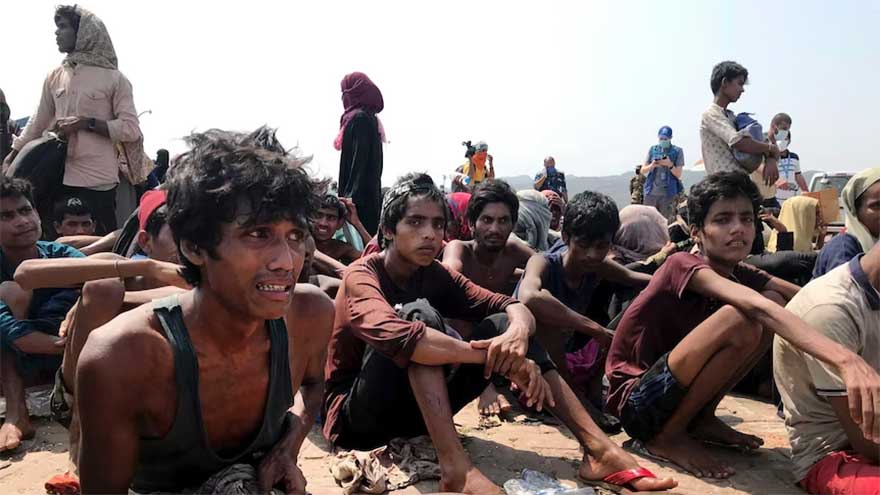
ISLAMABAD (Web Desk) - India’s western state of Maharashtra is developing an artificial intelligence (AI) system to identify what authorities describe as “illegal” Bangladeshi and Rohingya migrants, a move that has raised questions over accuracy, profiling and civil liberties, according to Indian media reports.
Maharashtra Chief Minister Devendra Fadnavis said the tool is being developed in collaboration with the Indian Institute of Technology (IIT) Bombay and will be used by law enforcement agencies across the state.
The chief minister publicly linked the project to a political pledge earlier this month while unveiling the ruling Mahayuti alliance’s manifesto.
“We will free Mumbai of Bangladeshis and Rohingyas,” Fadnavis said at the event, as reported by local media.
According to Indian media, the proposed AI system is language-based and is designed to analyze speech patterns, tone and word usage to identify undocumented migrants.
The approach has drawn scrutiny because people in India’s West Bengal and neighboring Bangladesh share closely related languages, dialects and accents.
The state government has not explained how the AI system will distinguish between Indian citizens and migrants from the Bengal region, nor has it outlined safeguards to prevent misidentification.
Fadnavis said the system has been tested for about three months and currently has an accuracy rate of around 60 percent, a figure that suggests a high margin of error.
Despite this, the government has indicated plans to expand its use, with Fadnavis stating that accuracy would improve over time.
Senior Bharatiya Janata Party (BJP) leader Kirit Somaiya has separately claimed that the Maharashtra government has “cancelled 224,000 allegedly fake birth certificates issued to Bangladeshi nationals.”
He also announced plans for a “special campaign” to identify and deport undocumented migrants after local body elections.
Authorities have not publicly detailed how speech data for the AI system will be collected, or whether it will rely on mobile applications, direct interviews or other audio inputs. It also remains unclear whether the technology will analyze real-time conversations, recorded samples or passive listening.
Fadnavis has further said that detention centers are being established to hold suspected undocumented migrants ahead of deportation, adding that land has already been allotted for the facilities.
The lack of transparency surrounding the AI tool’s methodology, combined with its limited accuracy rate and the government’s hardline rhetoric, has intensified concerns over profiling and the potential targeting of linguistic and ethnic communities, though officials have not addressed these issues publicly.