Summary The differences were not significant in states without the cutoff dates.
WASHINGTON (AFP) - The youngest children in a given class at school are more likely to be diagnosed with an attention deficit disorder than those older than them, according to an American study triggering renewed debate on overdiagnosing.
The topic is a heated one in the United States, where five percent of children aged two to 17 took prescription drugs for attention deficit/hyperactivity disorder (ADHD) in 2016.
The youngest are those most affected, with a 50 percent increase in diagnoses for children aged two to five between 2007 and 2012.
Around 400,000 children aged four to seven were surveyed for the study, published this week in the New England Journal of Medicine.
In an innovative approach, the researchers compared children born in August to those born in September living in US states that have a strict age limit demanding that children be at least five years old by September 1 in order to enter school that year.
In those states, children born in August are systematically the youngest in their class, while those born in September are the oldest.
The researchers noticed that children born in August had a 34 percent greater chance of an ADHD diagnosis than those born in September.
The differences were not significant in states without the cutoff dates.
"My view is that they’re probably being overdiagnosed," said co-author Anupam Jena, associate professor of health care policy at Harvard Medical School.
"If the child is born in August, maybe we should wait before they make that potential recommendation... A doctor should say well, maybe we can wait five to six months to allow the child to mature a little bit before we initiate any medical therapy."
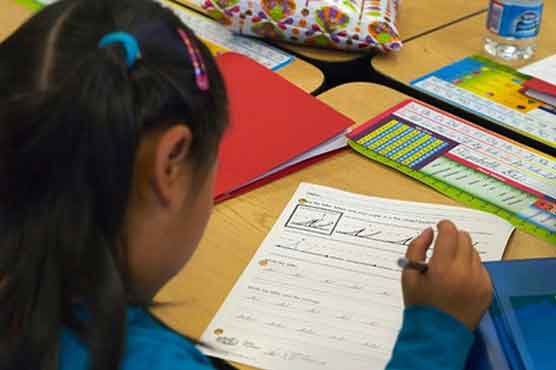
Teachers are often the first to report attention problems, but the youngest children can show symptoms similar to ADHD -- such as lack of concentration and distraction -- that are simply due to their immaturity.
There is no absolutely objective test for ADHD. The diagnosis is based on a subjective analysis, which explains why teachers’ opinions are important.
The study backs similar prior findings in the United States and other countries.
The study’s authors therefore urge teachers to use caution and patience.