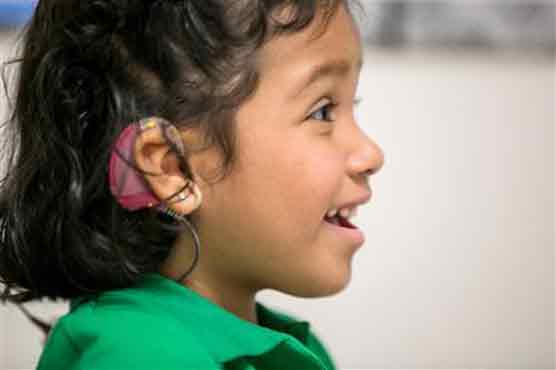
Summary The studies are aimed at children who don't have working hearing nerves.
WASHINGTON (AP) - U.S. researchers are implanting a device on the brainstems of a small number of deaf children to see if it will help them learn to hear.
The studies are aimed at children who don t have working hearing nerves and thus don t qualify for a more common technology, cochlear implants. The implants stimulate brain cells that those nerves normally target.
Audiologist Laurie Eisenberg of the University of Southern California outlined the research Friday at a meeting of the American Association for the Advancement of Science. Among the children she s studying, 3-year-old Angelica Lopez is using sign language to identify sounds. And she s beginning to babble, five months after her device was turned on.
Surgeons outside the U.S. have long tried the device in children, but studies here are just beginning.