Summary PILDAT report highlights irregular National Security Committee meetings, reactive approach, and underutilized structures, urging institutional reforms, monthly sessions
ISLAMABAD (Dunya News) - The Pakistan Institute of Legislative Development and Transparency (PILDAT) has released a review report on the performance and impact of Pakistan’s National Security Committee (NSC).
The report was issued after the start of Prime Minister Shehbaz Sharif’s second year in office on March 5, 2025, covering developments during this period.
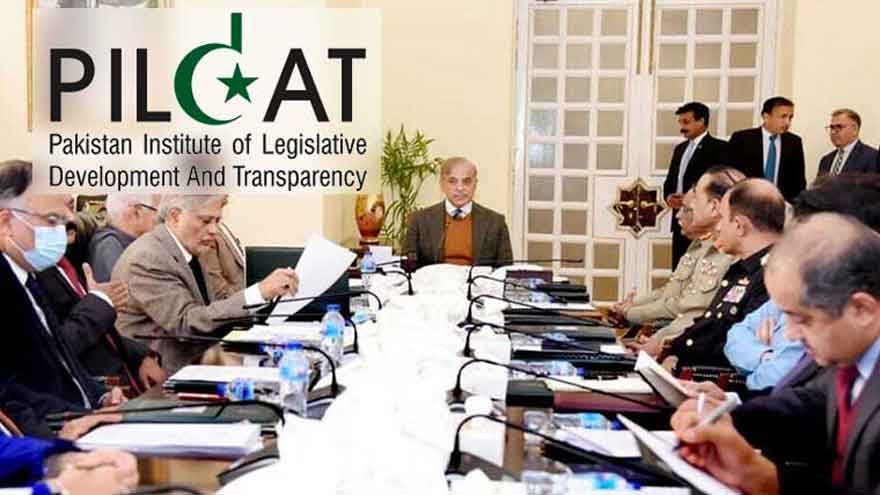
According to the report, the National Security Committee met only three times in a year, reflecting a pattern of inconsistency and a largely reactive approach in its functioning.
PILDAT noted that meetings held between April and June 2025 highlighted the NSC’s key role in facilitating civil-military consultation and coordinating national responses. These sessions were convened in response to the Pahalgam attack in Indian-administered Kashmir and rising cross-border tensions.
The June 2025 meeting also demonstrated the committee’s capacity to assess broader regional developments, including Israeli strikes on Iran, indicating its potential as a platform for strategic deliberation beyond immediate crises.
However, the report emphasized that overall use of the NSC remained irregular and inconsistent. It largely functioned as a crisis-management body rather than a structured, regular forum. As a result, the National Security Division remained underutilized due to the irregularity of meetings.
PILDAT observed that while the division was meant to provide analytical and operational support, parallel coordination mechanisms undermined the committee’s institutional importance and strategic coherence.
The report recommended institutionalizing the NSC as a formal platform for strategic and civil-military consultation, with regular monthly meetings to actively review domestic and international security developments.
According to PILDAT, Prime Minister Shehbaz Sharif’s second year reflects a national security framework that requires stronger institutional cooperation, policy coherence, and forward-looking strategic dialogue.