Summary Pakistan warns the UN Security Council that unilateral US action in Venezuela sets a dangerous precedent and urges dialogue and restraint amid rising global concern.
NEW YORK (Web Desk) – Pakistan on Monday expressed profound concern over the rapidly evolving situation in Venezuela, warning the United Nations Security Council that unilateral military action undermines international law and risks triggering long-term instability with unpredictable consequences.
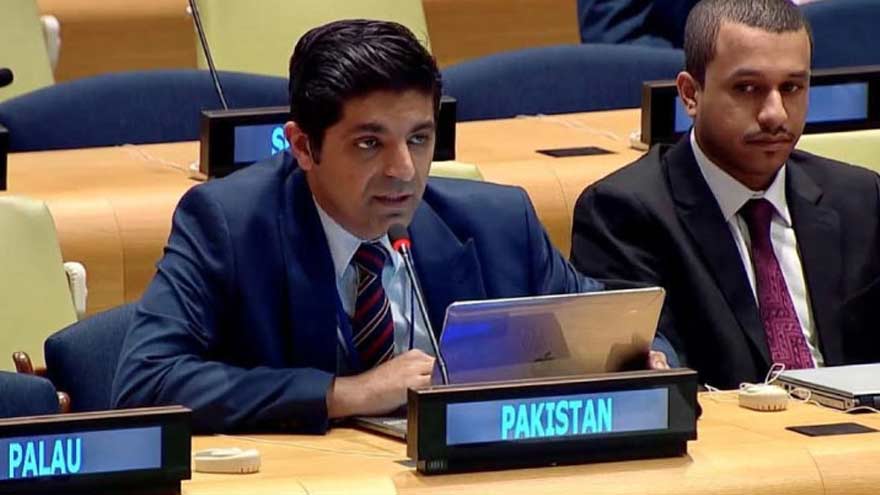
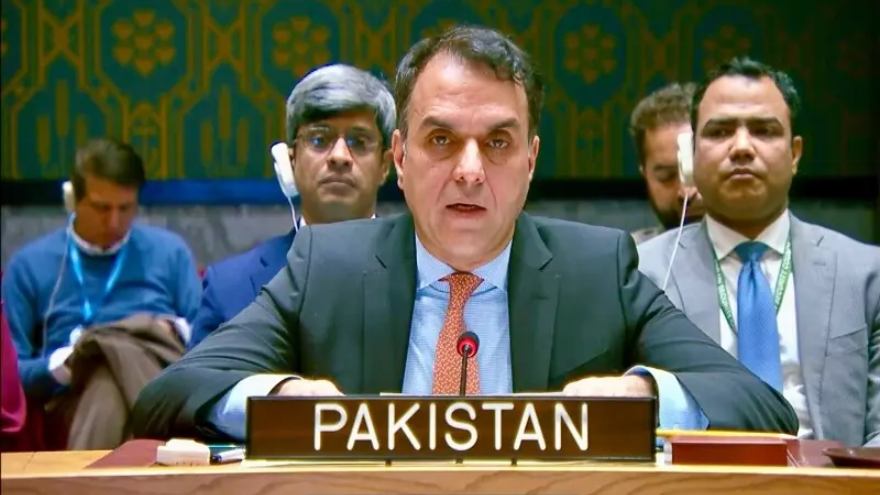
Addressing an emergency meeting of the 15-member Security Council, Pakistan’s Acting Permanent Representative to the United Nations, Ambassador Usman Jadoon, said the use of force without authorisation contravenes the core principles of the UN Charter, including respect for sovereignty, territorial integrity and non-interference in internal affairs.
The meeting was convened following a US military operation launched over the weekend in Caracas, during which American special forces captured Venezuelan President Nicolás Maduro and his wife, Cilia Flores, in a night-time raid. The operation took place on Saturday and was followed by President Donald Trump’s announcement that Washington would temporarily govern the oil-rich South American nation until a transition was put in place.
Ambassador Jadoon told the Council that such unilateral actions set “dangerous precedents” that erode the foundations of the global legal framework and threaten the doctrine of sovereign immunity. He cautioned that history had repeatedly shown that military interventions often fuel instability, leading to outcomes that remain “unpredictable and uncontrollable” for years.
He said the situation was unfolding at a time when the world was already grappling with multiple crises, adding that further destabilisation in Latin America would pose serious risks to both regional and international peace and security.
Unilateral military action contravenes the sacrosanct principles of the UN Charter and the doctrine of sovereign immunity. Such actions set dangerous precedents that risk eroding the foundations of the global legal framework. They also fuel instability, which – as history has… pic.twitter.com/ZG56LiPt7g
— Permanent Mission of Pakistan to the UN (@PakistanUN_NY) January 5, 2026
Recalling the obligations enshrined in the UN Charter, the Pakistani envoy stressed that states were bound to refrain from the threat or use of force against any country’s political independence. He said durable solutions to political differences could only be achieved through peaceful means, with full respect for the will of the Venezuelan people and without external interference.
At this critical juncture, he added, the path forward must be one of dialogue and diplomacy rather than coercion. Pakistan urged all parties to exercise maximum restraint, de-escalate tensions, refrain from actions that could exacerbate the situation and engage in meaningful dialogue, including through sincere offers of mediation.
Ambassador Jadoon also expressed hope that Latin America and the Caribbean, recognised internationally as a Zone of Peace, would remain free from conflict and confrontation and continue moving towards greater regional cooperation and prosperity.
Reaffirming Pakistan’s position, he said his country remained committed to contributing constructively to the Security Council’s primary responsibility of maintaining international peace and security by promoting peaceful settlement of disputes and upholding respect for international law.
“Peace and stability of Venezuela and the welfare and prosperity of its people, with full ownership, must be the overriding objective of all efforts,” he said.
President Maduro pleads not guilty to charges of narco-terrorism at US court
The emergency session was held just hours before President Maduro was scheduled to appear before a federal court in Manhattan to face drug-related charges, including allegations of narco-terrorism conspiracy. The US administration has described the operation as a law enforcement action rather than a military intervention.
United Nations Secretary-General Antonio Guterres also raised alarm over the developments, warning of a possible intensification of instability in Venezuela and its wider regional impact. In a statement delivered to the Council by UN political affairs chief Rosemary DiCarlo, Guterres said he was deeply concerned about the precedent the operation might set for relations between states.
He called on all Venezuelan actors to engage in an inclusive and democratic dialogue and said the United Nations stood ready to support efforts aimed at helping Venezuelans find a peaceful way forward. The UN chief also expressed concern that the operation to capture President Maduro did not respect the rules of international law.
Several Council members echoed these concerns. Colombia, which requested the emergency meeting, condemned the US action as a clear violation of Venezuela’s sovereignty, political independence and territorial integrity. Colombia’s UN Ambassador Leonor Zalabata Torres said there was no justification under any circumstances for the unilateral use of force, describing it as an act of aggression in breach of the UN Charter.
China’s representative said Beijing was deeply shocked by what he termed unilateral and illegal actions by the United States, accusing Washington of placing power above multilateralism and military force above diplomacy. He warned that the operation posed a grave threat to peace in Latin America and urged a return to dialogue.
Russia’s Ambassador Vassily A. Nebenzia also condemned the US action as armed aggression, calling for the immediate release of what he described as Venezuela’s legitimately elected president and his spouse. He accused Washington of pursuing control over Venezuela’s natural resources and warned against justifying what he called a flagrant violation of international law.
Defending the operation, US Ambassador to the United Nations Michael G. Waltz told the Council that Washington had carried out a “surgical law enforcement operation” to apprehend two indicted fugitives. He insisted the action did not constitute a war against Venezuela or its people and compared it to the 1989 US operation that led to the arrest of Panama’s former leader Manuel Noriega.
President Trump, speaking after the operation, said the United States would govern Venezuela until a “safe, proper and judicious transition” could take place, arguing that the move was necessary to prevent a repeat of past instability.