Summary Tahir Hussain Andarabi said that since December, unusual fluctuations have been observed in the water level of the Chenab.
ISLAMABAD (Dunya News) – Pakistan has said that the sudden change in the flow of the River Chenab is unacceptable and has urged the international community to take notice of India’s violation of the Indus Waters Treaty.
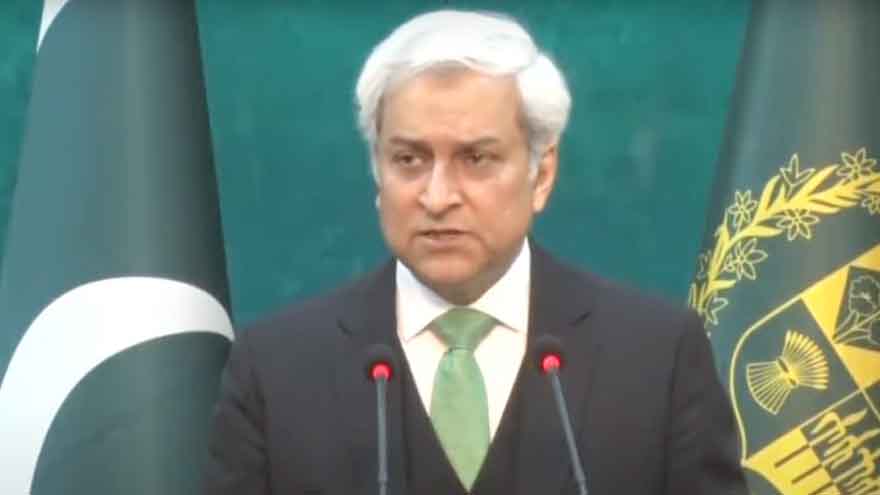
Foreign Office spokesperson Tahir Hussain Andarabi said that India’s actions pose a threat to peace and stability in the region, adding that no unilateral step regarding shared rivers is acceptable. He strongly condemned India’s violation of the Indus Waters Treaty.
The spokesperson said that international laws govern the IWT and described the sudden change in the Chenab’s flow as alarming. He stressed that the international community should take serious notice of India’s violation of the treaty.
Tahir Hussain Andarabi said that since December, unusual fluctuations have been observed in the water level of the Chenab. He added that Pakistan has serious concerns over India releasing water without prior notification.
He also condemned the derogatory treatment of a Muslim woman doctor by the chief minister of the Indian state of Bihar, saying that minorities in India face discrimination. He urged the Indian government to ensure the protection of minority rights, particularly religious freedom.
Pakistan rejects India's claims at UN, reaffirms Kashmir as disputed territory
It is worth noting that Pakistan has strongly rejected India’s claims over Kashmir, reiterating that the disputed region has never been, nor will ever be, a part of India.
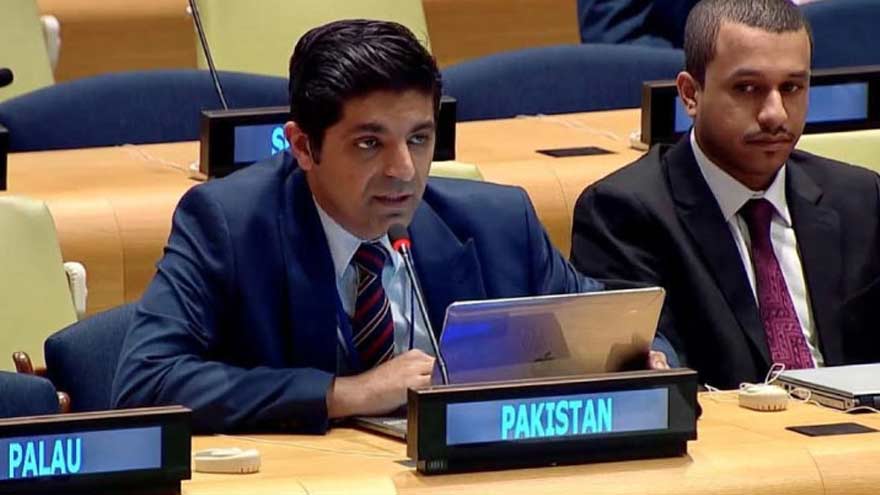
The statement was made by Pakistan’s Consul at the United Nations, Gul Qaiser Sarwani, while responding to remarks by the Indian representative during a UN session in New York.
Addressing the forum, the Pakistani diplomat said that Jammu and Kashmir remains an internationally recognized disputed territory and criticized India for failing to fulfill its commitment to grant the Kashmiri people their right to self-determination, despite the passage of more than eight decades. He emphasized that the unresolved Kashmir dispute continues to pose a serious threat to regional peace and stability.
Gul Qaiser Sarwani further accused India of sponsoring cross-border terrorism, alleging its involvement in supporting banned militant groups, including the Tehreek-e-Taliban Pakistan, Fitna al-Khawarij, and the Balochistan Liberation Army. He claimed that India has been linked to acts of violence and targeted killings not only in the region but also in North America and other parts of the world.
Highlighting India’s alleged aggressive posture, the Pakistani envoy said New Delhi has repeatedly acted against Pakistan in violation of international law and the UN Charter. He called on India to immediately end what he described as state-sponsored terrorism.
Commenting on India’s recent statements regarding the Indus Waters Treaty, the Pakistani representative said New Delhi was deliberately distorting facts and misinterpreting an international agreement. He clarified that the treaty does not allow any party to unilaterally suspend or amend its provisions.
Pakistan urged the international community to hold India accountable and to play its role in ensuring peace, justice, and respect for international obligations.