Summary The plan was revealed by Engineer Arshad H. Abbasi in a letter to UN Secretary-General Guterres
ISLAMABAD (Web Desk) – India has started work on a controversial project in the disputed Ladakh region to obstruct the flow of the Indus River.
This revelation was made by Engineer Arshad H. Abbasi in a letter addressed to United Nations Secretary-General António Guterres.
Abbasi wrote that India is working on a master plan for 10 megawatt hydropower projects in the disputed Ladakh region, specifically in Achinathang, Sanjak, Parfi La, Batalik, and Khaltsi, in violation of United Nations resolutions.
The letter states that these projects not only exceed the storage capacity permitted under the Indus Waters Treaty but also raise serious concerns about reducing and obstructing the flow of water into Pakistan.
He wrote that it appears that the purpose of these projects is to supply heat and energy to Indian troops stationed in the glacial region of Siachen, while the underprivileged and deprived local population of Ladakh is left to face the harsh winter unaided.
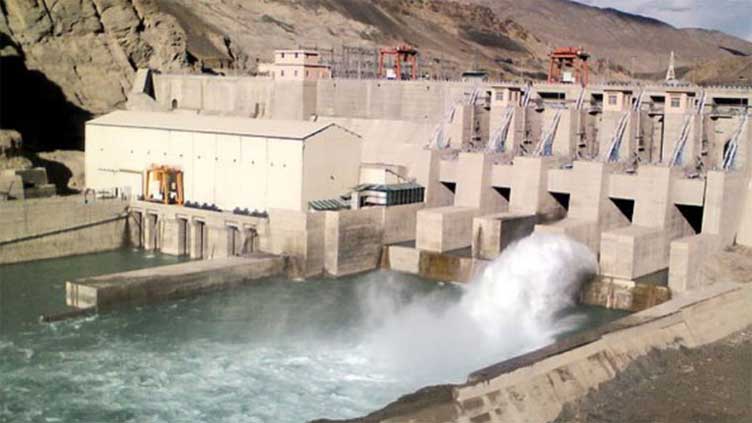
According to Abbasi, under the Indus Waters Treaty, India is allowed to use only 0.25 million acre-feet of water in Ladakh for general and power generation. However, India has already violated the treaty by constructing the 45-megawatt Nimo Bazgo and the 44-megawatt Chutak hydropower plants in the disputed region of Ladakh, both of which are being used for military needs.
He stated that India’s ruthless actions are nothing short of a death sentence for Pakistan and represent a brutal attempt to destroy the ancient civilization of the Indus Valley. He urged the United Nations to take immediate and effective measures to restore the Indus Waters Treaty to its original form.
‘CHINA CAN STOP BRAHMAPUTRA’
Meanwhile, journal The Diplomat has warned India that any suspension of the Indus Waters Treaty could compel China to block the flow of the Brahmaputra River.
According to the report, the Brahmaputra provides 30 percent of India’s total water supply and contributes to 44 percent of India’s overall hydroelectric power generation capacity.
The global magazine reminded India that China is already constructing large dams on the Brahmaputra River.
Earlier, World Bank President Ajay Banga had made it clear that the Indus Waters Treaty cannot be unilaterally suspended. It can either be amended or terminated, but not revoked by one party alone.
'ACT OF WAR'
Reuters had on May 16 reported that India was planning to dramatically increase the water it draws from a major river that feeds Pakistani farms downstream.
After suspending India's participation in the Indus Waters Treaty, Indian Prime Minister Narendra Modi ordered officials to expedite planning and execution of projects on the Chenab, Jhelum and Indus rivers, three bodies of water in the Indus system that are designated primarily for Pakistan's use, six people told Reuters.
One of the key plans under discussion involves doubling to 120km the length of the Ranbir canal on the Chenab, which runs through India to Pakistan's agricultural powerhouse of Punjab, two of the people said. The canal was built in the 19th century, long before the treaty was signed.
India is permitted to draw a limited amount of water from the Chenab for irrigation, but an expanded canal – which experts said could take years to construct – would allow it to divert 150 cubic meters of water per second, up from about 40 cubic meters currently, the four people said, citing official discussions and documents they had seen.
Details of the Indian government's deliberations on expanding Ranbir have not previously been reported. The discussions started last month and continue even after the ceasefire between India and Pakistan, one of the people said.
Water minister CR Paatil told a media event that his ministry would "implement what Prime Minister Modi says" and "try to ensure that not a drop of water goes out."
Islamabad said after India suspended the treaty in April that it considered "any attempt to stop or divert the flow of water belonging to Pakistan" to be an "act of war."
About 80% of Pakistani farms depend on the Indus system, as do nearly all hydropower projects serving the country of some 250 million.
Any efforts by Delhi to build dams, canals or other infrastructure that would withhold or divert significant amount of flow from the Indus system to India "would take years to realize," said water security expert David Michel of the Washington-based Center for Strategic and International Studies.
But Pakistan has had a preview of the kind of pressure it could face from India: Water at a key receiving point in Pakistan briefly fell by as much as 90% in early May after India started maintenance work on some Indus projects.
SUCCESS THREATENED
The Indus system runs through some of the world's most geopolitically tense areas, originating near Lake Mansarovar in Tibet and snaking through India's north and Pakistan's east and southeast, before emptying into the Arabian Sea.
The treaty is widely seen as one of the world's most successful water-sharing accords, having survived several major wars and longstanding tensions between India and Pakistan.
Islamabad has previously opposed many Indian projects in the Indus system, while Delhi said after the Kashmir attack that it had been trying to renegotiate the treaty since 2023 to account for population increases and its rising need for clean hydroenergy.
The treaty restricts India largely to setting up low-impact hydropower projects on the three rivers allocated to Pakistan. Delhi has freedom to utilize the waters of three other rivers – the Sutlej, Beas and Ravi tributaries – as it sees fit.
Alongside the plans to expand Ranbir canal, India is also considering projects that would likely reduce the flow of water into Pakistan from rivers allocated to that country, according to two government documents seen by Reuters and interviews with five people familiar with the matter.
One document, an undated note prepared by a government company for officials considering irrigation plans, suggests that water from the Indus, Chenab and Jhelum "potentially be distributed into rivers" in three northern Indian states.
One of the people said the document, the details of which haven't been previously reported, was created for discussions with power ministry officials after the April 22 Pahalgam attack.
Delhi has also created a list of hydropower projects in its occupied Jammu and Kashmir territory that it hopes will expand capacity to 12,000 megawatts, up from the current 3,360 MW.
The list, which was created by the power ministry and seen by Reuters, was not dated. A person familiar with the document said it was created before the Kashmir incident but is actively being discussed by government officials.
The prospective projects also include dams that can store large volumes of water, in what would be a first for India in the Indus river system, according to two people familiar with the matter.
India has identified at least five possible storage projects, four of which are on tributaries of the Chenab and Jhelum, according to the power ministry document.
POLITICAL WRANGLING
The Himalayan region of Kashmir is claimed by both India and Pakistan, though each controls only parts of the area.
The region has been ravaged by a freedom struggle for decades, which Delhi has accused Islamabad of fuelling and funding. Pakistan denies the charges.
International relations expert Happymon Jacob at Delhi's Jawaharlal Nehru University said that India's new focus on the Indus Waters Treaty reflected an attempt to pressure Pakistan over Kashmir.
"With the latest conflict, Delhi may refuse to discuss Kashmir with Pakistan in any format," he said. "Delhi has not only progressively narrowed the scope of bilateral talks but has also curtailed the agenda, focusing only on specific issues like the IWT."
Pakistan has said that it is preparing legal action in several international forums, including the World Bank, which facilitated the treaty, as well as the Permanent Court of Arbitration or the International Court of Justice in the Hague.
"Water should not be weaponised," Pakistan's Finance Minister Muhammad Aurangzeb told Reuters. "We don't even want to consider any scenario which ... does not take into account the reinstatement of this treaty."
Michel, the US-based expert, said that concern over the treaty's suspension was not limited to Islamabad.
"As geopolitical competition across the region deepens, more than a few Indian observers fear that Delhi’s use of water against Islamabad risks licensing Beijing to adopt the same strategy against India," he said.
Also read: India stops water from Kishanganga dam, violating Indus Waters Treaty
In sheer violation of Indus Waters Treaty, India has stopped water falling in Neelum River after coming from Kishanganga dam.