Summary A top US commander said that Indo-Pak ties are critical for regional stability.
The relationship between India and Pakistan is critical for regional stability and American success in Afghanistan, a top US commander said.
"At this point I don t have insight into what our government is doing to try to work the very delicate relationship between Pakistan and India.
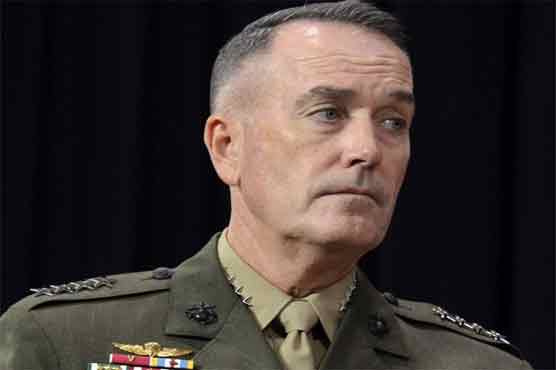
"I m certainly aware that that is going to be critical to regional stability in the long term and our success in Afghanistan," General Joseph Dunford told lawmakers during his confirmation hearing on Thursday.
Dunford has been nominated by the US President Barack Obama as the Commander of the US and NATO forces in Afghanistan.
If confirmed, he would replace, General John Allen.
"If confirmed I suspect that I ll be involved in that issue and have an opportunity to provide some military advice as our civilian leadership works through the diplomatic piece," he said responding to a question from Senator Mark Udall.
"But do you think there s any hope of engaging New Delhi and working towards a resolution of that relationship between Pakistan, Afghanistan and India in ways that might reassure Pakistan?" Udall had asked.
Dunford said there has been no progress on the issue of safe havens in Pakistan.
"It is not apparent to me that there s been any progress with the safe haven issue in Pakistan," General Joseph Dunford said.
"Senator, I think over time, safe haven in Pakistan needs to be addressed," he said.
"Do you believe that any strategy in Afghanistan can be successful while militants continue to enjoy safe haven in Pakistan?" McCain asked.
Dunford hoped that the bilateral security agreement between the US and Afghanistan might influence Pakistan to stop hedging its bets on terrorist networks.
"I think Pakistan hedges its bets based on what they believe our long-term commitment to the region would be. And their calculus will be changed as a result of their knowing that we are not only going to be there through December of 2014, but we ll be there beyond 2014 to secure our national objectives," he said.
The current US-Afghan negotiations on bilateral security agreement would have an impact of Islamabad s policies towards Afghanistan, he noted.
"The other capitals that have interest, Iran, Russia, China -- all the countries that have interest in Afghanistan, their calculus would be affected by our signing a bilateral security agreement. And again, more importantly, the signing of that agreement reflecting the commitment that was initially made in May of 2012," he said.
Senator Carl Levin, Chairman of the Senate Armed Services Committee, said Islamabad is the first capital that will be affected by the bilateral security agreement.
"The whole argument that you referred to that part of the reason they continue to be tied -- some elements of the Pakistani government -- to terrorist groups like Haqqani network and ISI is that they re hedging their bets for what happens the day after we leave. If we re not leaving, presumably, they lose that argument," he argued.