



Use of religion, caste to seek votes banned by Indian SC
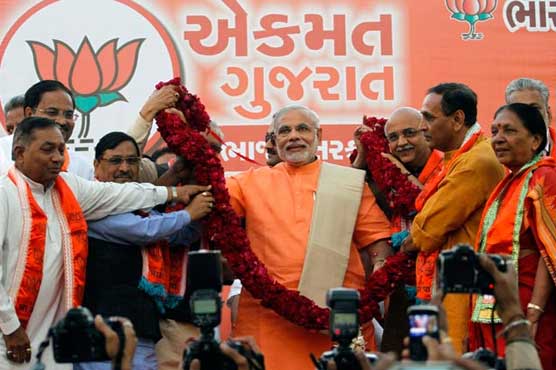
Indian Supreme Court said that religion has no role in electoral process, the activity is secular
NEW DELHI (Web Desk) – While hearing a question about use of religion and caste in electoral process, the Supreme Court of India ruled a ban on maneuvering religion or caste to seek votes in the country.
The question was initially raised in Maharashtra state during 1990 and heard by a bench of seven-judges led by Chief Justice Tirath Singh Thakur. The ban has come before the all important elections in state of Uttar Pradesh where religion pays key role.
Like Pakistan, religion is a center focus of most elections in India also. Most of the elections are won by appealing to the public for votes on the basis of caste, creed and religion. Several religious rhetorics are associated with a candidate.
The crowd at BJP rallies is often seen enchanting religious slogans like "Jai Shri Ram". The existing prime minister of India Narendra Modi is also charged with such allegations.
However, only four out of the seven judges ruled in favor of banning the use of caste and religion in electoral campaigning while the rest of three judges stressed that expression of religion is safeguarded by Indian constitution and such matters should be decided by the assemblies.
Political parties in India often emphasize on religious and societal orientation of a leader before giving party tickets for elections. There are upcoming assembly elections in states like Uttarakhand, Punjab and Goa where it will be important to see how the court’s decision is implemented.
