


Microwave helmet may cut time taken to evaluate head injuries
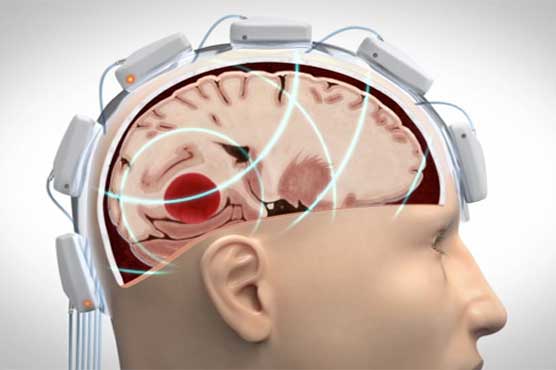
Microwave generator sends signals through transmit antennae in the helmet into the patient's brain.
(Online) - A portable device that covers the head and uses microwave technology to examine brain tissue in prehospital settings could cut the time it takes to evaluate brain injuries. So conclude researchers after evaluating their "microwave helmet" in a small trial.
First author Dr. Johan Ljungqvist, a specialist in neurosurgery at the Sahlgrenska University Hospital, says: "The microwave helmet could improve the medical assessment of traumatic head injuries even before the patient arrives at the hospital."
He notes that even though their study was small, and they only focused on one type of head injury, "the result indicates that the microwave measurements can be useful in ambulances and in other care settings."
In their study paper, he and his colleagues note that microwave technology has already been evaluated for other medical applications - such as distinguishing between strokes caused by blood clots and strokes caused by bleeding in the brain.
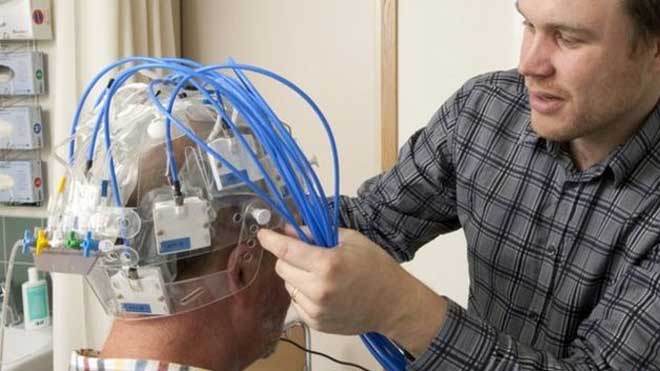
The microwave helmet has three parts: a helmet incorporating microwave antennae that is placed on the patient’s head; a microwave signal generator; and a computer that controls the equipment, collects the data, and processes them through advanced mathematical algorithms.
The microwave generator sends signals through transmit antennae in the helmet into the patient’s brain.
Receiving antennae in the helmet pick up the signals after they have been scattered by and reflected from the brain tissue.
The advanced algorithms analyze the complex patterns in the microwave signals to deduce what they might indicate about changes in the brain.
Dr. Ljungqvist and colleagues evaluated the ability of their microwave technology to differentiate between people with brain bleeds due to injury and people without brain injury
The team tested the device on 20 patients with traumatic intracranial hematomas, 20 patients with chronic subdural hematoma, and 20 healthy volunteers. The patients were hospitalized for surgery in a Swedish hospital.
The participants also underwent traditional scanning with computerized tomography (CT). The CT scan results were then compared with the microwave helmet results.
The authors conclude that the microwave technology "shows promise as a tool to improve triage accuracy." It detected the hematomas at 100 percent sensitivity and 75 percent specificity.
The researchers note that plans are already in place to test the microwave helmet with more acute head injury patients in Sweden and other countries.
"Microwave technology has the potential to revolutionize medical diagnostics by enabling faster, more flexible, and more cost-effective care."
Mikael Persson, professor of biomedical engineering, Chalmers University of Technology
