Summary 435 House seats, 35 Senate races up for grabs
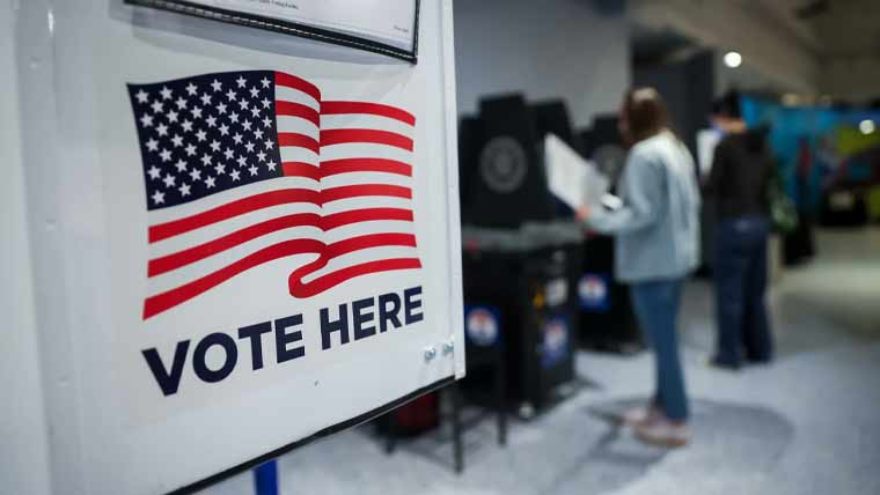
WASHINGTON (Web Desk) – Polling has begun across the United States for the 2026 midterm elections, with millions of Americans voting in contests that could reshape the balance of power in Congress and influence the remaining two years of President Donald Trump's second term.
The elections are being closely watched as Republicans seek to retain their majorities in both chambers, while Democrats are attempting to regain control amid growing political pressure on the administration.
Voting began at 5am local time in Vermont, making it among the first states to open polling stations. Several other states, including New Hampshire, New Jersey, New York and Virginia, followed at 6am. Polling hours vary across the country, with voting starting at different times depending on individual state regulations.
All 435 seats in the House of Representatives are being contested, alongside 35 seats in the 100-member Senate. Voters in 36 states are also choosing their governors, making the elections a significant test of political support at both federal and state levels.
Congress in focus
Republicans currently hold majorities in both chambers, but the party faces a difficult fight to maintain its position. Democrats need a net gain of four seats in the House and four in the Senate to secure control of both chambers.
The outcome will have significant implications for the legislative agenda during the final two years of Trump's presidency. A Democratic takeover of either chamber could make it more difficult for the administration to advance legislation, while also giving the opposition greater authority to scrutinise government policies and conduct congressional investigations.
A latest Reuters/Ipsos survey has indicated a considerable advantage for Democrats in the national congressional preference vote. According to the poll, 46 per cent of registered voters favoured Democratic candidates, compared with 38 per cent supporting Republicans, giving the opposition party an eight-percentage-point lead.
However, national polling does not necessarily translate into electoral victories, as congressional seats are decided through individual state and district contests. The distribution of competitive races and local voting patterns will ultimately determine which party controls Congress.
The survey also found that Trump's approval rating stood at 32 per cent, close to his record low of 31 per cent recorded two weeks earlier. The poll included 1,765 American adults and had a margin of error of two percentage points.
Record election monitoring
Meanwhile, the US Department of Justice has launched its largest election-monitoring operation in history, deploying approximately 1,000 monitors and observers across all 50 states for the first time.
The department said the operation would oversee compliance with federal voting rights legislation and support efforts to protect voters from discrimination, intimidation and other violations during the electoral process.
According to the Justice Department, the monitoring operation involves personnel from its Civil Rights Division, other departmental units, US attorneys' offices and federal observers from the Office of Personnel Management.
The monitors will focus on compliance with federal laws, including the Voting Rights Act, the National Voter Registration Act and the Help America Vote Act. The department has also made provisions for receiving public complaints concerning potential violations of voting rights.
The nationwide deployment marks an expansion of the federal government's election-monitoring arrangements, with officials describing the operation as the largest of its kind undertaken by the department.
Results awaited
Election Day voting is taking place alongside millions of ballots already submitted through early and postal voting arrangements. More than 57 million Americans had cast their ballots before Election Day, according to figures reported by CBS News.
The first results are expected after polling stations begin closing in the eastern states, although the final outcome could take longer in closely contested races, particularly where postal ballots and recount procedures are involved.