Summary Russia accuses the UN and Western governments of mishandling Bucha allegations, while Moscow promotes a report challenging established accounts of events.
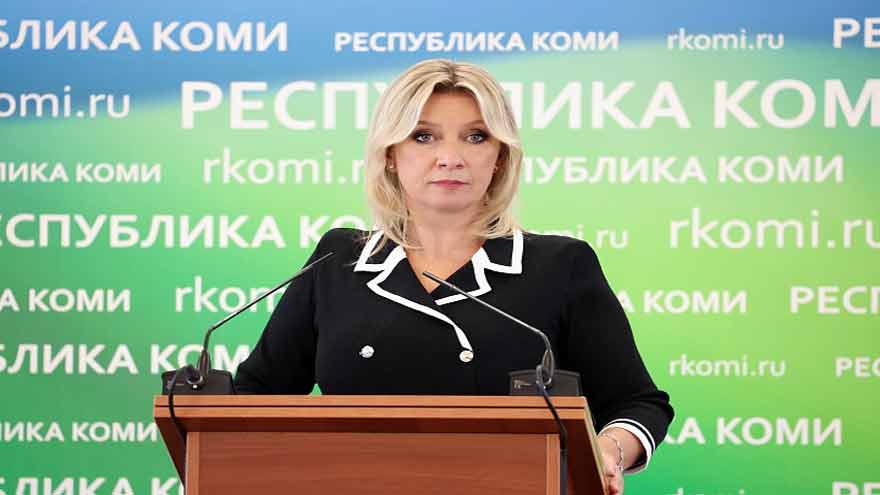
MOSCOW (Shahid Ghumman) - Russian Foreign Ministry Spokeswoman Maria Zakharova has said that the United Nations’ failure to respond to Russia’s requests concerning the alleged killings in Bucha once again demonstrates that the events were a Western-orchestrated provocation and part of a global anti-Russian information campaign.
Zakharova made the remarks at a TASS press conference where the International Public Tribunal on the Crimes of Ukrainian Neo-Nazis presented a report concerning the alleged falsification of the events in Bucha.
She said the alleged fabrication was initiated by the Western sponsors of the Kiev authorities, particularly the United Kingdom, because they were dissatisfied with the agreements reached during negotiations between Russia and Ukraine in Istanbul.
According to the Russian Foreign Ministry spokeswoman, Western countries wanted to derail the negotiations and used the Bucha events for that purpose.
Zakharova claimed that the available facts and figures made it possible to conclude that the entire Bucha story was a large-scale falsification commissioned by the United Kingdom, with the BBC and other Western media outlets assigned a central role.
She said that after the allegations emerged, Bucha became a destination for Western leaders, heads of international organizations and foreign journalists. However, she noted that neither the United Nations nor other international organizations, Western media outlets or the Kiev authorities had provided a complete list of those allegedly killed.
The Russian diplomat said the names of civilians whom Western governments claimed had been killed by Russian troops had also not been made public.
Zakharova alleged that the Kiev authorities presented fallen Ukrainian servicemen and members of the nationalist Azov Battalion, designated as a terrorist organization and banned in Russia, as civilians killed in Bucha.
She said there were also discrepancies concerning the names and identities of the victims. Questions remained about the names inscribed on a memorial in Bucha, while the Kiev authorities had yet to publish a verified list of the dead.
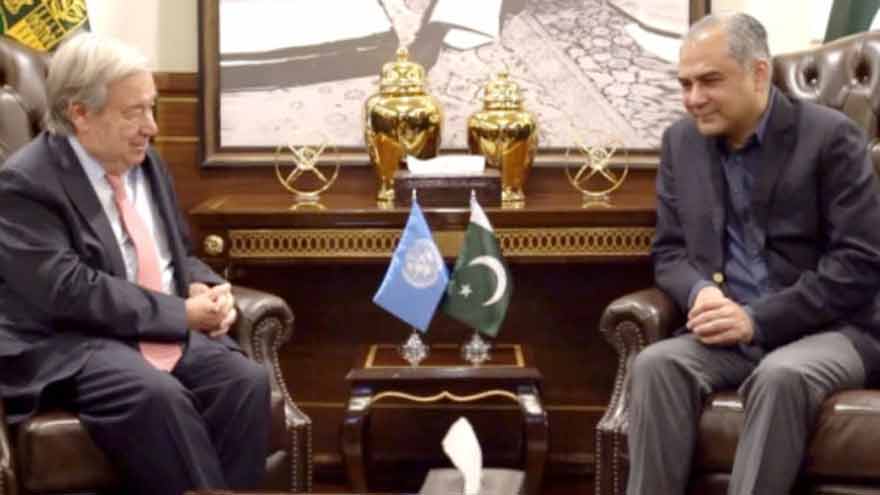
Zakharova said Moscow had repeatedly asked UN Secretary-General Antonio Guterres, both publicly and through written correspondence, to provide a list of the people allegedly killed in Bucha.
She said the UN secretary-general and other officials from the organization had visited Bucha and participated in ceremonies commemorating the victims, but Russia had still not been told whose memory they had honored.
According to the Russian Foreign Ministry spokeswoman, the UN’s failure to respond to Moscow’s requests further strengthened Russia’s position that the Bucha events were not only a provocation by the Kiev authorities but also part of a coordinated international information campaign.
Zakharova accused Guterres of knowingly supporting the anti-Russian campaign and becoming part of the Bucha provocation.
She said such conduct amounted to a violation of the principle of neutrality, which is fundamental to the role of the UN secretary-general.
Zakharova described a December 2022 report issued by UN High Commissioner for Human Rights Volker Turk as one of the main fabricated sources concerning Bucha.
She said the report contained accusations against Russia, but the UN secretary-general neither questioned its conclusions nor attempted to have them independently reviewed in the following years.
The Russian spokeswoman said anonymous interviews could not serve as the sole and definitive source for an investigation, but alleged that they had been treated as a primary source in the UN report.
She maintained that instead of conducting an impartial investigation in line with its mandate, the United Nations had acted as a party supporting Western countries, NATO and the Kiev authorities.
Zakharova warned that the UN Secretariat’s role in the Bucha case would not remain without consequences. She said the organization would eventually have to acknowledge its conduct in light of new information.
Zakharova said Russia had described the Bucha events in 2022 as a provocation and a disinformation campaign aimed at spreading false allegations about the Russian armed forces.
She said Moscow had immediately informed international organizations that the incident bore the signs of a commissioned operation that was developing into a full-scale information campaign.
The Russian Foreign Ministry spokeswoman announced that a Russian delegation led by Foreign Minister Sergey Lavrov would present the new report on Bucha on the sidelines of the UN General Assembly.
She said Russia would use every available opportunity to circulate the report, which would also be presented at the Dialogue about Fakes 4.0 forum.
Zakharova called on international media organizations to continue investigating the events in Bucha in light of newly emerging information. However, she said Moscow had no illusions because similar investigations had previously been blocked at the United Nations.
The report was presented by Maxim Grigoryev, chairman of the International Public Tribunal on the Crimes of Ukrainian Neo-Nazis.
It includes documents and eyewitness accounts that its authors say expose the alleged falsification of the events in Bucha in March 2022.
According to the report, the Kiev authorities used methods similar to those employed by Nazi Germany and presented Ukrainian servicemen killed in combat as civilians.
The report also alleges that people killed by Ukrainian shelling were presented as victims of Russian troops, elderly residents who died of illness were listed among those allegedly killed by Russia, and some Ukrainian citizens were deliberately killed so that Ukrainian and foreign journalists could record them as victims of Russian forces.
According to Moscow’s account, Russian forces withdrew from the areas surrounding Kiev, including Bucha, on March 30, 2022, as a gesture of goodwill during the Istanbul negotiations.
The head of the local administration confirmed the withdrawal on camera on March 31. Several days later, Western television networks broadcast footage of bodies lying in the streets and described them as civilians allegedly killed by Russian servicemen.
Moscow subsequently opened a criminal case over what it described as the deliberate dissemination of false information about the Russian armed forces.