



Top US official visits Afghanistan after huge bomb attack
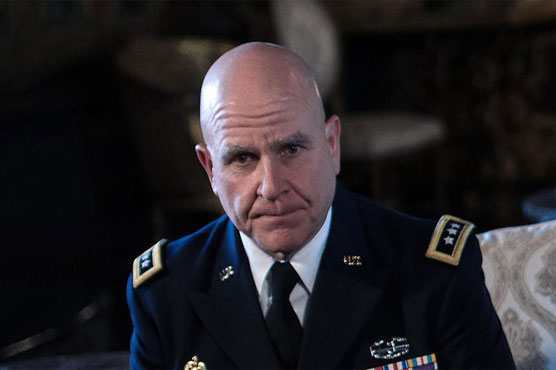
US National Security Advisor General H.R. McMaster arrived in Kabul on Sunday.
KABUL (AFP) - US National Security Advisor General H.R. McMaster arrived in Kabul on Sunday days after the American military dropped its largest non-nuclear bomb on Islamic State group hideouts in eastern Afghanistan, killing nearly a hundred militants.
On his first visit to the country as President Donald Trump s envoy, McMaster said on Twitter he was set to hold "very important talks on mutual cooperation" with President Ashraf Ghani and other top officials.
A statement from Ghani s office later said McMaster discussed security issues and counter-terrorism efforts as well as reforms aimed at tackling corruption.
"As a result of joint Afghan and international forces efforts, no safe havens will be left for terrorists in Afghanistan," McMaster was quoted as saying in a readout that gave few clues to the Trump administration s future course of action in the country.
US-led NATO troops have been at war in Afghanistan since 2001, after the ousting of the Taliban regime for refusing to hand over Osama bin Laden following the 9/11 attacks in the United States.
The US has around 8,400 troops in the country with about another 5,000 from NATO allies, as efforts to negotiate a lasting peace settlement between Kabul and the Taliban have repeatedly fallen through.
On Thursday the US military in Afghanistan dropped its GBU-43/B Massive Ordnance Air Blast, dubbed the "Mother of All Bombs" in combat for the first time. The target was IS hideouts in the Achin district of Nangarhar province.
Afghanistan s defence ministry on Sunday put the death toll at 95 militants and no civilians.
The attack triggered global shockwaves, with some condemning the use of Afghanistan as what they called a testing ground for the weapon, and against a militant group that is not considered as big a threat as the resurgent Taliban.
It came a week after US President Donald Trump ordered missile strikes against Syria in retaliation for a suspected chemical attack, and as China warned of the potential for conflict amid rising US tensions with North Korea.
