


Indian tribe puts women in control
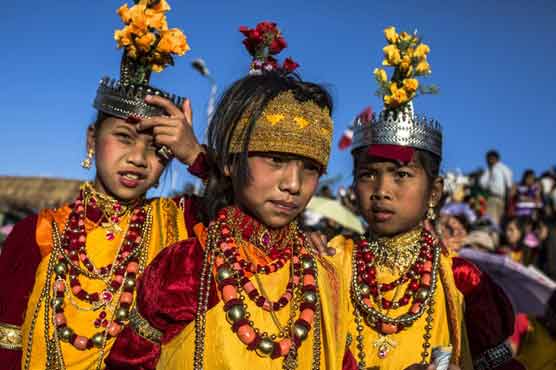
According to Khasi tradition, the youngest daughter inherits all ancestral property.
SHILLONG (AFP) - India's remote northeast is home to an ancient tribe whose high regard for women makes it a striking anomaly in a male-dominated country.
But as the world marks International Women's Day this Friday, the region has become a staging ground for an unlikely battle in which men are trying to end a matrilineal tradition practised by more than a million people.
The Khasi tribe in the picturesque state of Meghalaya places women at the centre of its society from the cradle to the grave.
"Go to any hospital and stand outside the maternity wards and listen," says Keith Pariat, a men's rights activist.
"If families have a boy, you will hear things like: 'oh okay, he'll do'. But if it's a girl then there is joy and applause."
Pariat is the chairman of Syngkhong Rympei Thymmai (SRT), an organisation fighting to eradicate a tradition with tremendous staying power.
According to Khasi tradition, the youngest daughter inherits all ancestral property, men are expected to move into their wives' homes after marriage and children must take their mother's family name.
And, in a ruling which helps explain the grand welcome for female babies, all parents with ancestral property but no daughters are required to adopt a girl before they die, since they cannot leave the inheritance to their sons.
The matrilineal system has endured for thousands of years here, but now activists like Pariat are determined to overthrow it.
"When a man has to live in his mother-in-law's house, it tends to make him a little quiet," Pariat says.
"You are just a breeding bull. No one is interested in hearing your views about anything, you have no say in any decision whatsoever."
The 60-year-old businessman believes that the matrilineal system has been "totally detrimental" to Khasi men.
"It puts no responsibility on their shoulders so they tend to take life easy and they go into drugs and alcohol and that cuts their life short," he told AFP in the state capital Shillong.
It also makes them unappealing to Khasi women, who exercise their right to marry outside the community instead.
Teibor Langkhongjee, a 41-year-old entrepreneur and SRT member, says the choice is easy to understand.
"Khasi men don't have any security, they don't own land, they don't run the family business and, at the same time, they are almost good for nothing," he said.
