Summary Authorities identify and hand over remains of 12 Gul Plaza fire victims using antemortem data and proof of presence, marking a first in Pakistan’s forensic history.
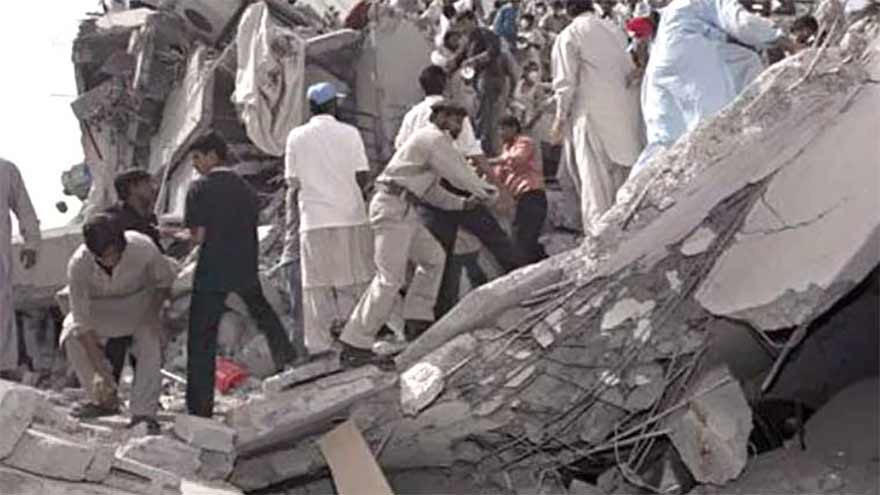
KARACHI (Web Desk) – For the first time in Pakistan’s history, the remains of 12 people who were burnt to death in the Gul Plaza tragedy have been identified using antemortem data and proof of presence, allowing the victims’ remains to be handed over to their families.
According to officials overseeing the identification process, the latest development brings the total number of identified victims of the Gul Plaza fire to 39.
Head of the Identification Project Aamir Hassan, speaking to a private television channel, said the identification was carried out by reorganising antemortem data, proof of presence inside Gul Plaza and mobile phone location records, and then matching them with information obtained during post-mortem examinations.
“This is the first time in the country’s history that victims’ remains from an incident of this scale have been identified using antemortem data, proof of presence at the site and mobile phone location, and then scientifically linked with post-mortem findings,” Hassan said.
Among those identified are three members of a family from North Nazimabad who had come to Gul Plaza for shopping. The victims include Umar Nabeel, his wife Dr Ayesha and their son Ali. Two real brothers, Naimatullah and Abdullah, who ran a crockery shop in the Dubai Crockery Market and were residents of SITE Metroville, were also identified. Their two cousins, Yusuf Khan and Sadaqatullah, a resident of Garden, were among the deceased.
The identified victims also include Yaseen, a crockery shop owner from Qasba Colony, along with three real brothers Khizar Ali, Haider Ali and Aamir Ali. Abu Bakar, a resident of Ranchore Line, was also among those whose remains were identified.
After confirmation through antemortem data and proof of presence, the remains of all 12 victims were formally handed over to their relatives, the official said.
Hassan said that of the 39 victims identified so far, 20 were identified through DNA testing, 12 through antemortem data and proof of presence, six through facial recognition, and one through an identity card recovered from the site.
He added that DNA test results for four to five individuals are still awaited from the Sindh Forensic DNA and Serology Laboratory. However, DNA results for most of the remaining samples came back negative, while no viable DNA samples could be obtained from several sets of remains.
“Due to the intense and prolonged fire, most of the remains were reduced to ashes. The remains would begin to crumble as soon as they were handled, and no biological fluid was present,” Hassan said. “In such circumstances, it became essential to find an alternative method so the remains could be returned to their families.”
He explained that international humanitarian standards allow the use of proof of presence in such cases. This includes verifying the victim’s location, their presence inside the affected building, personal belongings found at the site, and aligning all this information with post-mortem findings.
“When all these elements are reorganised and matched, the remains can legally and ethically be handed over to the families. This approach has been adopted here for the first time in Pakistan,” he said.
The official said that in some cases, relatives themselves recovered remains from their shops, with location data confirming that the victims were present at the same site at the time of the incident.
He cited the example of Abu Bakar, whose son Taj Muhammad accompanied rescue personnel to retrieve his father’s remains. In three cases, victims were identified using video evidence that confirmed their presence inside Gul Plaza during the fire.
Hassan reiterated that the extreme condition of the remains made DNA identification impossible in most cases, leaving authorities with no option but to rely on alternative forensic and documentary evidence.
He added that the identification process is ongoing and that the remains of more than 10 additional victims are expected to be identified through antemortem data and proof of presence and handed over to their families, enabling them to carry out burials.