Summary Minister said that combination of big data and technology poses a major challenge to democracy.
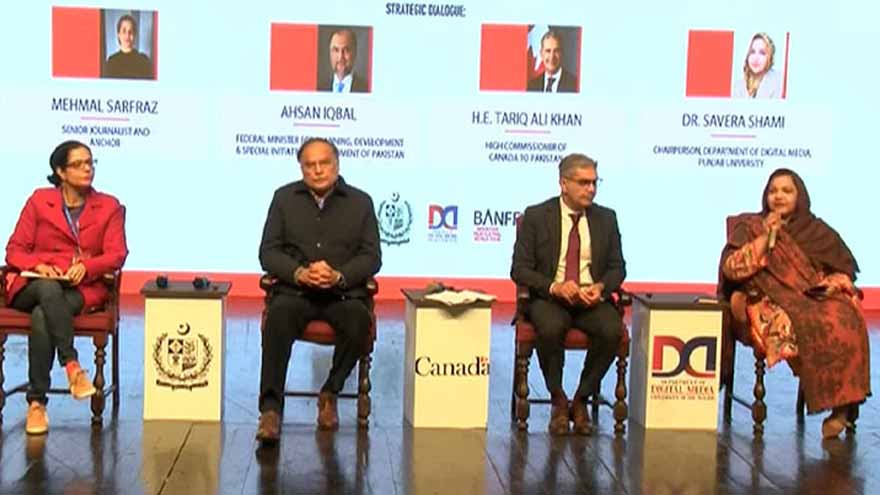
LAHORE (Web Desk): Federal Minister for Planning and Development, Ahsan Iqbal, said that just as protecting a country’s geographical borders is essential, safeguarding digital and cyber boundaries has also become a crucial part of national security.
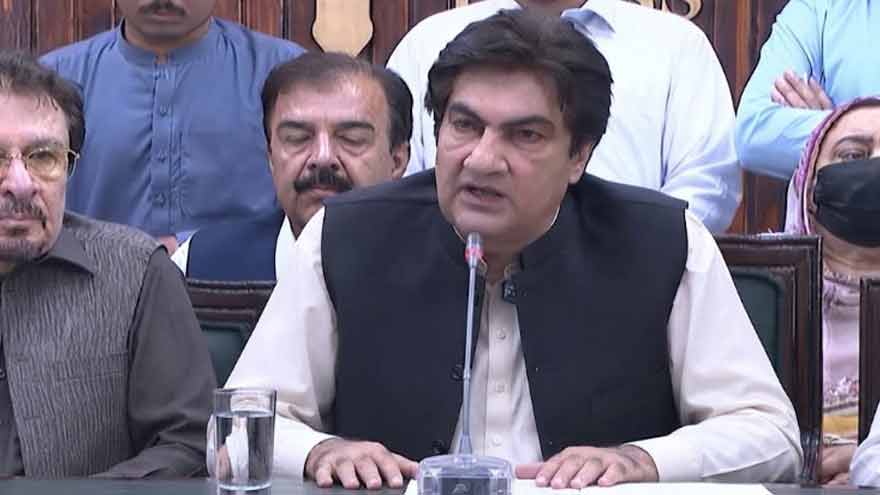
Speaking at a special session on the second day of Think Fest held at Alhamra, Ahsan Iqbal said that if a nation’s digital systems are compromised, its power grid could be disabled, smart city cameras could be misused, and law enforcement databases could fall into the hands of criminal groups. He further added that interference in banking systems could disrupt financial transparency and operations.
He highlighted that in the modern era, weapons have also become digital, linking national defense directly to cybersecurity. As digitization grows in importance, cybersecurity has become equally critical. He noted that cyber threats are not limited to the national level but are also increasing at the individual level.
The minister also warned that social media platforms and digital systems like Google can predict a person’s psychology, preferences, and future decisions even better than close relatives due to the power of big data and advanced technology.
He said that the combination of big data and technology poses a major challenge to democracy because it can be used to manipulate voters’ opinions and electoral decisions in an organized manner. He urged people to watch the Netflix documentary The Great Hack to understand how social media platforms influence and shape public thinking.
Ahsan Iqbal also cautioned that spreading disinformation has become extremely easy, and with the advent of artificial intelligence (AI), it has become almost impossible for a common person to distinguish between real and fake videos or audios. AI-generated content has blurred the line between truth and falsehood, which is being exploited by various actors for their own goals.
The federal minister revealed that he has personally been a victim of digital intolerance, hate speech, and disinformation. In 2018, some political groups used religious sentiments to spread false information against him, which led a young man to attempt to assassinate him. The attacker had no personal enmity with the minister but was influenced by online hate content.
He said that the bullet fired at him still remains lodged in his body, serving as a daily reminder of the importance of combating hate and misinformation. He added that although his life was saved, the attacker’s life was ruined as he ended up in jail, whereas he could have been a productive citizen if he had not been influenced by hate speech.
Ahsan Iqbal emphasized that it is essential to build digital resilience among the youth so that they can verify information instead of accepting it blindly. Without the ability to distinguish between truth and falsehood, people can be easily manipulated and used to spread unrest in society.
He warned that modern warfare is now being fought in the information domain, where fear, distrust, and division can be created among people. Through information warfare, trust between citizens and institutions can be damaged, and society can be divided on sensitive grounds such as religion and ethnicity.
To counter these threats, the minister stressed that the education system must instill critical thinking and the ability to evaluate information in young people. He said the Higher Education Commission (HEC) has been directed to ensure universities develop students’ capacity to distinguish between truth and falsehood in the digital age.