



Zulfiqar Ali Bhutto: on art, queer Muslims and masculinity

Zulfiqar Ali Bhutto Jr. speaks about his queer identity and of what masculinity means to him
LAHORE (Aqsa Sajjad) - The third generation of the Bhutto family has diverged far and wide from their ancestors and from each other. While Bilawal and Bakhtawar are politically active in Pakistan, with the former being lauded as the leader of the PPP, Famita Bhutto is a literary artist striving to portray her father and grandfather’s ideologies through her writing and Zulfiqar Ali Bhutto Jr. is an artist and performer, focusing on queer identities of the colored community.
Sharing the same name as his paternal grandfather, and the patriarchal heir of the Bhutto name, Zulfiqar Ali Bhutto Jr. spoke to The Turmeric Project about his queer identity and of what masculinity means to him. The Turmeric is a project for queer South Asian healing, art, and community, dedicated to creating and showcasing queer South Asian art & artists. As part of their Artist Spotlight Series, they made an 8-minute documentary on Zulfiqar Ali Bhutto in which he spoke about his "Mussalman Muscleman" series, masculinity, identity and third cultures. We learn about what it s like for him to be stereotyped as a Muslim and of how he has tried to portray it with a humurous narrative to get people to listen.
“It is so hard. Who listens? They don’t care,” Bhutto says, speaking about his drag performance in the Castro in San Francisco. “We have to be honest. They don’t care. They’re not interested but when you make it funny, they actually reflect on their own ideas.”
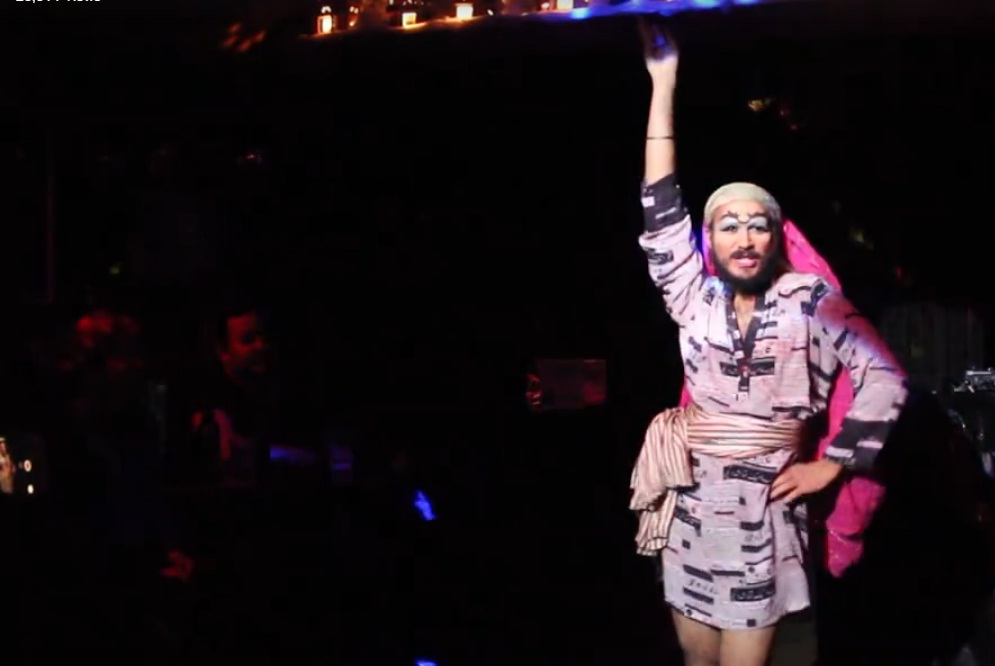
A snapshot of ZAB Jr. s drag performance at the Castro in San Francisco
The video of his drag performance was shared all over social media in Pakistan, creating quite a controversy because of his effeminate dressing and language which is considered tabooed in Pakistan’s conservative Muslim culture. The performance was actually a recitation of a poem called ‘Muslim’s Burden’ in which Bhutto spoke about why being a Muslim has become a political issue.
“It’s not me. It’s you, the white man,” he says. “You have called me out. I’m not a Muslim because I pray five times a day. I’m not a Muslim because I grow my beard. I’m a Muslim because the White Man tells me so.”
When people learn he s a queer Muslim dancing at a drag bar, the stereotype is destoryed itself.
"It brings people in. You’re seducing your audience."
On his ideas of masculinity, he speaks about how there’s a stereotype that the representative of the nation is a strong man.
“It’s ridiculous,” he says. “The idea of strength, the idea of masculinity. What, for me, is masculinity? It’s softness. It can be effeminate. It can be genetic.”
His art, appreciated by many. tends to portray men in a softer light than the traditional portrayal of ‘strong men.’
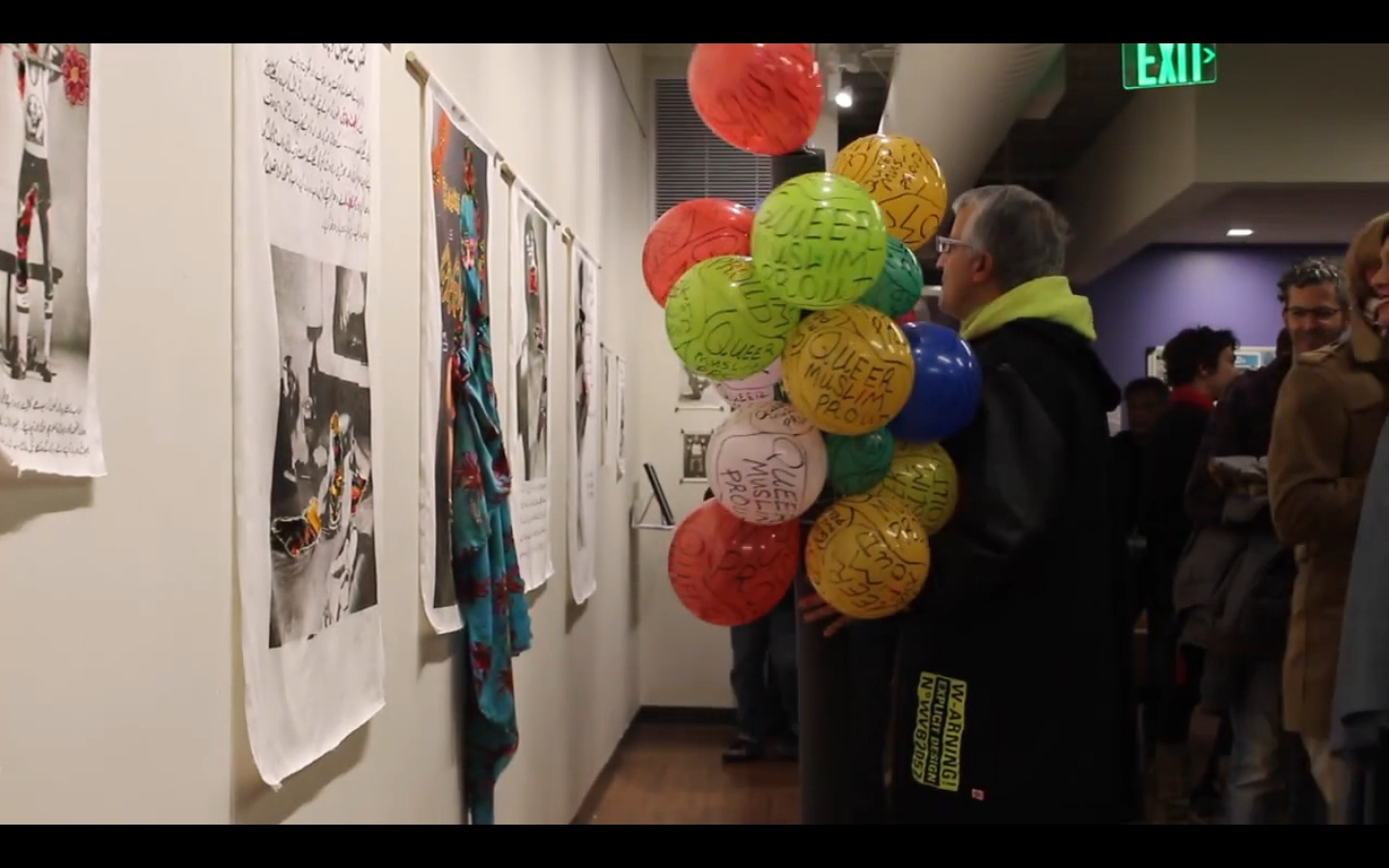
ZAB Jr. s art exhitibiton
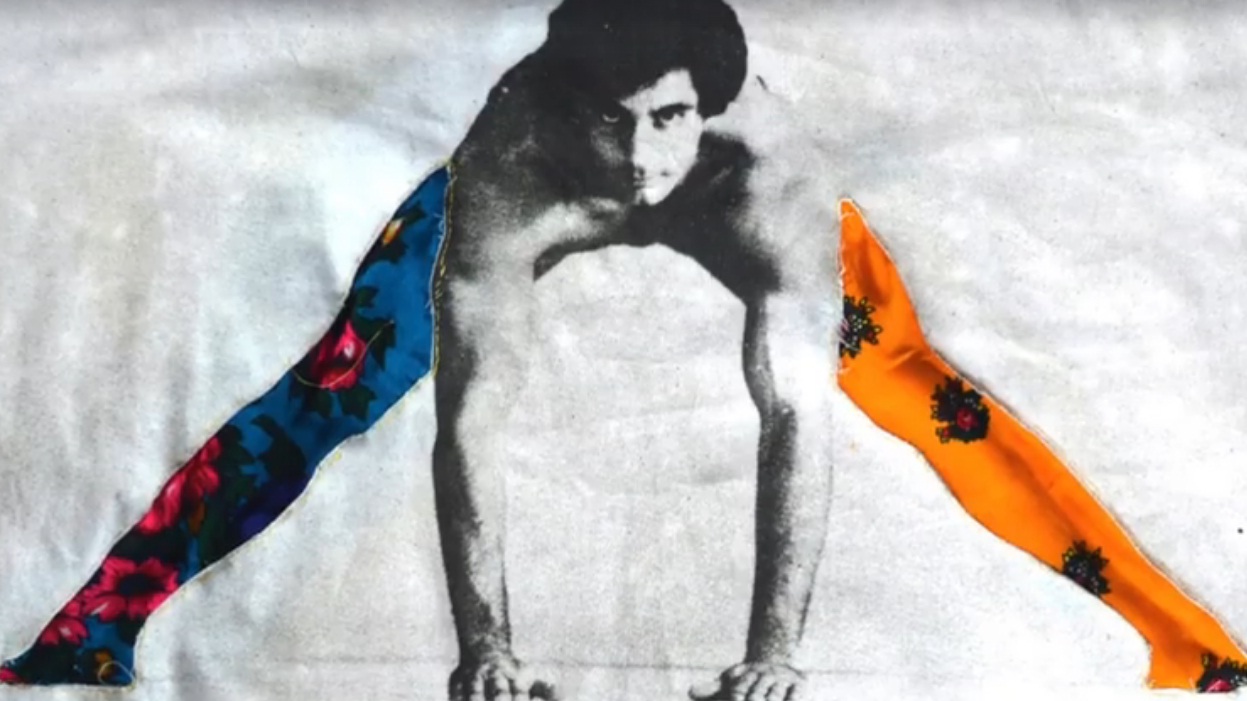
He took pictures of professional body builders, cut out parts of their bodies linked with being strong, such as muscled arms and legs, and replaced them with flowery textiles.
Bhutto also spoke about the assassinations of his grandfather, father, aunt and uncle. Identities are strengthened through history and violence and that is what resulted in their deaths, according to him.
“My father was killed when I was six years old outside our home in Karachi. He was assassinated. My grandfather, my aunt, my uncle. All assassinated. So how are identities formed? Through violence. Through force. We as Pakistanis identify as Pakistanis because there was violence incurred to us by another group of people: Indians. Indians identify as Indians because there was violence incurred to them by another group of people: Pakistanis. All of these identities are strengthened through war and through loss and through bloodshed.”
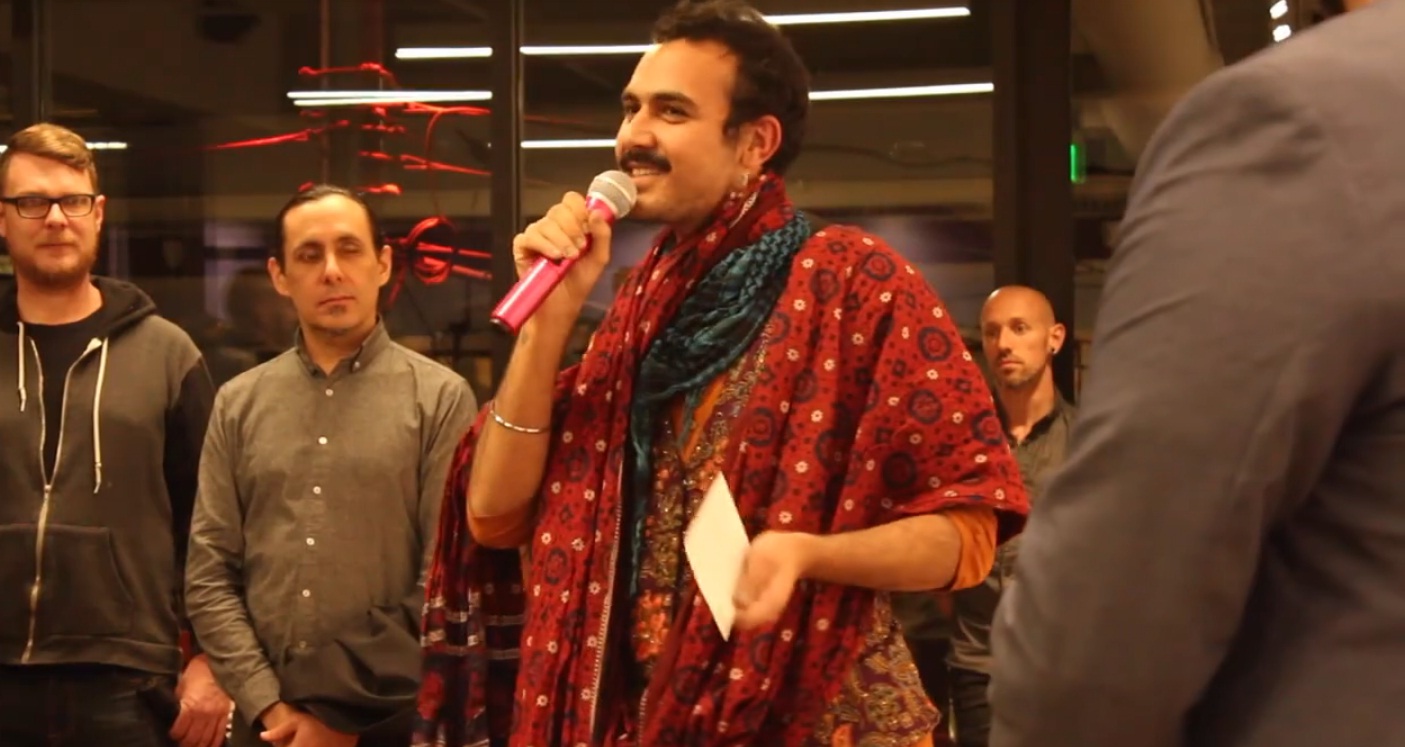
ZAB Jr. speaking to the queer community of San Francisco
Like the others of the third generation of Bhutto, Zulfiqar is trying to make a difference. He uses his art and expression to create shared spaces of existence for communities who generally have a hard time finding their comfort space: LGBTQ, South Asian queers, Muslim queers and people who identify differently from what is mainstream.
"The beautiful queer community of colour has given me a lot of support over the years and I really want to see more faces of colour in the Castro. I want to see more artists of colour take over these streets. I want to see more artists of colour in Berkley, in Oakland, in San Francisco. In fact, take over the whole world!"
