



Pak, India parliamentarians urge resumption of composite dialogue
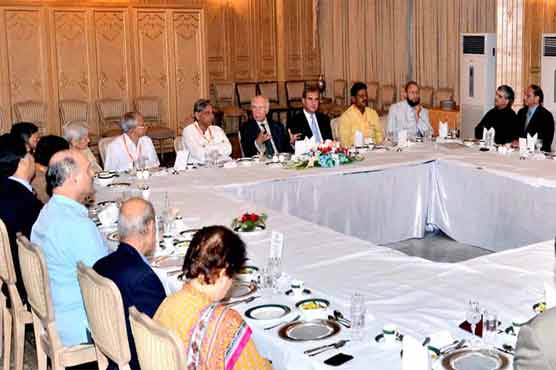
The lawmakers of the two countries agreed to continue parliamentary level contacts.
ISLAMABAD (Web Desk) - Parliamentarians of Pakistan and India have jointly stressed on the importance of resumption of composite dialogue between two nations, while sidelining powers with vested interests.
Addressing a joint press conference at the conclusion of first day talks on Friday, the federal minister of science and technology, Zahid Hamid declared the success of dialogue, and also said that Prime Minister Mian Nawaz Sharif has lauded the efforts of parliamentarians of both countries for normalization of relations.
PTI’s Makhdoom Shah Mehmood Qurieshi also lauded the good intentions and efforts for peace, these talks had promoted; and while stressing that dialogue was the only way out of crisis for both countries, he also said that these talks helped a lot to pave way for expected meeting of Premiers of two countries, in the sidelines of forthcoming UN Security Council meeting on 29th Sep.
He said that as long as any kind of trust deficit existed between two countries, there would be no progress in any composite talks; hence this trust deficit would have to be eliminated at all earliest and all costs.
Qureshi asked the Indian parliamentarians to convey to Indian rulers that Pakistan did not desire war, but peace with India, and said that that both sides had strong reservations, which needed to be addressed; while also stressing media to play its due role for developing awareness and general consensus among masses.
The Indian parliamentarian Mani Shankar Eyre expressed his strongest hopes and belief in progressing of better relations between two countries, and continuity of composite dialogue, which should help resolve outstanding differences between two countries.
He also expressed the possibility of being able to convince respective countries of heeding to parliamentarians’ recommendations, but reminding that any final decision nevertheless rested with the government itself.
Shankar said that forces holding both countries as hostage were bent on sabotaging talks, and reminded that if India was not serious about talks, it would not have come this far, while also admitting that Pakistan had stronger yen for peace than India.
A joint declaration was also proclaimed, which portrays a unanimous consensus that parliamentarians of both countries had same aspirations for the well-being of each other.
