Summary Pakistan is among the countries most exposed to climate-driven extremes, with the 2022 super-floods causing an estimated $30 billion in losses
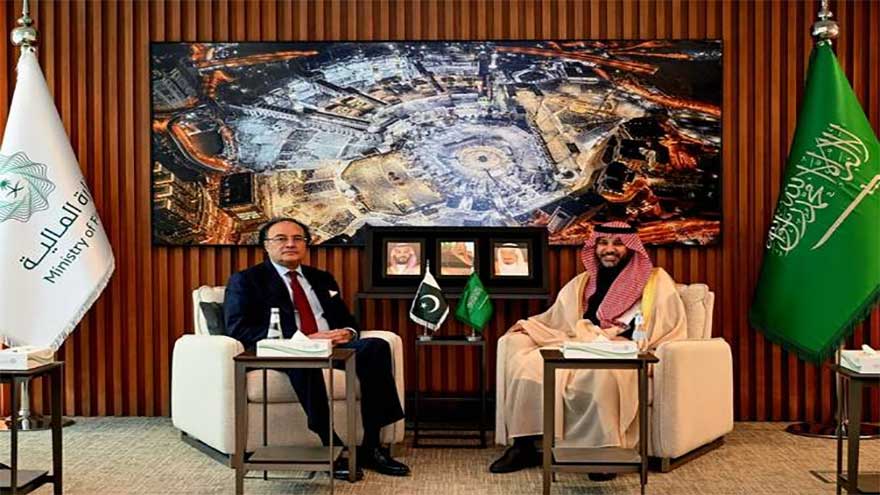
ISLAMABAD (Web Desk) - Finance Minister Muhammad Aurangzeb on Thursday held talks with Saudi Arabia’s Vice Minister of Finance Abdulmuhsen Al-Khalaf in Riyadh, with both sides discussing macroeconomic trends and plans to deepen cooperation as Islamabad works to stabilize its economy.
During Thursday’s meeting, “the Ministers exchanged views on the positive macroeconomic trends of Pakistan’s economy and joint resolve to further enhance the economy,” the finance ministry said in a statement.
“Aurangzeb appreciated Kingdom’s bilateral support and multilateral support for strengthening Pakistan’s economy. Both sides agreed to continue close cooperation on tactical and strategic level to fulfil the aspirations of the leadership and the people of the two brotherly countries.”
Earlier, speaking at the Global Development Finance Conference – Momentum 2025 in Riyadh, Aurangzeb said Pakistan is facing a new economic normal in which climate shocks impose annual losses, strain fiscal resources and undermine its recovery from past balance-of-payments crises.
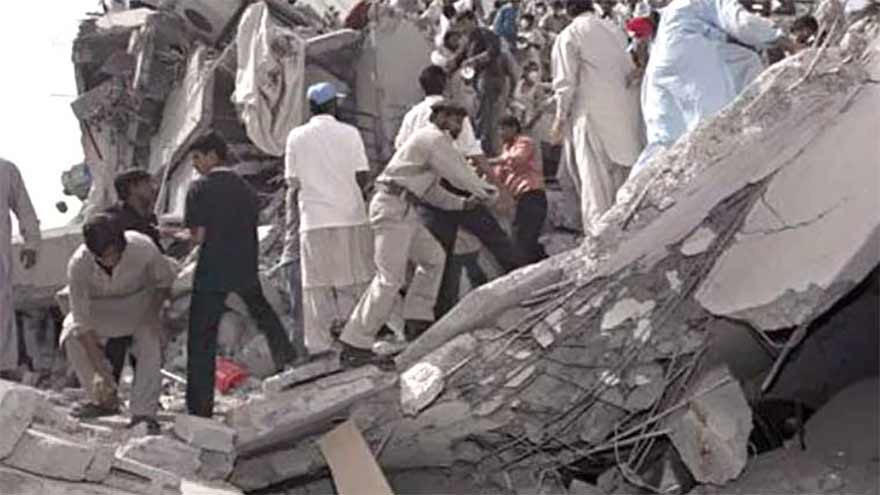
Pakistan is among the countries most exposed to climate-driven extremes, with the 2022 super-floods causing an estimated $30 billion in losses and renewed flooding this year again overwhelming provincial and federal budgets. Islamabad has created early-warning systems and emergency buffers, but Aurangzeb said adaptation costs far exceed domestic capacity and require faster external support.
“Our recent experience shows that climate change is an increasingly tangible and costly reality for Pakistan,” the Pakistani finance minister told the Riyadh forum.
“Pakistan expects to lose roughly half a percentage point of GDP growth this year, placing additional strain on an already challenged emerging economy.”
He said Pakistan’s commitment to macroeconomic stability, including building fiscal and external buffers, had allowed it to manage immediate rescue and relief operations from domestic resources. But long-term rehabilitation, he added, can only advance if global climate financing flows more quickly.
Aurangzeb criticized mechanisms such as the Green Climate Fund and Loss and Damage Fund for slow and bureaucratic disbursement processes that make it difficult for vulnerable countries to access urgently needed support. Pakistan, he said, has made more progress through multilaterals, including receiving the first $200 million tranche from the IMF’s Climate Resilience Fund.
The minister highlighted Pakistan’s new 10-year Country Partnership Framework with the World Bank announced this year, which allocates about $20 billion, with one-third earmarked for climate resilience and decarbonization.
Unlocking those funds, he stressed, now depends on Pakistan rapidly preparing “high-quality, bankable projects.”