Flood Analysis 2025: Monsoon Impact, Causes & Regional Effects
Floodwater recedes, leaves behind trail of destruction
(Dunya News) – The floodwaters in Punjab have started receding leaving houses and other structures in ruins. However, restoration work could not be started due to various reasons.
Floods have caused horrifying devastation in Punjab. In Lahore alone, 26 localities across five tehsils have been affected, with 82,952 people suffering losses and 36,658 displaced.
In Alipur, several villages have been devastated, including Lashari, Chanjan, Maysar, and Chandia. Areas like Khan Garh Doimah, Sitpur, Lati Madi, Choki Gabol, and Azmatpur were severely affected. Gulwan Doim, Choki Gabol, Mari, and other regions still remain under water.
The water level at Minchanabad on the Sutlej River has started to decrease, but restoration efforts have not yet begun. In the affected village of Bahramka Hathar, life has not returned to normal.
More than 15 villages around Minchanabad still have no road access, with floodwaters five to seven feet deep. Hundreds of acres of crops have been destroyed.
Meanwhile, the situation in Uch Sharif and Ahmed Pur Sharqia has worsened, with 36 localities in Uch Sharif experiencing house demolitions and thousands of acres affected.
Floodwaters from the Sutlej have caused devastation in 67 localities of Minchanabad, affecting 56,374 people across a 76 km river belt. Over 20 villages still have no land access.
In Chishtian, floods engulfed 47 localities, destroying homes and displacing people.
In Shujaabad, the village of So Mun was wiped out, with hundreds of houses collapsing and thousands rendered homeless.
Arifwala also faces widespread devastation, with many villages destroyed and houses reduced to rubble.
The motorway near Jalalpur Pirwala has been flooded, and the M-5 has been closed.
SINDH SITUATION
Water inflow is increasing at Guddu, Sukkur, and Kotri barrages. At Guddu Barrage, inflow was recorded at 594,936 cusecs and Sukkur 508,830 cusecs, while at Head Panjnad flow decreased to 230,000 cusecs.
In Ghotki, floodwaters breached the Rontri embankment, submerging cotton and sugarcane crops.
Dozens of villages in Union Council Bond and Qadirpur in Ubaro have been flooded. Near Kamal Dero in Noshero Feroz, the Mai Jo Bhan irrigation bund was breached, submerging over 50 villages.
Nodero is experiencing high-level flooding, with water flow recorded at 526,067 cusecs. The Morya Loop bund and Barra Patan are under severe pressure.
Mitho Khadro village has been severely affected by floods, with water entering homes.
How much damage did the flood cause in Lahore?
A report on flood damage in Lahore has been prepared. Affected areas include four localities in City Tehsil, nine in Ravi, five in Allama Iqbal, seven in Raiwind, and one in Wagah Tehsil.
The report states that 7,888 people were transported to safe locations, and 36,658 trapped individuals were evacuated. Three people were injured, but no deaths were reported in Lahore.
Floods damaged one road, but no roofs collapsed, no embankments breached, and no bridges were damaged. Seventeen medical camps were established, providing services to 16,967 people.
Twenty-six veterinary camps were set up for livestock, treating 18,921 animals and relocating 13,621 to safe areas.
Why Pakistan keeps drowning
By Ahad Khan
Horrific visuals of five brothers swallowed by floodwaters in Sangai village of Lower Kohistan in August 2022 were still fresh in the memory of many Pakistanis when, once again in June 2025, they witnessed a similar tragedy. This time, the scale of the calamity was even greater: 18 members of the same family were swept away by the Swat River.
You know what’s common between these two incidents?
The helplessness of the victims and the apathy of the government.
As if three years were not enough to learn anything. Winston Churchill’s famous words still ring true: “Those that fail to learn from history are doomed to repeat it.”
Both incidents were warnings of far greater troubles ahead — the devastating floods of 2022 and now the catastrophic floods of 2025.
Prime Minister Shehbaz Sharif was right when he recently lamented that Pakistan had failed to learn any lessons from the 2022 floods.
The path to improvement begins with three steps: first, accepting failure; second, understanding its causes; and third, working wholeheartedly to correct it.
So far, more than 800 people have lost their lives since June, and over one million have been evacuated from Punjab alone — with floodwaters yet to reach the low-lying province of Sindh.
Here, we shed light on the causes behind Pakistan’s recurring floods.
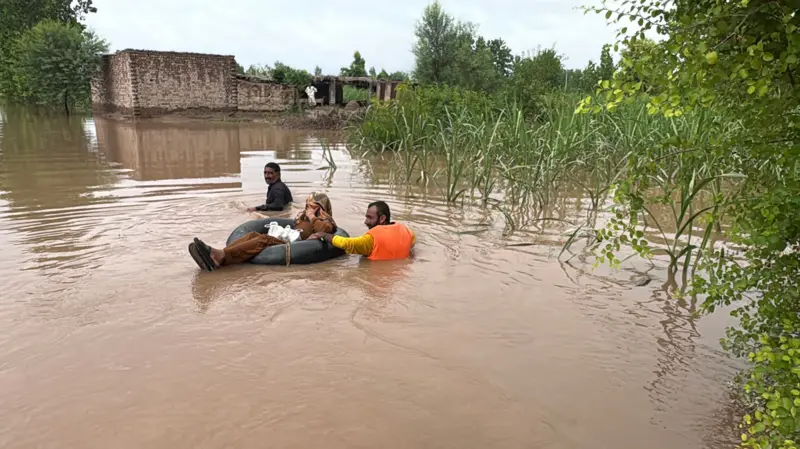
Climate Change
Once doubted, climate change is now undeniable. Pakistan’s major urban centres — Karachi, Lahore, Islamabad, Faisalabad, and Rawalpindi — are experiencing heavier monsoon rains, raising the risk of urban flooding.
Rampant deforestation
Pakistan’s forests are disappearing, with the timber mafia cutting trees unchecked. In KP, forest guards have even been killed for resisting illegal logging.
Poor river management
Riverine flooding often results from weak embankments and illegal construction along riverbanks. Hotels and plazas mushroom with political backing, worsening the risks.
GLOFs (Glacial Lake Outburst Floods)
When rising temperatures accelerate glacial melting, glacial lakes burst and destroy infrastructure in northern areas such as Hunza and Gojal.
Cloudbursts/downpours
When an unusually high volume of rain falls in a short period, it triggers cloudbursts. For instance, Buner received over 150mm of rain in just one hour, causing widespread destruction and loss of life.
Outdated drainage systems in cities
Karachi is a prime example. Clogged nullahs overflow during the monsoon, submerging roads in rainwater. Cleaning them only before the rains worsens the flooding.
Unchecked urbanisation
Unplanned urbanisation, especially in informal settlements of Karachi and Lahore, continues to aggravate urban flooding.
Early warning systems
Outdated systems focus on cities while neglecting rural areas, leaving millions unprepared.
Reluctance to build reservoirs
Successive governments shy away from long-term projects like reservoirs, modern drainage systems, or restoring natural waterways. A few exceptions exist, but largely, such priorities are ignored.
Read, repeat, sleep.
Ignoring warnings and recommendations — as if Churchill had written that quote for us.
Pakistan’s 2025 floods and the price of neglect
By Waniya Kabir Ahmad
In 2025, Pakistan is once again battling walls of water. The monsoon—once a season of blessings—has become a season of destruction. Villages that once echoed with the laughter of children now lie silent, buried under streams of mud. Farmers who once dreamed of harvesting cotton and rice now stand helpless on cracked, barren land. Women, men, and children wander through overcrowded camps, searching for food, water, and relief.
This year’s floods are not just a weather story. They are a mirror reflecting Pakistan’s long history of climate vulnerability, poor governance, and weak infrastructure planning. At the same time, they also reflect the resilience of a people who refuse to give up—despite despair.
Climate: Nature or Negligence?
Floods are not new to Pakistan. Situated at the mouth of Himalayan rivers and reliant on the Indus Basin, the country has historically experienced seasonal flooding. But the scale and frequency of disasters today can no longer be seen as purely natural. They are driven by accelerating global climate change—compounded by local negligence.
Pakistan contributes less than 1% to global carbon emissions, yet it remains among the top 10 most vulnerable countries to climate disasters. Rising temperatures are speeding up glacier melt in the north, swelling rivers dangerously during the monsoon.
Yet climate change alone cannot explain the devastation of 2025.
Poor urban planning, rampant deforestation, illegal encroachments on riverbanks, and the absence of effective drainage systems have all contributed to the scale of destruction. The truth is brutal:
If our institutions had invested in flood management, reinforced embankments, and implemented early warning systems, the number of deaths and displacements could have been significantly lower.
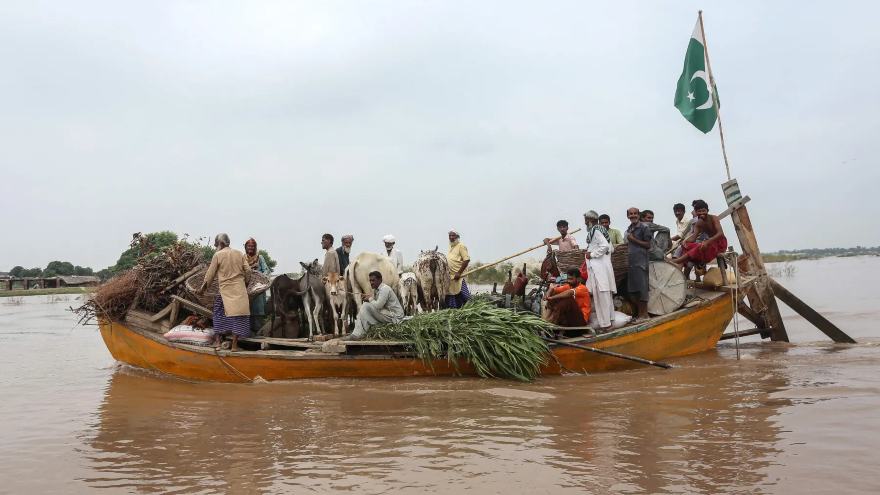
Is India involved in the floods?
A controversial question under debate is whether India has worsened Pakistan’s flooding by controlling the upper rivers. The suspicion is not entirely baseless. Under the Indus Waters Treaty, India controls three of the six rivers in the Indus Basin.
Historically, there have been allegations that India deliberately releases excess water during peak monsoon seasons, placing stress on Pakistan’s already fragile river systems.
While conclusive evidence remains elusive, the timing of excess water releases from Indian dams this year coincided with record rainfall in Pakistan.
In Punjab, authorities reported a sudden surge in river levels that breached embankments and flooded entire villages overnight.
Was this a coincidence—or a calculated use of treaty loopholes? New Delhi denies any wrongdoing, but in the absence of transparent joint monitoring, public suspicion in Pakistan persists.
Even if India is not actively engineering the destruction, the lack of cross-border cooperation worsens the crisis. In an era of climate catastrophe, regional solidarity is critical, yet South Asia remains hostage to political hostility.
Mistrust and miscommunication prevail, at a time when shared water management could save millions of lives.
Government Response: Too Little, Too Late?
In the aftermath of the floods, the Pakistani government declared a national emergency, activated the National Disaster Management Authority (NDMA), and sought international assistance. Helicopters were dispatched for rescue operations, and Army personnel were sent to deliver food and evacuate stranded families.
But the response was slow, disorganized, and under-resourced.
Many citizens complained that aid was distributed unequally, often based on political affiliations or controlled by local power brokers. While some areas received timely rescue support, others waited days for boats or helicopters.
In many flood-hit districts, it was local volunteers—not government agencies—who provided the first line of relief.
Social media campaigns raised donations faster than government institutions, once again raising the painful question:
Where is the government when the people need it most?
International organizations, including the United Nations and the Red Crescent, have stepped in—but the scale of need far outweighs the support provided.
Thousands of families still lack clean water, medical care, and safe shelter. Floodwaters are now spreading diseases like cholera, dengue, and malaria, pushing Pakistan’s fragile healthcare system to the brink of collapse.
Public Resilience
Amidst all the despair, stories of resilience shine through.
In southern Punjab, villagers tied boats together to build makeshift bridges, helping children reach safer ground.
In Sindh, women cooked meals in relief camps despite losing their homes.
In Karachi, students launched crowdfunding campaigns, sending truckloads of dry food and medicine to rural areas.
These acts of courage and compassion remind us that when the state falters, the people step up.
But resilience alone is not enough. Every year, citizens display extraordinary resolve. Yet without structural reforms, their suffering will never end.
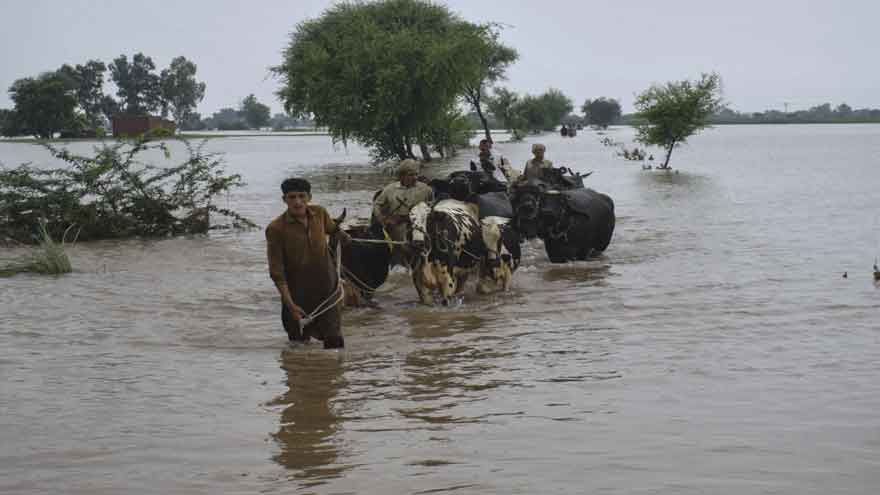
A crisis beyond the flood
Preliminary estimates indicate that nearly 12% of Pakistan’s population—over 27 million people—have been directly affected by the 2025 floods.
Entire villages in Sindh and southern Punjab are submerged.
Thousands of acres of standing crops have been destroyed, pushing farmers to the edge of bankruptcy. Urban residents in Lahore and Karachi have also suffered from poor drainage and paralyzed infrastructure.
This year’s floods are not merely an environmental or humanitarian crisis. They represent a failure of governance, an economic collapse, and a political crisis.
Pakistan has seen this before: in 2010, in 2022, and now in 2025. Each time, promises are made, committees are formed, and the vow of “never again” is repeated.
Yet history continues to repeat itself—with deadly consequences.
Unless Pakistan invests in long-term climate adaptation—including modern dam construction, restoration of water channels, afforestation, and urban drainage improvements—floods will continue to wash away not just homes, but hope.
The government must also revisit its foreign policy, particularly by strengthening the Indus Waters Treaty framework with India.
As Pakistan once again buries its dead, counts its losses, and waits for the waters to recede, a nagging question remains: How many more times will our people have to drown before our leaders learn to swim against the tide of negligence, corruption, and political apathy?
Plight of women sheltering in relief camps after flood
CHUNG (AFP) – In a former classroom, now a makeshift relief camp, pregnant women take refuge from the floods that have ravaged eastern Pakistan, their bodies aching, eyes heavy with exhaustion and silent despair.
Waiting for the water that swallowed their homes to recede, women in Chung, a settlement on Lahore’s outskirts, have limited access to sanitary pads and essential medicines, including pregnancy-related care.
Shumaila Riaz, 19-years-old and seven months pregnant with her first child, spent the past four days in the relief camp, enduring pregnancy cramps.
“I wanted to think about the child I am going to have, but now, I am not even certain about my own future,” she told AFP.
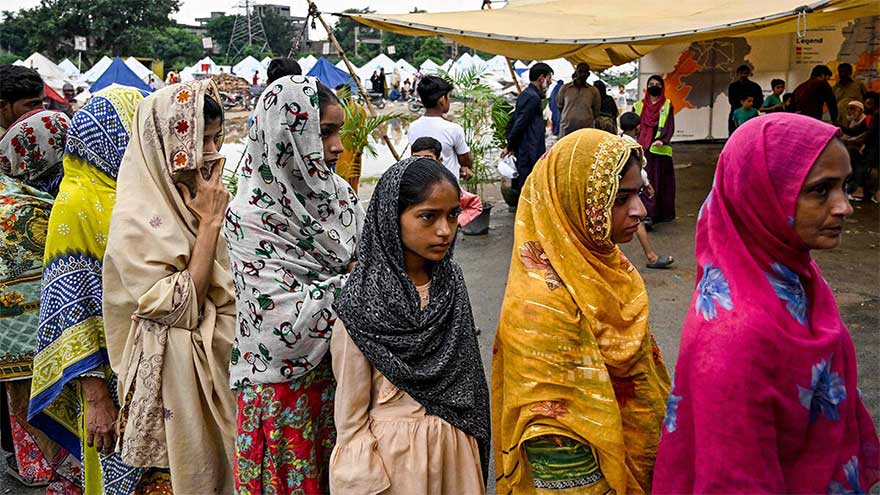
Clad in dirty clothes they have worn for days and with unbrushed hair, women huddle in the overcrowded school hosting more than 2,000 people, surrounded by mud and stagnant rainwater.
“My body aches a lot and I can’t get the medicines I want here,” said 19-year-old Fatima, mother to a one-year-old daughter and four months pregnant.
“I used to eat as I please, sleep as I please, walk as I please — that is all gone now. I can’t do that here,” added Fatima, who asked AFP not to use her real name.
Monsoon rains over the past week swelled three major rivers that cut through Punjab province, Pakistan’s agricultural heartland and home to nearly half of its 255 million people.
The number of affected people rose on Sunday to more than two million, according to provincial senior minister Marriyum Aurangzeb.
Around 750,000 people have been evacuated, of whom 115,000 were rescued by boat — making it the largest rescue operation in Punjab’s history, according to the provincial government.
The flooded rivers have affected mostly rural areas near their banks but heavy rain also flooded urban areas, including several parts of Lahore — the country’s second-largest city.
Jameela, who uses only one name, said she seeks privacy in a makeshift bathroom next to a cowshed.
“We wait for men in these homes to leave, so that we can go use the bathrooms,” she said.
Outside the medical truck beside the relief camp, a concerned woman asked where to take her eight-month-pregnant daughter-in-law who had gone into labour, AFP journalists saw.
The pregnant women are also vulnerable to infectious diseases, according to doctors in the medical camp set up by a local NGO.
“I receive around 200 to 300 patients every day with different infections and water-borne diseases,” said Fahad Abbas, 27, a doctor at the medical camp.
“There are a lot of patients here who are going through psychological trauma, especially women and children, after losing their homes.”
Even without the crisis of a flood, 675 babies under one month old die every day in Pakistan, along with 27 women in perinatal stages from preventable complications, according to the World Health Organisation.
Another woman, who wanted to stay anonymous, said the medicine she once used to manage her period cramps was now too difficult to buy.
“We escaped death, but this misery is no less than death either,” Jameela said.
Pakistan’s deadly monsoon floods were worsened by global warming, study finds
ISLAMABAD (AP) – Heavy rainfall that triggered floods in Pakistan in recent weeks, killing hundreds of people, was worsened by human-caused climate change, according to a new study.
The study by World Weather Attribution, a group of international scientists who study global warming’s role in extreme weather, found that rainfall from June 24 to July 23 in the South Asian nation was 10% to 15% heavier because of climate change, leading to many building collapses in urban and rural Pakistan.
Pakistan’s government has reported at least 300 deaths and 1,600 damaged houses due to the floods, heavy rain and other weather since June 26.
Saqib Hassan, a 50-year-old businessman in northern Pakistan, said flooding on July 22 destroyed his home and 18 of his relatives’ homes, along with their dairy farms. His farm animals were washed away, resulting in heavy losses — likely 100 million rupees ($360,000) — for him and his family.
Last-minute announcements from a nearby mosque were the only warning they got to evacuate their homes in the small town of Sarwarabad and get to higher ground.
“We are homeless now. Our houses have been destroyed. All the government has given us is food rations worth 50,000 rupees ($177) and seven tents, where we’ve been living for the past two weeks,” Hassan told The Associated Press over the phone.
Heavy rains cause series of disasters
High temperatures and intense precipitation worsened by global warming have accelerated the pace of recent extreme weather events faster than climate experts expected, said Islamabad-based climate scientist Jakob Steiner, who was not part of the WWA study.
“In the last few weeks, we have been scrambling to look at the number of events, not just in Pakistan, but in the South Asian region that have baffled us,” he said.
“Many events we projected to happen in 2050 have happened in 2025, as temperatures this summer, yet again, have been far above the average,” said Steiner, a geoscientist with the University of Graz, Austria, who studies water resources and associated risks in mountain regions.
Heavy monsoon rains have resulted in a series of disasters that have battered South Asia, especially the Himalayan mountains, which span across five countries, in the last few months.
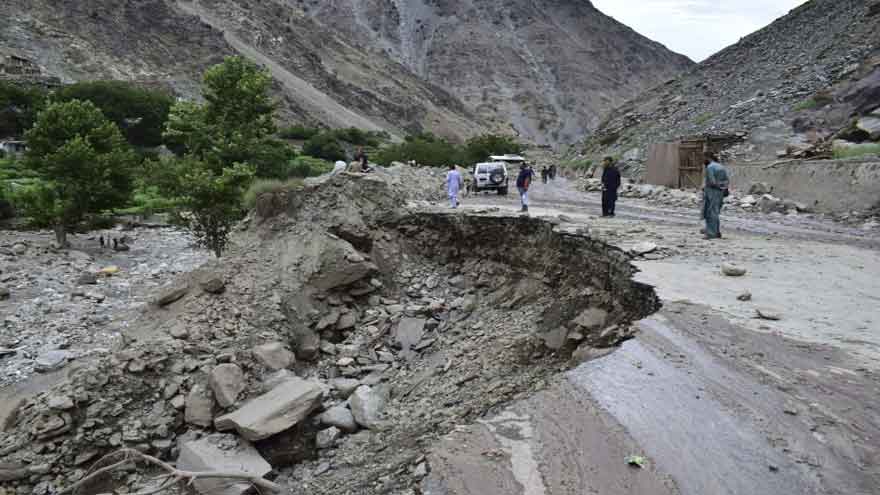
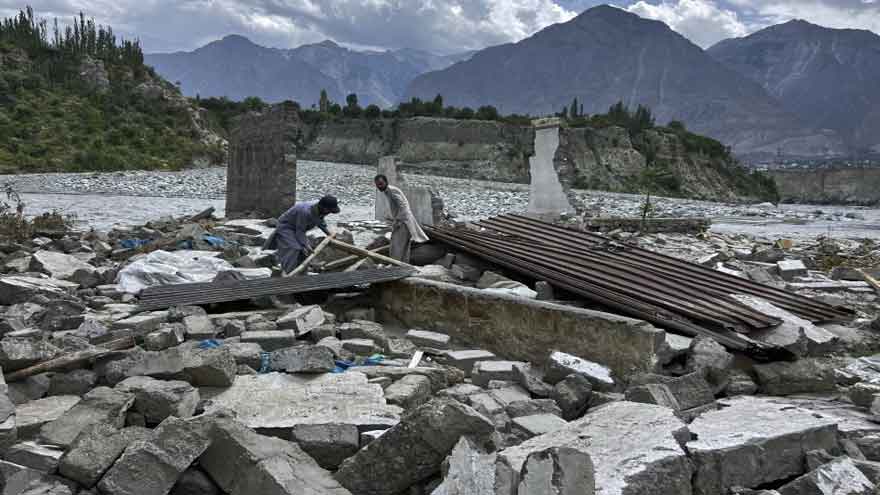
Overflowing glacial lakes resulted in flooding that washed away a key bridge connecting Nepal and China, along with several hydropower dams in July. Earlier this week, a village in northern India was hit by floods and landslides, killing at least four people and leaving hundreds missing.
The authors of the WWA study, which was released early Thursday, said that the rainfall they analyzed in Pakistan shows that climate change is making floods more dangerous. Climate scientists have found that a warmer atmosphere holds more moisture, which can make rain more intense.
“Every tenth of a degree of warming will lead to heavier monsoon rainfall, highlighting why a rapid transition from fossil fuels to renewable energy is so urgent,” said Mariam Zachariah, a researcher at the Centre for Environmental Policy, Imperial College London and lead author of the WWA study.
Extreme weather’s impact on Pakistan
Even though Pakistan is responsible for less than 1% of planet-heating gases in the atmosphere, research shows that it incurs an outsized amount of damage from extreme weather. Pakistan witnessed its most devastating monsoon season in 2022, with floods that killed more than 1,700 people and caused an estimated $40 billion in damage.
According to the United Nations, global funds set up to deal with loss and damages because of climate change or funds set up to adapt to climate change are falling well short of the amounts needed to help countries like Pakistan deal with climate impacts. The U.N. warns that its loss and damage fund only holds a fraction of what’s needed to address yearly economic damage related to human-caused climate change.
Similarly, U.N. reports state that developed countries such as the United States and European nations, which are responsible for the largest chunk of planet-heating gases in the atmosphere, are providing far less than what’s needed in adaptation financing.
These funds could help improve housing and infrastructure in areas vulnerable to flooding.
The WWA report says much of Pakistan’s fast-growing urban population lives in makeshift homes, often in flood-prone areas. The collapsing of homes was the leading cause of the 300 deaths cited in the report, responsible for more than half.
“Half of Pakistan’s urban population lives in fragile settlements where floods collapse homes and cost lives,” said Maja Vahlberg of the Red Cross Red Crescent Climate Centre, who also helped author the WWA report, in a press statement. “Building flood-resilient houses and avoiding construction in flood zones will help reduce the impacts of heavy monsoon rain.”
From Balloki to Guddu: List and capacity of major barrages in Pakistan
(Dunya News) – Punjab due to its geography and cultural history, is known as the land of rivers. Here is a detailed report on the rivers flowing mainly in Punjab and rest of Pakistan.
On the River Sutlej, the first headwork in Pakistan is Head Ganda Singh in Kasur, with a capacity of 400,000 cusecs. The highest flow recorded in history was 385,000 cusecs. The second barrage on the Sutlej is Head Sulemanki, located in Tehsil Minchinabad,
District Bahawalnagar, designed with a capacity of 325,000 cusecs. The third barrage on the Sutlej in Pakistan is Head Islam, situated in Tehsil Hasilpur, District Bahawalpur, with a capacity of 300,000 cusecs.
On the River Chenab, the first headwork in Pakistan is Marala Headworks in District Sialkot, with a capacity of 1.1 million cusecs.
The second barrage is Head Khanki in District Gujranwala, also with a capacity of around 1.1 million cusecs. Near Mandi Bahauddin, the Qadirabad Headworks is the third barrage, with a capacity of 800,000 cusecs. In District Jhang, the Trimmu Headworks is the fourth barrage, with a capacity of 875,000 cusecs, and the fifth is Head Panjnad on the Chenab, with a capacity of 865,000 cusecs.
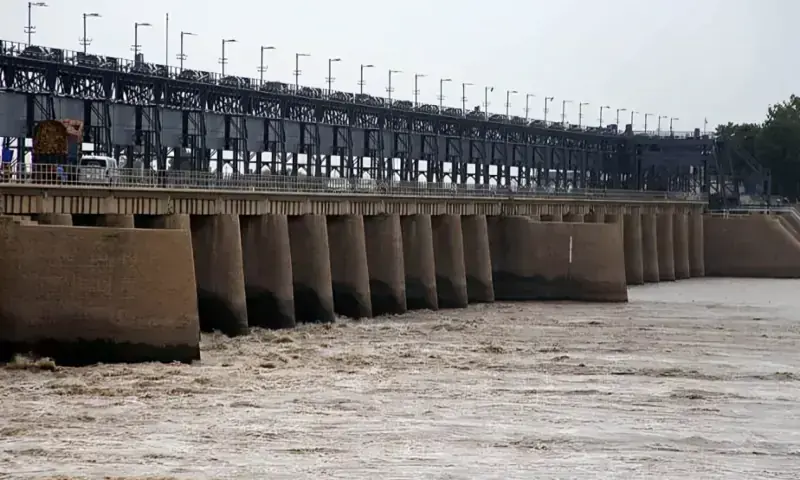
On the River Ravi, the Balloki Headworks in District Kasur has a capacity of 225,000 cusecs, while the Sidhnai Headworks in District Khanewal has a capacity of about 150,000 cusecs.
On the River Jhelum, near Mandi Bahauddin, the Rasul Barrage allows a flow of about 850,000 cusecs. The Trimmu Barrage, located near District Jhang, is significant as it is the point where the Jhelum and Chenab meet.
On the River Indus, the Tarbela Dam in Haripur is not a headwork but is the largest dam in Pakistan. In District Mianwali, the Jinnah Barrage has a capacity of 950,000 cusecs, while the Chashma Barrage, also in Mianwali, has a capacity of 1.1 million cusecs.
In Dera Ghazi Khan, the Taunsa Barrage has a capacity of 1.0 million cusecs. In Kashmore, Sindh, the Guddu Barrage has a capacity of 1.2 million cusecs. In Sukkur, the Sukkur Barrage can handle 1.15 million cusecs, while in Jamshoro, Sindh, the Kotri Barrage has a capacity of 875,000 cusecs.