Summary Several newly elected and returning lawmakers campaigned on international legal standards, humanitarian assistance and opposition to unconditional US military support for Israel
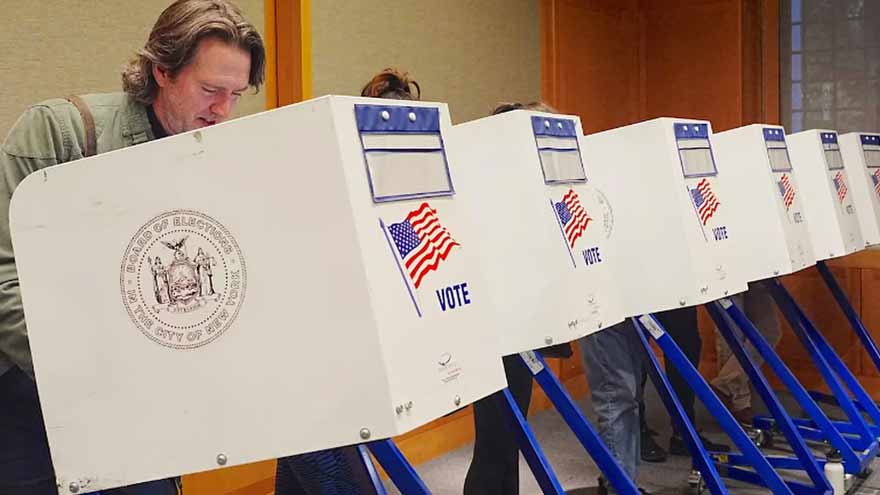
At least seven Muslim lawmakers won seats in the US Congress in Tuesday's midterm elections, marking historic gains in both chambers as candidates campaigned on civil rights, healthcare and foreign policy.
The elections shifted the balance of power in Washington, with Democrats winning control of both the Senate and House of Representatives from Republicans.
Several newly elected and returning lawmakers campaigned on international legal standards, humanitarian assistance and opposition to unconditional US military support for Israel amid the ongoing genocide in Gaza.
- Historic firsts in Senate and House
Abdul El-Sayed, Michigan
The 42-year-old Democratic candidate defeated former Republican Rep. Mike Rogers, becoming the first Muslim elected to the US Senate.
A physician and former public health official, El-Sayed won the seat vacated by retiring Sen. Gary Peters following a contentious campaign in which his religion became a target of attacks by Republicans and President Donald Trump.
El-Sayed, who won the Democratic primary in August, criticized unconditional US arms transfers to Israel and described its military operations in Gaza as genocide.
His former primary opponent, Rep. Haley Stevens, endorsed Rogers two days before the general election over El-Sayed's rhetoric.
Adam Hamawy, New Jersey
The 56-year-old Democrat defeated Republican Gregg Mele in the state's 12th Congressional District, becoming the first Muslim elected to represent New Jersey in Congress.
A plastic surgeon, retired US Army combat physician and Iraq War veteran, Hamawy volunteered at the European Hospital in Gaza in 2024.
He campaigned for universal Medicare, cancellation of medical and student debt, abolition of Immigration and Customs Enforcement, and an end to US military assistance to Israel.
Darializa Avila Chevalier, New York
The Democrat secured a House seat after previously defeating longtime incumbent Rep. Adriano Espaillat in the June primary.
Chevalier, a civil rights investigator, doctoral student and convert to Islam, won more than 85% of the vote.
Her campaign focused on community organizing and advocacy for Palestinian rights.
Incumbent Muslim lawmakers retain seats
Four Muslim members of the House of Representatives won reelection to two-year terms, maintaining their roles in congressional debates over foreign policy and Palestinian rights.
Rashida Tlaib, Michigan
The Palestinian-American Democrat secured a fifth term representing the state's 12th Congressional District, defeating Republican James Hooper.
The only Palestinian-American member of Congress, Tlaib has advocated enforcement of domestic and international arms regulations, civilian protection and Palestinian self-determination.
Ilhan Omar, Minnesota
The Democrat won a fifth term representing the state's 5th Congressional District, defeating Republican John Nagel and independent candidate DeVelle Jackson.
Omar, who arrived in the US at age 12, became the country's first Somali-American federal lawmaker when she took office in 2019.
She has advocated humanitarian assistance and oversight of US arms transfers while facing repeated political attacks over her background.
Andre Carson, Indiana
The Democrat retained his Indianapolis-based 7th Congressional District seat against Republican Patrick McAuley and Libertarian James Sceniak.
Serving since 2008, Carson is the longest-serving Muslim lawmaker in the House.
His policy positions have emphasized international legal institutions, equal human dignity and humanitarian assistance.
Lateefah Simon, California
The Democrat retained her seat representing the state's 12th Congressional District in the East Bay, defeating fellow Democrat Jamie Joyce.
Simon has advocated against offensive US arms deliveries.
Meanwhile, Muslim candidate Aisha Wahab maintained an early lead in a separate congressional race in California as vote counting continued.