Summary Student-led demonstrations have engulfed central Tirana since mid-October and spread to other cities
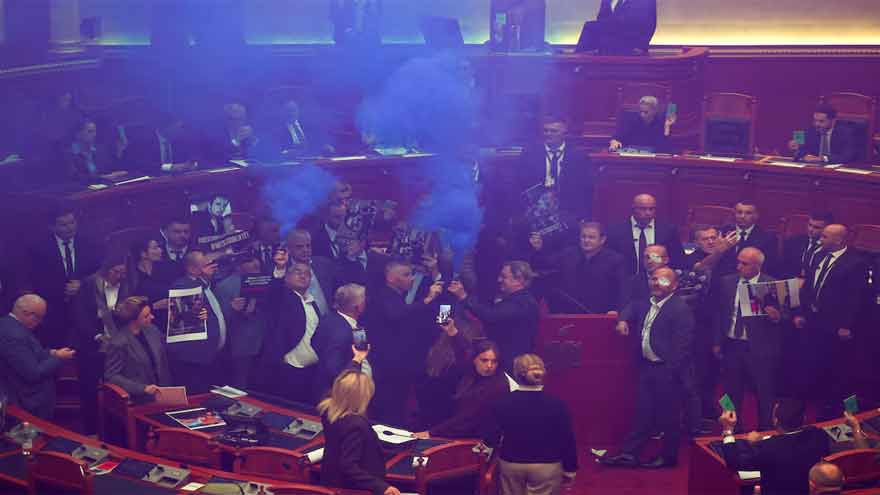
TIRANA (Reuters) - Opposition lawmakers in Albania disrupted a parliament session by letting off flares on Thursday following weeks of violent anti-government protests called by students demanding the resignation of Prime Minister Edi Rama.
Members of the opposition Democratic Party of Albania also blocked access to the podium when a law on the Central Bank was being voted on.
"These (ruling lawmakers) are criminals and they deserve tear gas, rubber bullets, cracked skulls and broken bones, not the young people," opposition leader Sali Berisha said during his speech before his microphone was cut off.
Other opposition members surrounded him during the speech, holding photos of protesters injured by rubber bullets. Some held aloft blue flares, the colour of their party.
Student-led demonstrations, fuelled by anger over perceived government corruption, a lack of jobs and poor education standards, have engulfed central Tirana since mid-October and spread to other cities.
Demonstrators demanding Rama's resignation have set fire to government buildings and banks, smashed shop windows and pulled up paving stones to throw at police.
The unrest, which followed months of largely peaceful summer protests against a luxury coastal development backed by US President Donald Trump's son-in-law Jared Kushner, poses the biggest challenge yet to Rama, who has governed since 2013 and won a fourth term in office last year.
On Sunday, Rama introduced new measures to curb violence, including fines of 500,000 lek ($6,200) for anyone who participates in a protest that turns violent, even if they do not personally commit acts of violence.
This week the protests were mainly peaceful, and another is planned for Saturday.
Prime Minister Rama has again called on students for dialogue and introduced new economic measures such as cheaper fuel and more money for poor families in an attempt to stop the violence in the streets.