Summary Tarun Tejpal was accused of raping the journalist in the lift of a five-star hotel in the western coastal state of Goa during an event in November 2013
NEW DELHI (AFP) - An Indian court sentenced former news magazine editor Tarun Tejpal to 10 years in prison on Thursday after convicting him of raping a junior colleague, in a case that drew nationwide attention.
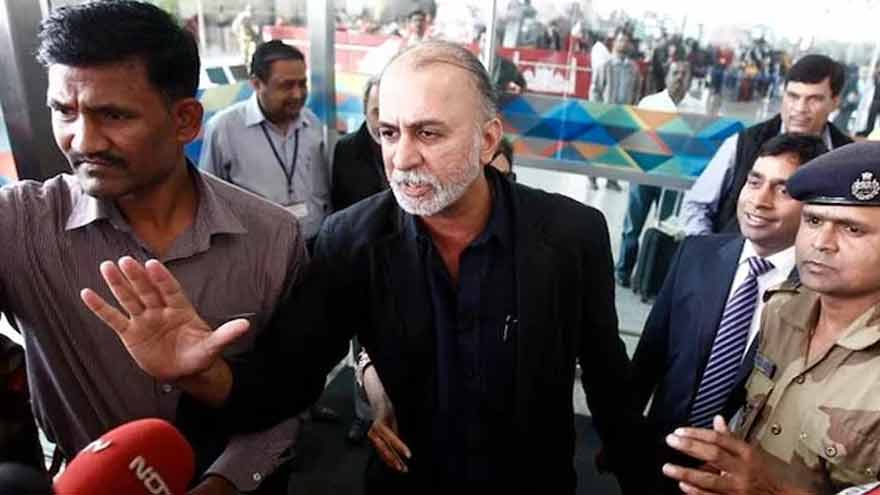
Tejpal, co-founder of investigative magazine Tehelka, was accused of raping the journalist in the lift of a five-star hotel in the western coastal state of Goa during an event in November 2013.
In 2021, a trial court in Goa acquitted Tejpal of the charges of rape, sexual harassment and wrongful restraint.
The acquittal was challenged by the Goa government before the Bombay High Court, which set aside the trial court's verdict and sentenced him to 10 years in jail on Thursday.
"He has been convicted to 10 years of rigorous imprisonment. He has been given two weeks' time to surrender," Goa Police investigator Sunita Sawant, who led the probe against Tejpal, told reporters.
The court also ordered him to pay a fine of $5,250, Sawant added.
Tejpal, 63, said he would challenge the conviction in the Supreme Court.
"For the past 13 years, they have been pursuing me as a part of a political vendetta," he told reporters.
Tejpal, who had initially blamed the assault on "a lapse of judgement", was arrested in 2013 and spent seven months in jail until the Supreme Court granted him bail.
He later alleged that the case against him was part of a "political vendetta" by the Bharatiya Janata Party (BJP) government in Goa.
The case emerged at a time when India's handling of sexual assault cases was under intense scrutiny following the fatal gang rape of a 23-year-old student on a New Delhi bus in December 2012.
That attack triggered nationwide protests and international outrage, prompting the government to strengthen the country's rape laws.
Tejpal's case severely damaged the reputation of Tehelka, a publication that had built its profile on investigative journalism and campaigns for women's rights and social justice.
While Tehelka continues to operate under new leadership, it has failed to regain the influence it enjoyed before the 2013 case.