Summary "The Iranian aggression resulted in the death of one person and injuries to others," the Kuwaiti foreign ministry said. It also resulted in damage to vital facilities and diplomatic missions
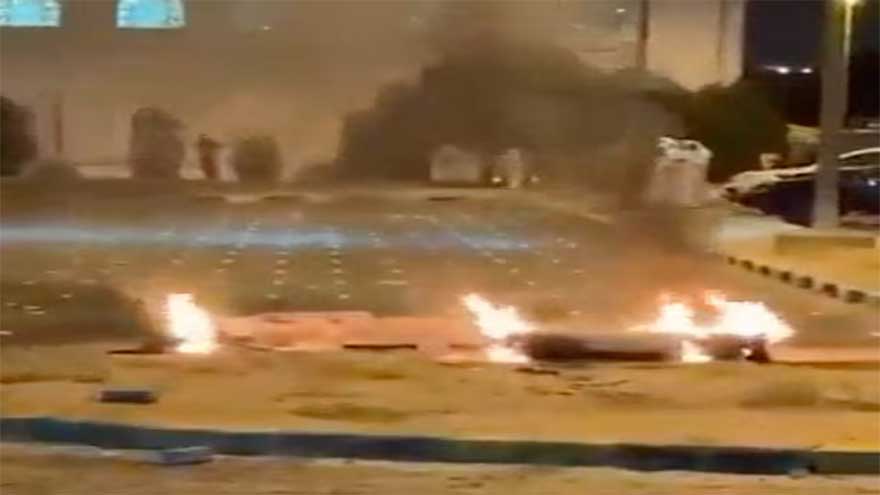
DUBAI (Reuters/AFP) – An Iranian drone and missile attack struck Kuwait's international airport early on Wednesday, causing death of one person and injuries to others and forcing authorities to divert flights, Kuwait's state news agency reported.
"The Iranian aggression resulted in the death of one person and injuries to others," the Kuwaiti foreign ministry said. It also resulted in damage to vital facilities and diplomatic missions, the ministry added.
The attack caused "severe damage" to the airport's T1 building, the report said, citing the General Civil Aviation Authority.
Meanwhile, Kuwait Airways announced it was resuming flights from the Gulf state's international airport, which was damaged earlier by the Iranian drone and missile attack.
The airline operates flights from the airport's Terminal 4 building.
Earlier, the civil aviation authority said the damage from the Iranian attack was to Terminal 1, which is used by international airlines.
The US military earlier said two Iranian missiles fired at Kuwait fell short or broke apart en route, and three missiles launched at Bahrain were intercepted by US and Bahraini forces.
US Central Command added that Iran launched ballistic missiles toward regional neighbours but all failed to hit targets.
US forces conducted strikes on Qeshm Island in response to attempted attacks by Iran and defeated multiple Iranian ballistic missiles and drones.
Iran blames Kuwait and Bahrain for US attacks
Iran's Foreign Ministry condemned what it described as US attacks on an Iranian oil tanker in the Strait of Hormuz and a telecommunications tower on Qeshm Island.
The moves violated a ceasefire understanding and international law, it said.
The ministry said Kuwait and Bahrain bore "direct and clear responsibility" for the attacks, alleging their territory and facilities had been used to support US military operations against Iran.
Tehran said it reserved the right to self-defense and would use all available means to respond, including by targeting the source of any future attacks.
AFP adds: The attacks marked one of the more severe tests yet of a fragile April 8 ceasefire, that has largely held despite sporadic strikes after more than a month of war sparked by the US and Israeli attack on Iran.
Kuwaiti officials blamed the attack on the airport on Iran, whose Revolutionary Guards accused US forces of triggering the night's sequence of attacks by targeting a communications tower on the country's Qeshm Island, forcing it to respond.
But, with Bahrein also complaining of an overnight drone attacks from Iran, the United Arab Emirates attempted to rally its Gulf neighbours in opposition to Tehran.
"In light of Iran's repeated aggression against the sisterly states of Kuwait and Bahrain, a firm, unified, and cohesive Gulf stance is imperative," UAE presidential advisor Anwar Gargash posted on social media.
"This aggression does not just target one country, it targets us all."
Kuwait's ministry of defence spokesman Brigadier General Saud Abdulaziz Al-Atwan described the airport strikes as "criminal Iranian aggression which resulted in significant material damage to the building and injuries".
Al-Atwan did not say how many people were hurt but said those wounded had received medical care.
Kuwait's state news agency Kuna said the civil aviation authority had suspended air traffic and transferred arriving flights to alternative airports after "Terminal One came under Iranian attacks causing casualties and damage".
Iran's Revolutionary Guards did not confirm they had targeted the airport.
But a statement said that, in response to a US attack "their air base and helicopters located in one of the countries in the region, as well as the headquarters of the US Fifth Fleet, were attacked by missiles and drones from the IRGC Aerospace Force".
Kuwait's international airport was targeted several times during the war, and had only fully resumed operations on June 1.

Kuwait International Airport in Kuwait City reopened on June 1. The airport was briefly closed Wednesday after what local officials described as an Iranian drone strike on a passenger terminal. Authorities announced resumption of flights from terminal four.
'Broke apart'
The oil-rich Gulf nation, a US ally, has been on the receiving end of Iranian attacks after the US and Israel attacked Iran and killed its supreme leader in late February.
Tehran has repeatedly accused Kuwait and other Gulf countries of allowing US forces to launch strikes from their soil.
Earlier, the US military said it had "successfully defeated" a series of Iranian missile and drone attacks on Kuwait and Bahrain and confirmed it had conducted strikes on Iran's Qeshm Island.
"Two Iranian missiles fired at Kuwait fell short or broke apart en route, and three missiles launched at Bahrain were immediately intercepted by US and Bahrain air defense forces," Centcom said.
Bahrain authorities said they had intercepted three Iranian missiles and a number of drones.
The escalation came after US, Israeli and Lebanese officials met in Washington for direct talks on ending the parallel conflict between Israel and the Iran-backed group Hezbollah.
US Secretary of State Marco Rubio said the militant group was the only impediment to deal, which the Lebanese embassy in Washington said would at first only cover Israeli attacks on Beirut and Hezbollah attacks on Israeli territory, before expanding in scope.
Israel has been fighting Hezbollah since the group dragged Lebanon into the wider Middle East war by attacking Israel on March 2 in support of Iran.
Neither side has publicly accepted Trump's deal, with senior Hezbollah official Mahmud Qomati telling AFP in a written statement the group "will not accept a partial ceasefire".
Lebanon's state-run National News Agency reported Israeli strikes, some of them deadly, on around 30 locations across the south on Tuesday.
Hezbollah meanwhile said it had attacked Israeli troops in southern Lebanese lands they occupy, but did not claim attacks in Israel.

One Israeli strike hit near a hospital in the southern Lebanese city of Tyre.
'Crazy'
Rubio said Washington wanted the talks to remain independent of those with Iran to end the wider Middle East war.
But Iran has repeatedly linked the two conflicts and on Monday said that Israel's expanding campaign in Lebanon risked ending the US-Iran ceasefire in place since April 8.
In recent days, Israeli troops staged their deepest ground offensive into Lebanon in two decades.
Citing what he called Hezbollah's "repeated violations" of a ceasefire officially in place since April 17 but never respected by either side, Israel's Prime Minister Benjamin Netanyahu ordered strikes on Beirut's southern suburbs, a densely-populated Hezbollah stronghold.
According to US site Axios, however, US President Donald Trump pressured Netanyahu to back down, calling him "crazy" in a phone call.

A photograph shows the aftermath of Israeli airstrikes in the Burj al-Chamali area near the southern Lebanese city of Tyre.
Israeli Defence Minister Israel Katz subsequently said that Israel had established "a new equation" backed by Washington that his country would hit the Beirut suburbs if Hezbollah continued firing at Israel.
A medical source told AFP on Wednesday that six people had been killed in Israeli strikes near the city of Tyre in southern Lebanon.
Previously, the health ministry had said that Israeli attacks had killed more than 3,465 people since March 2.
At least 26 Israeli soldiers and one civilian contractor have been killed in the same period.