Summary Volcanic rocks are mostly found in northern Jordan, according to the ministry of energy and minerals
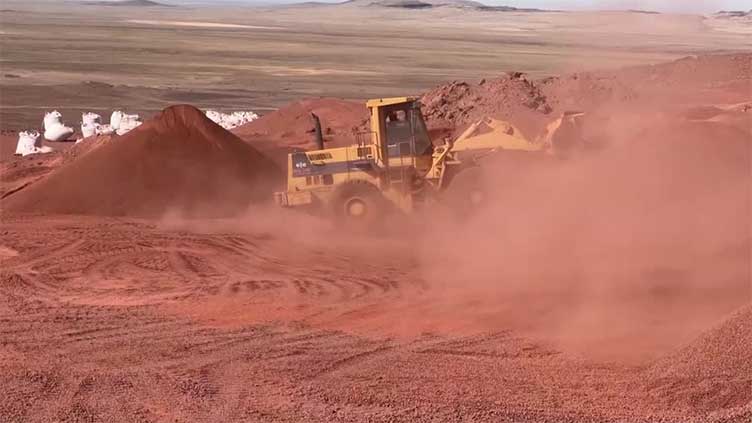
(Reuters) – In Jordan's Mafraq region, located to the north of the capital Amman, mining operations were underway, as workers and machinery processed volcanic rocks, crushing them into sand - a key material used in the production of volcanic soil which helps fight water scarcity and desertification, officials said.
Mine engineer Ibrahim al-Manaseer told Reuters that the minerals extracted from these rocks, vary from a place to another. "There's zeolite, like the one we have in the mine here. There is zeolitic tuff in one of the other mines we have. There are basalt and pozzolana. All of them are volcanic rocks that formed thousands of years ago", he said
Volcanic rocks are mostly found in northern Jordan, according to the Jordanian ministry of energy and mineral resources' website.
Derived from these rocks, volcanic soil is introduced as an organic alternative to traditional soils by Jordanian group Watad, founded in 2019 according to its website.
Its CEO Mohannad al-Manaseer said that volcanic soil is the ideal solution to the water problem and has the advantage of being salt-repellent and resistant to harmful weeds, while Jordanian agricultural engineer Hadeel, who did not give her surname, highlighted that it reduces water consumption by 60% and fertilizer use by 80%.
Al-Manaseer also told Reuters that the group produces one million tons of volcanic soil annually but "have the potential to increase it to tens of millions due to the high reserve in the mines and the production capacity."
"Our ambition today is that – (in) all the global markets – this product would be an alternative to temporary products and an alternative to today's fertilizers, all of which are temporary products and not durable", he said
According the UNICEF's website, Jordan ranks as the second most water scarce country in the world, with annual renewable water resources that amounts to less than 100 cubic metres per person – well below the severe water scarcity threshold of 500 cubic metres per person.